Baby & Toddler

13 Best Toddler Musical Toys of 2026: Durable Picks with Volume Control

Which toddler musical toys actually survive daily drops and have a quiet mode that doesn't startle? Our guide helps you find the ones that last.

The typical toddler musical toy arrives full of promises: lights, sounds, and endless engagement. But after a few weeks, the buttons stop responding, the volume is stuck on full blast, or the pull string is too short to actually pull.

The gap between marketing and real-world use is especially wide here. Toys that look great on the shelf often fail at the two things that matter most: surviving tumbles onto tile and offering a volume setting that respects a parent's sanity.

This guide focuses on picks that hold up to daily use, have a quiet mode or adjustable volume, and actually deliver the engagement toddlers need without the noise that drives adults up the wall.

#1

Baby Einstein Take Along Tunes
Baby Einstein Take Along Tunes

First musical toy

Doodle Score 9.6/10
Check Price

Worth Noting

  • Sound muffles when toy is placed flat on a surface due to rear-mounted speaker
  • No interactive features beyond basic music playback
Age Range
3-36 months
Sound Type
10 classical melodies
Portability
Fits in diaper bag
Interactive Features
Press button, volume control
Read the full review

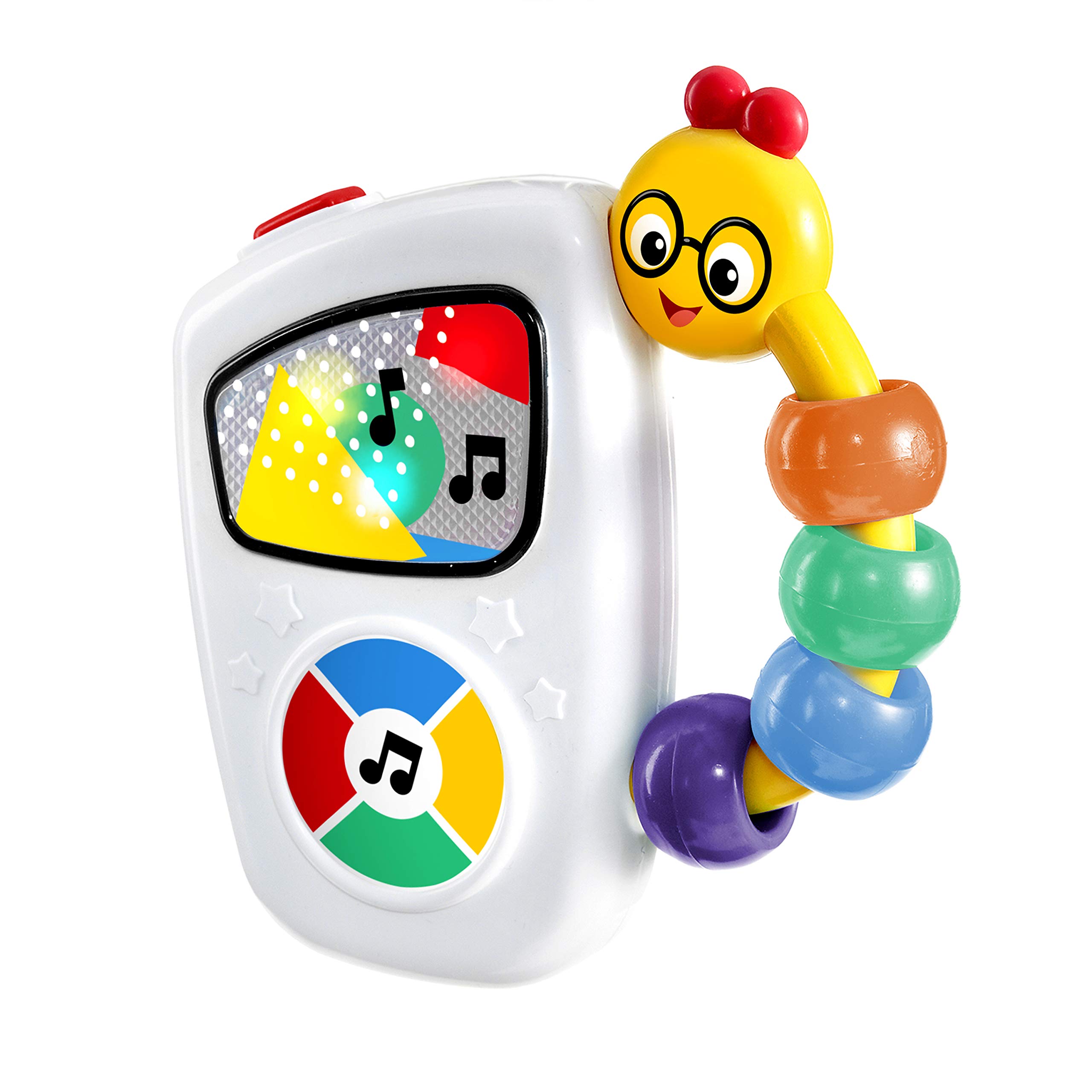
The Baby Einstein Take Along Tunes packs ten classical melodies into a compact, kid-friendly player with an adjustable volume dial – parents can keep the tunes low enough to avoid sensory overload while still engaging their baby. The speaker sits on the back, so sound quality suffers when the toy is laid flat on a table; holding it upright or in a stroller clip gives the best audio.

This is the ideal first musical toy for babies as young as 3 months, and it remains a go-to travel companion through the toddler years. It does not offer interactive features – no lights, sound effects, or learning games – so it suits parents who want a simple, no-fuss music player rather than a full-featured learning tool. The muffled sound on flat surfaces is a minor tradeoff for a toy that disappears into any diaper bag and rarely causes parental fatigue.

Tip: Hold the toy upright or attach it to a stroller clip to avoid muffled sound from the rear speaker.

Bottom line: For a no-regret first music toy that travels anywhere and keeps babies entertained without overwhelming them, this is the one. Just keep it upright for the best sound.

#2

VTech Musical Rhymes Book

VTech Musical Rhymes Book

Interactive learning book

Doodle Score 9.6/10
Check Price

Worth Noting

  • Singing mode volume remains high even on the lowest setting.
Age Range
6-36 months
Sound Type
Nursery rhymes, instrument sounds
Portability
Tabletop book
Interactive Features
Turning pages, slide pieces, piano buttons
Read the full review

The VTech Musical Rhymes Book turns reading into a multisensory experience with sliding pieces and piano buttons that trigger nursery rhymes and instrument sounds. Its durable plastic build survives repeated drops on tile floors, and the interactive pages teach colors and instruments. This book-style toy suits toddlers 6-36 months who enjoy turning pages and moving parts, but the singing mode stays loud even on the lowest volume setting - parents of noise-sensitive children may want to stick with learning mode instead.

Tip: Use learning mode (not music mode) to keep volume lower for sensitive ears.

Bottom line: A durable, educational book-style toy for toddlers who love interactive pages - best for families where loud singing isn't a dealbreaker.

#3

Hape Pound & Tap Bench

Hape Pound & Tap Bench

Wooden pounding toy

Doodle Score 9.6/10
Check Price

Worth Noting

  • No electronic sounds or lights; purely acoustic play may not hold the attention of toddlers who prefer digital toys.
  • Requires some hand-eye coordination; not suitable for children under 12 months.
Age Range
12 months - 3 years
Sound Type
Xylophone tones
Portability
Floor toy
Interactive Features
Pounding hammer, slide-out xylophone
Read the full review

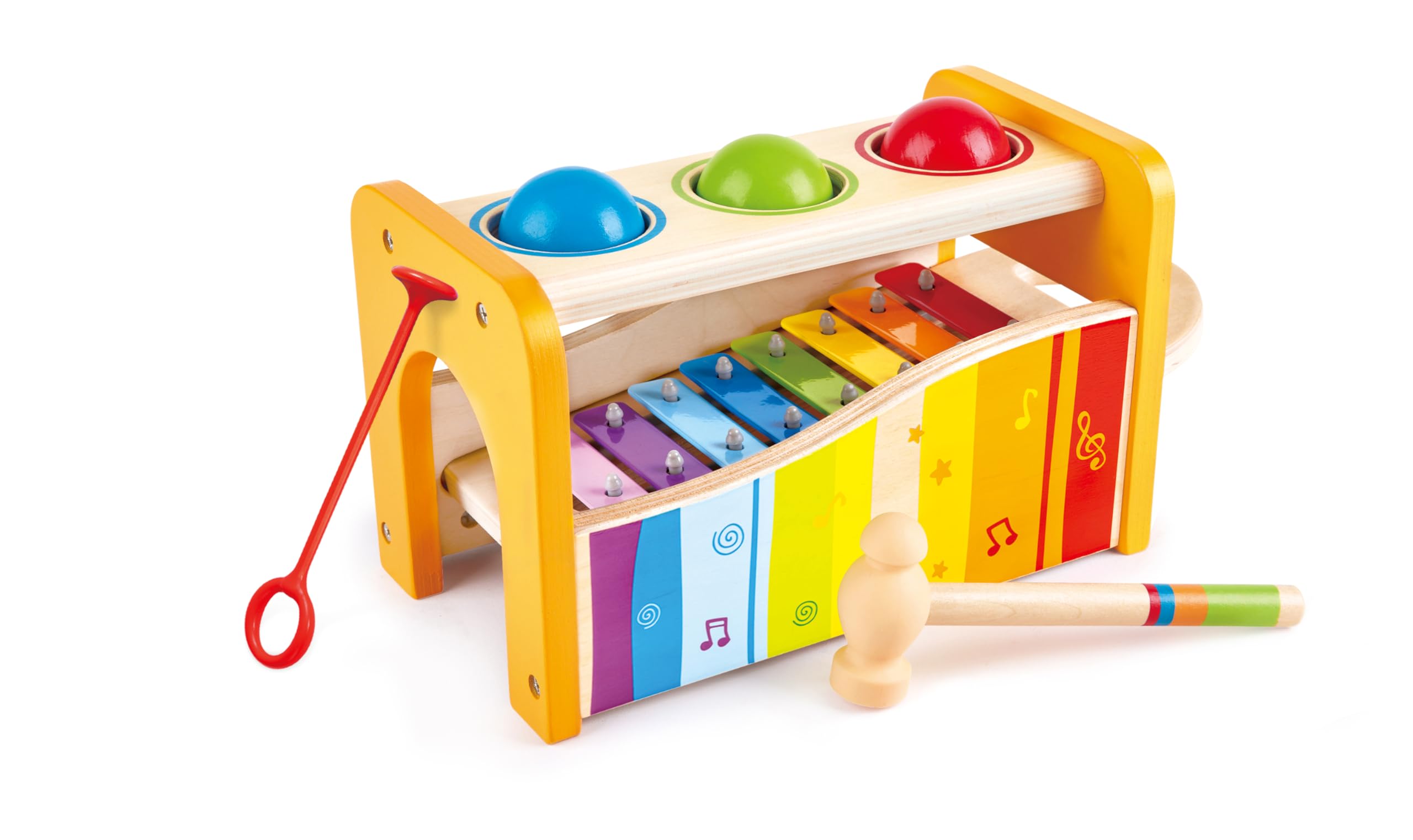
The Hape Pound & Tap Bench combines two play modes in one durable wooden toy: toddlers can pound colorful balls onto a xylophone to hear musical notes, then slide out the eight-key xylophone for independent play. There are no electronic sounds or lights — the sound comes entirely from the wooden mallets hitting the metal keys. This makes it a solid choice for eco-conscious families who want a manual, non-plastic toy, though toddlers who expect digital feedback may need time to adjust.

Bottom line: For parents who want a wooden toy that encourages cause-and-effect and music-making without batteries, this is a well-made option. Just know it's entirely manual.

#4

Fisher-Price Classic Xylophone

Fisher-Price Classic Xylophone

Classic pull toy

Doodle Score 9.6/10
Check Price

Worth Noting

  • Pull string is too short for toddlers to use the pull-along feature comfortably
Age Range
18 months+
Sound Type
Xylophone tones
Portability
Pull-along
Interactive Features
Pull-along string, tethered mallet
Read the full review

The Fisher-Price Classic Xylophone delivers the nostalgic appeal of a simple mallet-and-key setup that toddlers can bang on, sit on, and drop without breaking. Eight colorful keys produce clear notes, and the tethered mallet stays attached during play. The pull string, however, is so short that toddlers struggle to drag the toy behind them — most parents end up cutting it off. This xylophone suits families who want a durable, battery-free instrument for stationary play, not a functional pull toy.

Tip: Many parents remove the string entirely — the xylophone works fine without it.

Bottom line: A rugged, non-electronic xylophone for toddlers who just want to make noise, but the short string means it’s best left on the floor rather than pulled around.

#5

eKids Ms Rachel Player

eKids Ms Rachel Player

Ms Rachel fan

Doodle Score 9.6/10
Check Price

Worth Noting

  • Volume is not adjustable and can be too low for active environments
Age Range
3-6 years
Sound Type
Character songs, nursery rhymes
Portability
Small, handheld
Interactive Features
4 song buttons, flashing lights
Read the full review

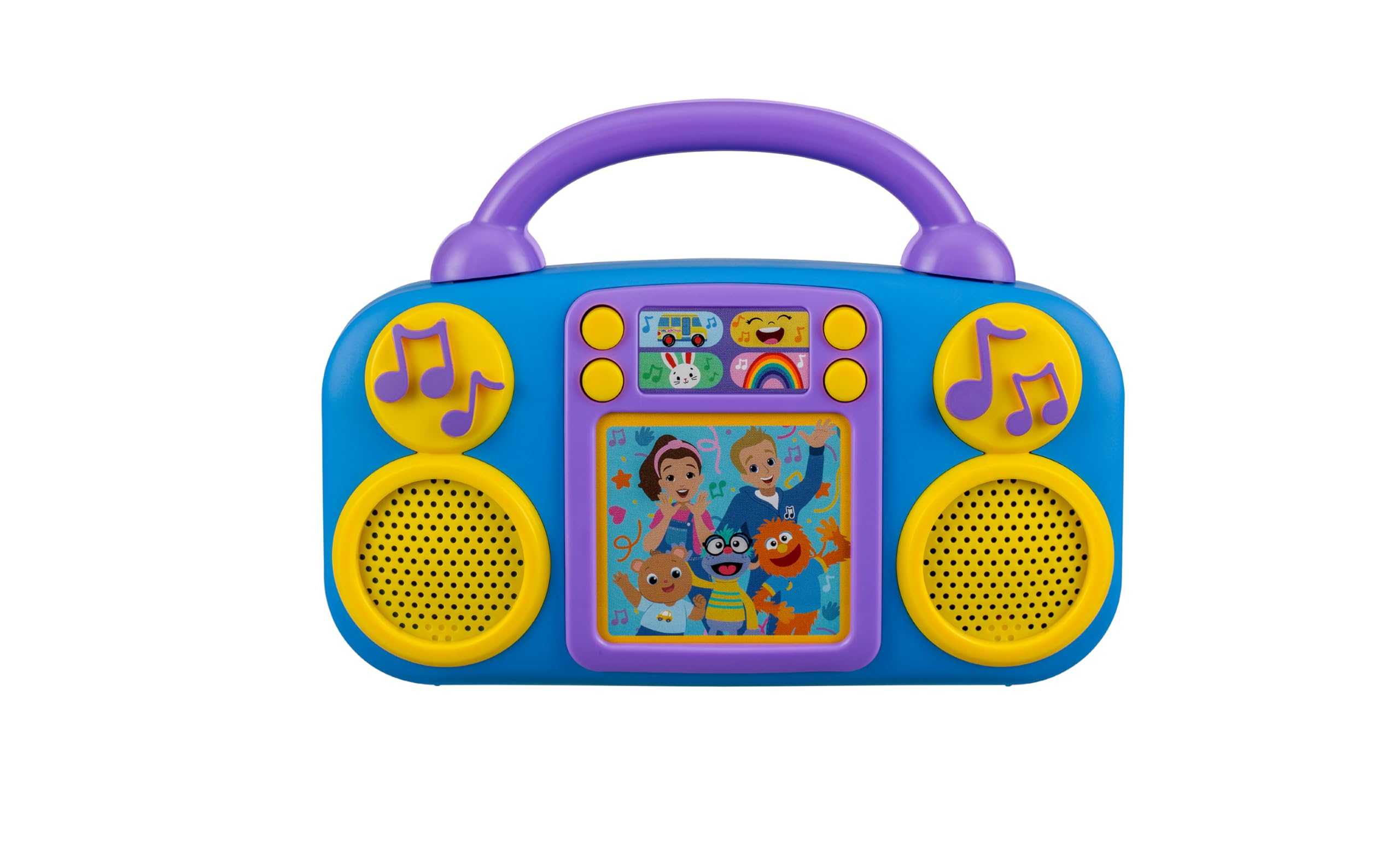
The eKids Ms Rachel Player gives toddlers a familiar character and buttons even 1-year-olds can press to start music on their own. Unlike the top pick with many melodies, this player keeps it simple with four built-in songs from Ms Rachel and Bluey. The fixed volume may be too low for noisy playrooms, making it best for quiet one-on-one time. This suits families who want an inexpensive, character-driven music player for a young Ms Rachel fan – not those needing adjustable audio or song variety.

Tip: Position the player close to your child for best sound; it's not designed for noisy group settings.

Bottom line: For quiet, focused play with a beloved character, this player works well – but if you need louder audio or more song options, the top pick is a better choice.

#6

Stoie's Wooden Instrument Set

Stoie's Wooden Instrument Set

Instrument variety

Doodle Score 9.6/10
Check Price

Worth Noting

  • Tambourine discs may come loose with rough play
Age Range
3 years+
Sound Type
Variety of instrument sounds
Portability
Crate storage
Interactive Features
9 instruments, manual play
Read the full review

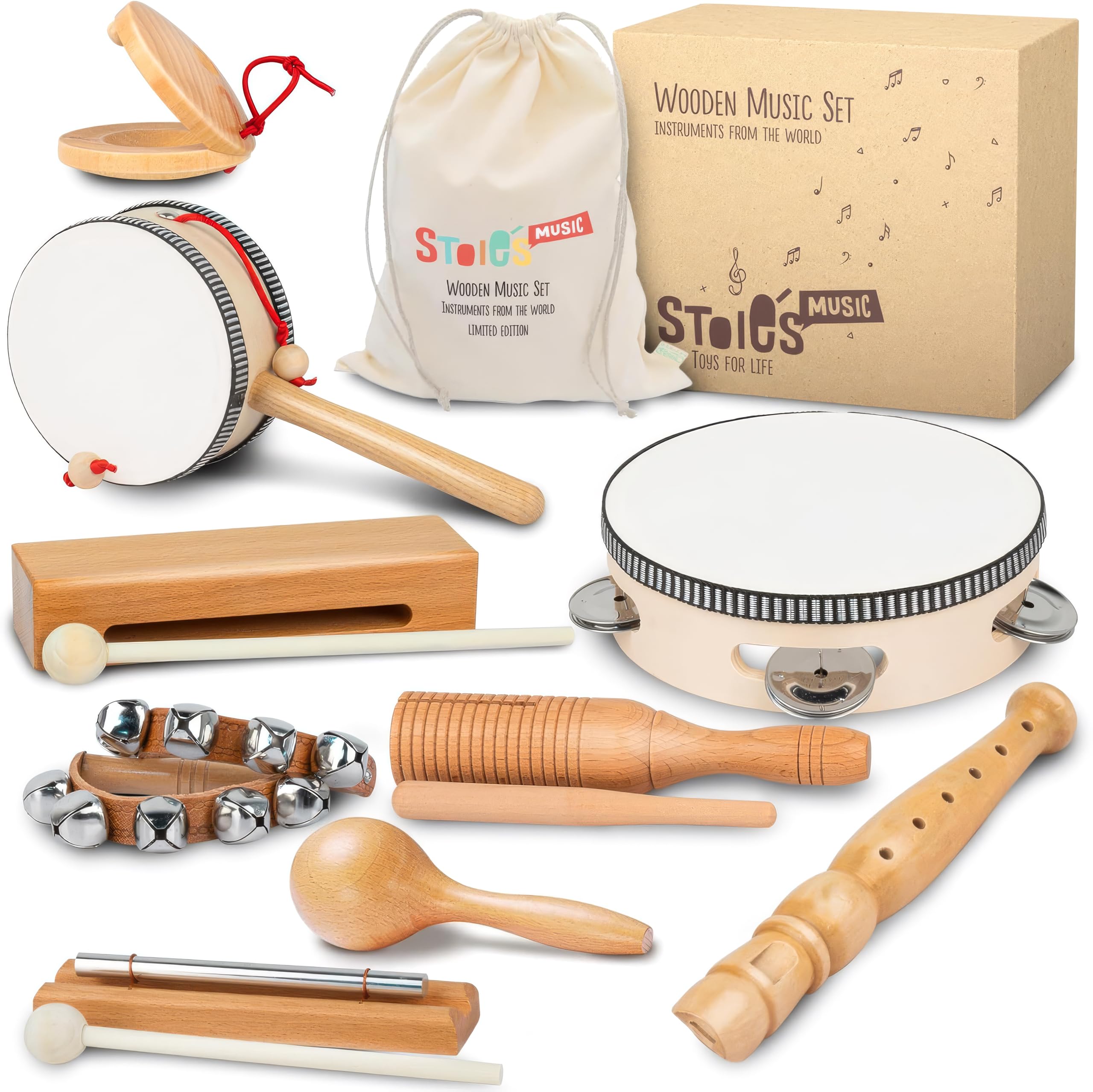
This set provides a variety of instruments with solid wood construction and pleasant sound, making it a worthwhile bundle for group play. However, the tambourine discs can come loose under heavy use, and the recommended age (3+) means it does not serve toddlers under 3 who search for musical toys. For older preschoolers who enjoy exploring different sounds, it offers good variety at a reasonable price.

Bottom line: Best for group settings with older preschoolers (3+) where instrument variety matters more than individual durability.

#7

TOMY John Deere Hayride

TOMY John Deere Hayride

Tractor fans

Doodle Score 9.6/10
Check Price

Worth Noting

  • Sound can stop working after short playtime due to battery contact issues.
Age Range
18-36 months
Sound Type
Animal sounds, tractor, Old MacDonald
Portability
Pull-along
Interactive Features
Matching game, push tractor
Read the full review

This tractor blends a push-along toy with a matching game: toddlers place farm animals into spots that trigger their sounds and the Old MacDonald song. The concept is engaging for animal-loving toddlers. However, the sound mechanism can stop working after short playtime due to battery contact issues, so long-term audio reliability is uncertain.

Bottom line: Best for toddlers who love tractors and farm animals, provided you are comfortable with the possibility of sound failure.

#8

Baby Einstein Magic Touch Piano

Baby Einstein Magic Touch Piano

First piano experience

Doodle Score 9.4/10
Check Price

Worth Noting

  • Black keys do not produce half-notes, limiting accurate scale play as musical interest grows.
  • Can tip forward when a baby leans on the keyboard
Age Range
6-36 months
Sound Type
Piano notes, 6 songs
Portability
Tabletop piano
Interactive Features
Touch keys, 2 modes, sheet music
Read the full review

Unlike a simple music player, this piano rewards tiny taps with pleasant tones, making it a first instrument for babies who are curious about cause and effect. The magic touch technology means even a six-month-old can activate a key without enough finger strength for a traditional press. The color-coded sheet music adds a visual layer for guided play as they grow.

Best suited for families who want a Montessori-inspired wooden toy for early musical exploration — not a portable travel companion. The black keys do not play half-notes, so older toddlers working on scales may outgrow it quickly, and the piano can tip forward if a baby leans on the keyboard. These boundaries matter less for the intended 6- to 18-month-old who simply enjoys making sounds with a tap.

Tip: Place the piano against a wall or on a non-slip mat to reduce tipping when your baby leans in.

Bottom line: A clever first piano for babies who respond to gentle sounds, but the missing half-notes and tipping risk make it a better early exploration tool than a long-term instrument.

#9

Munchkin Mozart Magic Cube

Munchkin Mozart Magic Cube

Music education

Doodle Score 9.4/10
Check Price

Worth Noting

  • Buttons may become unresponsive after a few months in some units
Age Range
All ages up to 60 months
Sound Type
Mozart songs, instrument layers
Portability
Cube, tabletop
Interactive Features
5 instrument buttons, orchestra mode, lights
Read the full review

The Munchkin Mozart Magic Cube introduces babies to orchestral concepts through individual instrument buttons (harp, flute, horn, piano, violin) that combine into eight Mozart songs with lights. The pleasant sound quality avoids the typical grating toy noise. However, after a few months of use, the buttons can become unresponsive in some units, making this better suited for supervised educational play rather than daily rough handling.

Bottom line: Best for parents who want a learning-focused music toy for short, guided play sessions where durability is less critical.

#10

WITALENT Baby Piano

WITALENT Baby Piano

Budget light-up toy

Doodle Score 9.4/10
Check Price

Worth Noting

  • Compact size may be smaller than expected for some buyers.
Age Range
6-36 months
Sound Type
Elephant sounds, songs
Portability
Small handheld
Interactive Features
Light-up keys, fine motor activities
Read the full review

The WITALENT Baby Piano offers a cute elephant design with light-up keys and fine motor activities for babies 6-12 months. However, its compact size may disappoint those expecting a larger piano, and occasional functional defects have been noted. This suits parents seeking a budget-friendly, multi-feature toy for younger babies who enjoy pressing and grasping.

Bottom line: Best for budget-conscious parents of babies 6-12 months who want a compact, feature-rich toy and can accept size tradeoffs.

#11

Melissa & Doug Caterpillar Xylophone

Melissa & Doug Caterpillar Xylophone

Budget xylophone

Doodle Score 9.4/10
Check Price

Worth Noting

  • Mallet paint may rub off onto the metal keys over time
Age Range
3-6 years
Sound Type
Xylophone tones
Portability
Carry by handle
Interactive Features
8-note, self-storing mallets
Read the full review

This budget-friendly xylophone charms with its caterpillar design and mallets that store as antennae, but it is only safe for children ages 3 and up — the small mallets pose a choking risk for younger toddlers. The eight metal keys produce decent sounds for the price, though paint from the mallets may transfer onto the keys over time, and some notes can be slightly off-pitch. It is a good value introductory xylophone for preschoolers rather than a precision instrument for musical exploration.

Bottom line: A fine pick for preschoolers 3+ who want a first xylophone, provided you accept minor paint wear and tuning quirks.

#12

M&D Band-in-a-Box

M&D Band-in-a-Box

Group play

Doodle Score 9.4/10
Check Price

Worth Noting

  • Tambourine discs can detach under enthusiastic handling
Age Range
3-6 years
Sound Type
Variety of percussive sounds
Portability
Crate with handle
Interactive Features
10 instruments in crate
Read the full review

This crate of instruments includes a tambourine, cymbals, maracas, clacker, tone blocks, and triangle — enough to keep a small group occupied. The wooden storage box keeps everything tidy. But the tambourine discs may detach during enthusiastic play, and small parts make it unsuitable for children under three. It works well for preschool classrooms or families where an adult can monitor the tambourine use with older toddlers.

Bottom line: A good fit for supervised group play with children ages three and older who can handle the tambourine with care — not a rugged toy for unsupervised toddlers.

#13

VTech KidiBeats Drum Set

VTech KidiBeats Drum Set

Drumming fun

Doodle Score 9.2/10
Check Price

Worth Noting

  • Much smaller than photos suggest; compact size may not match expectations.
Age Range
2-5 years
Sound Type
Drum sounds, melodies
Portability
Small tabletop set
Interactive Features
3 drum pads, cymbal, LED lights, 4 modes
Read the full review

The VTech KidiBeats Drum Set offers four play modes (free play, letters, numbers, follow-along) and LED lights that keep toddlers engaged. Volume control helps manage noise. However, the set is much smaller than product photos suggest, and some units may experience electronic issues shortly after purchase.

Bottom line: Best for families who want variety in a small, portable drum set and are willing to test the unit early for any issues.

How to Choose

Age Range and Readiness

Age recommendations matter more than you think. A toy labeled for 6+ months might have small parts or require fine motor skills a younger child doesn't have yet. Conversely, a toy rated 3+ may be too simple for a two-year-old.

Look for age ranges that match your child's stage of development. For babies under 12 months, toys with large button targets and gentle sounds work best. For toddlers 18 months and up, more interactive elements like hammering or page-turning sustain attention.

Sound Type and Quality

Sound type determines how often you'll hear the toy. Classical melodies and nursery rhymes tend to be less grating than electronic beeps. Instrument sounds (xylophone, drum) offer a more organic experience.

The hidden trade-off: toys that play full songs often have a fixed volume that can't be lowered, while manual instruments let you control the intensity. If you value peace, prioritize a toy with a volume switch or one that produces sound only when actively played.

Interactive Features

Buttons, lights, moving parts — these keep toddlers engaged, but they also introduce failure points. Buttons can become unresponsive after repeated drops, and lights may dim over time.

The most durable interactive features are mechanical: turning pages, sliding pieces, and hammering. Electronic features are fine, but ensure the toy has a reputation for surviving drops and that batteries are easily replaceable.

Portability and Size

A toy that fits in a diaper bag gets used on car rides, at restaurants, and during doctor visits. Larger floor toys may stay home but can offer more play value. The trade-off is straightforward: portable toys are simpler, while stationary ones often have more features.

Check physical dimensions before buying. Many toys look smaller in real life than in product images, leading to disappointment. If you intend to travel, choose something under 12 inches with no loose parts.

Material and Durability

Wooden toys generally survive longer than plastic ones, but they can splinter if dropped on hard floors. Plastic toys can crack or have buttons pop off. The most durable options use thick plastic or solid wood with non-toxic finishes.

Reviews often reveal hidden durability issues: strings that break, tambourine discs that fall off, or battery compartments that corrode. Prioritize toys with positive feedback on 'survives drops' and 'still works after months.'

Frequently Asked Questions