Building & Blocks

7 Best Gear Toys for Kids of 2026: Match Age and Skill Level

Find the right gear toy that matches your child's age, fine motor skills, and interests -- from toddler cause-and-effect to complex STEM builds.

Gear toys promise STEM learning, but not all deliver the same experience. A toddler's first encounter with spinning cogs is very different from an 8-year-old building a moving machine. The mismatch between marketing claims and actual play often leaves parents with a toy that's either too simple or too frustrating.

This guide cuts through that confusion. We focus on matching each toy's mechanical demands to your child's age and dexterity, so the toy challenges without overwhelming. Whether you need a durable wooden gear for a 1-year-old or a complex kit for a budding engineer, the right fit is a matter of finding the right specs for your situation.

#1

Melissa & Doug Gear Caterpillar

Melissa & Doug Gear Caterpillar

Toddlers 18m-3y

Doodle Score 9.6/10
Check Price

Worth Noting

  • Gears can pop off the pegs when a toddler spins them quickly
Material
Wood
Age Range
18m-3y
Piece Count
6
Educational Focus
Color matching, fine motor
Read the full review

Solid wood construction and bright colors make this caterpillar gear toy safe and engaging for toddlers just starting to explore cause and effect. With only six gears, it suits early fine motor and color matching play, not multi-piece builds. Gears may slip off the pegs when a toddler spins vigorously — a typical tradeoff for this age range and material. This is best for parents seeking a durable, non-plastic sensory toy for the youngest builders, not for older children wanting sturdy interlocking gear systems.

Tip: Show your toddler how to spin the gears gently — they stay on better when turned slowly.

Bottom line: A budget-friendly wooden gear toy that introduces cause and effect to toddlers — best for supervised play given the loose gear fit.

#2

Gears! 100-Piece Deluxe Set

Gears! 100-Piece Deluxe Set

Ages 3-8 builders

Doodle Score 9.4/10
Check Price

Worth Noting

  • Only one crank handle included, which can limit how many children can actively turn gears at once.
  • Green base plates may require adult strength to snap together and apart, especially for younger builders.
Material
Plastic
Age Range
3+
Piece Count
100
Educational Focus
STEM, problem-solving
Read the full review

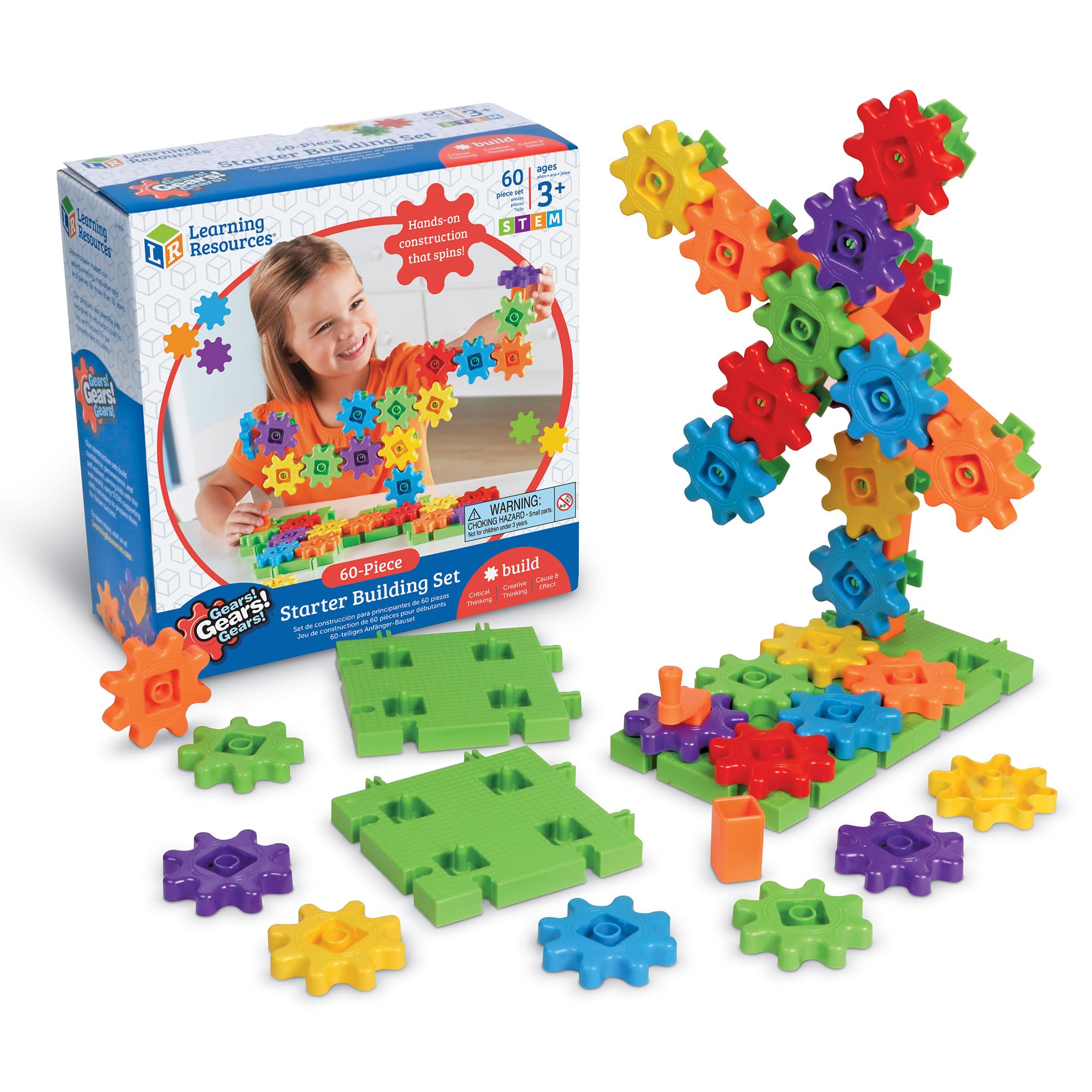
With 100 pieces including 46 gears, 26 pillars, and 6 interlocking base plates, this set gives children the freedom to build everything from towers to moving vehicles. The open-ended design encourages repeated rebuilding, so the toy stays engaging as fine motor skills improve.

The green base plates can be hard to snap together and apart, requiring adult strength in some cases, and only one crank handle is included for turning the gears. That tradeoff matters less for solo play or small groups, making this a solid fit for preschoolers to early elementary children, classroom settings, or daycare centers where collaborative building is common.

Tip: Separate base plates by twisting gently rather than pulling straight apart to reduce the force needed.

Bottom line: For families and classrooms that want a gear set with lasting play value across multiple ages, this deluxe kit delivers where simpler sets run out of pieces or ideas.

#3

Spirograph Jr. Set

Spirograph Jr. Set

Art-loving 3+

Doodle Score 9.4/10
Check Price

Worth Noting

  • Spiral patterns are less precise than the classic version
Material
Plastic
Age Range
3+
Piece Count
4 large gears + ring
Educational Focus
Art, creativity
Read the full review

Jumbo gears and a self-contained travel case make this a mess-free, screen-free art activity for ages 3+. Unlike open-ended construction sets, this Spirograph Jr. channels gear interaction into drawing, letting toddlers create spiral patterns by turning large gears. It is best for young children ages 3-5 who enjoy art and for parents seeking a travel-friendly creative activity. The spiral designs are coarser than the classic Spirograph – this suits little hands but may disappoint older kids looking for fine detail.

Tip: For finer patterns, use the classic Spirograph – this Jr. version prioritizes ease of use over detail.

Bottom line: A budget-friendly, screen-free art activity that introduces young children to gears through drawing – ideal for ages 3-5.

#4

Gears! Starter Set 60pc

Gears! Starter Set 60pc

Ages 3-5 beginners

Doodle Score 9.4/10
Check Price

Worth Noting

  • For older children or those wanting more elaborate builds, the 60 pieces may limit the scale of creations.
  • In some cases, the crank handle can be difficult to snap into place
Material
Plastic
Age Range
3+
Piece Count
60
Educational Focus
STEM, engineering
Read the full review

This 60-piece set focuses on what matters most for ages 3-5: gears that snap together easily and stay connected during play. Where the 100-piece Deluxe set offers more pieces for complex builds, this starter set keeps things simple – a deliberate choice for short attention spans and developing fine motor skills. Best for parents introducing basic cause-and-effect with gears, though the piece count will feel limiting once a child wants to build larger structures. The crank handle can be stiff to attach, but the gears themselves are easy for small hands to manipulate.

Tip: Press the crank handle firmly onto the axle while wiggling slightly – this seating method helps it snap in more easily.

Bottom line: A well-priced introduction to gear play that suits the preschool crowd, provided expectations stay within its piece count.

#5

Klutz LEGO Gear Bots

Klutz LEGO Gear Bots

Ages 8-12 LEGO fans

Doodle Score 9.2/10
Check Price

Worth Noting

  • Instructions can be tricky for some kids, often requiring adult assistance.
  • Only one bot can be built at a time
Material
Plastic, paper
Age Range
8-12
Piece Count
62 LEGO + papercraft
Educational Focus
STEM, axles, cams
Read the full review

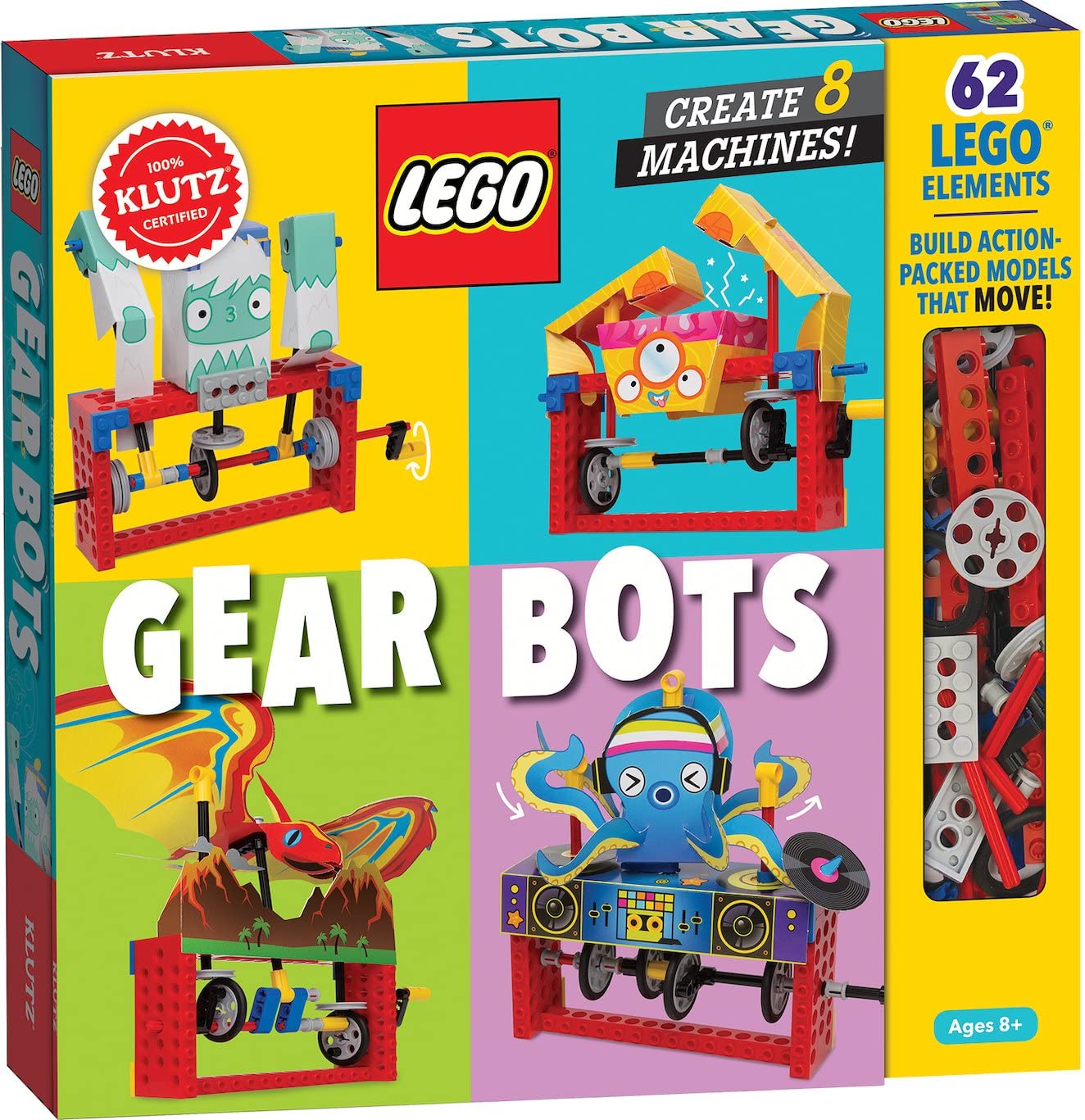
This kit builds 8 different kinetic creatures, each introducing a new mechanical concept like axles, cams, and cranks. The structured projects are great for kids who enjoy following a clear path, but the instruction book can be tricky for some children to follow solo. You can only build one bot at a time — disassembly is required for the next. Best suited for ages 8-12 with an adult nearby to help interpret steps, rather than for independent play.

Tip: Walk through the instruction book together before the first build – it sets a clear path through each project.

Bottom line: A solid choice for families where an adult can help with assembly and the child enjoys step-by-step projects over free-form building.

#6

ArtCreativity Gear Car

ArtCreativity Gear Car

Sensory-seeking toddlers

Doodle Score 9.0/10
Check Price

Worth Noting

  • Music is loud with no volume control
  • Some units may stop moving after a few weeks of use.
Material
Plastic
Age Range
3+
Piece Count
1 car
Educational Focus
Sensory, cause-effect
Read the full review

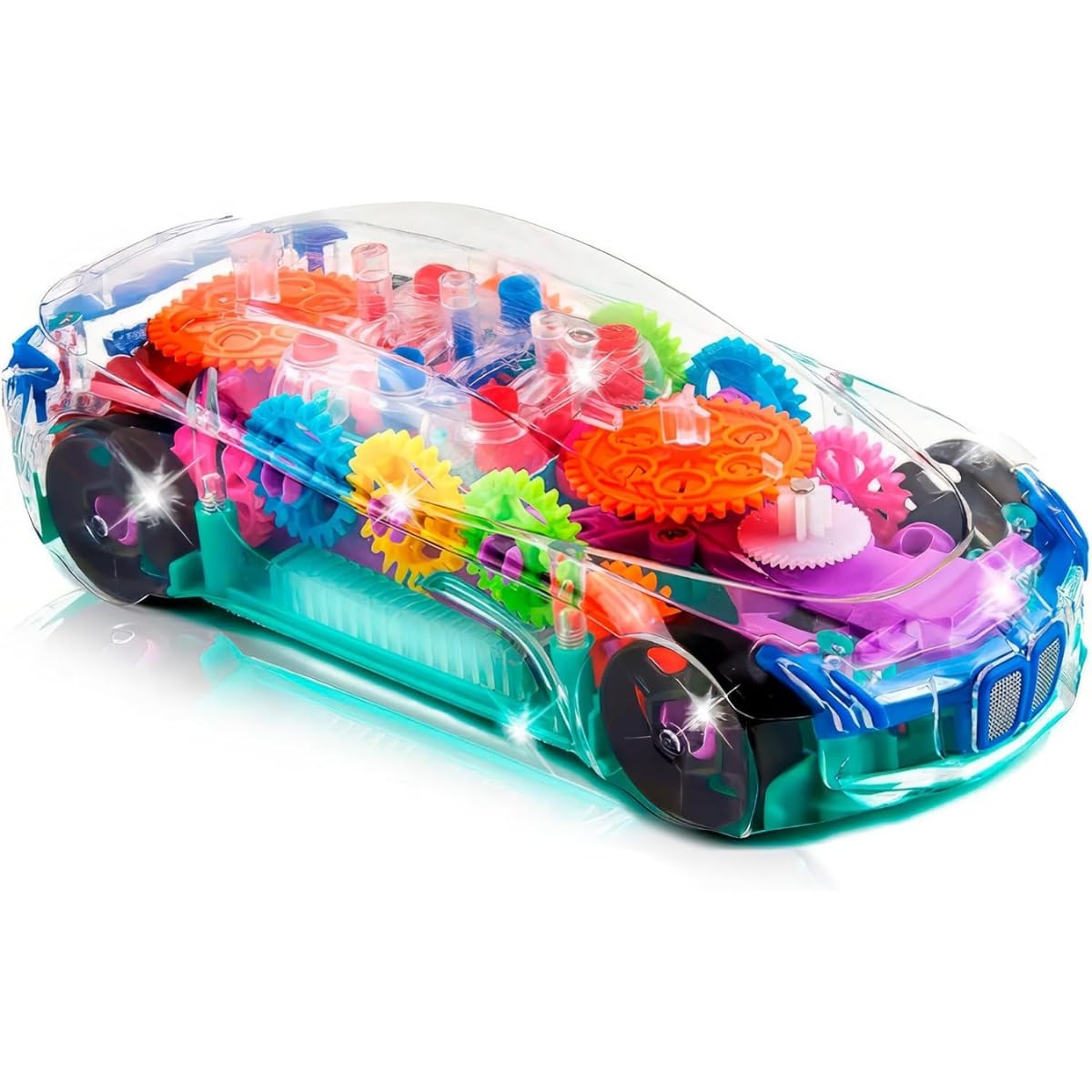
The ArtCreativity Gear Car’s clear shell reveals spinning gears and LED lights that flash as the vehicle bumps around the room. Unlike stationary wooden gear sets, this one adds motion and sound to keep a toddler’s attention. It suits short bursts of play or travel where parents can tolerate the loud music — the sound has no volume adjustment and some units have shown early battery drain.

Tip: Switch to lights-only mode for quieter play or set the car on a soft surface to muffle the noise.

Bottom line: A visually engaging toy for toddlers who love lights and motion, but the loud sound and potential durability mean it’s best as a short-term treat rather than a daily driver.

#7

TOMY Gearation Magnets

TOMY Gearation Magnets

Fridge play, kitchen

Doodle Score 8.8/10
Check Price

Worth Noting

  • With repeated repositioning, magnets can come loose from the plastic gears
  • On weaker fridge surfaces, the gears may not hold in place
Material
Plastic, magnet
Age Range
3+
Piece Count
5 + motorized
Educational Focus
Fine motor, creativity
Read the full review

The Toomies Gearation Magnets turn a refrigerator into an interactive play station with five magnetic gears and one motorized gear that spin as toddlers rearrange them. For parents who need a hands-free activity while cooking, these magnets provide engaging distraction – though magnets can detach over time and may slide on some fridge surfaces, making this best for households with strong magnetic doors and where occasional regluing is acceptable.

Tip: The motor gear may produce a ticking noise – place it away from quiet areas if noise is a concern.

Bottom line: A clever concept that works well for toddlers during cooking time, provided you are willing to occasionally reattach magnets.

How to Choose

Number of Pieces and Gears

More pieces scale with a child's ability to plan and execute multi-step builds. A 60-piece set suits a 3-year-old just learning to snap gears onto pillars, while 100+ pieces allow an 8-year-old to build machines with moving parts. Too few pieces and the toy is quickly outgrown; too many and frustration sets in.

Age Range Suitability

Manufacturer age labels are a starting point, but fine motor ability varies widely. A 4-year-old who struggles with hard-to-snap plastic may enjoy a wooden gear toy years earlier than the box suggests. Always check whether the pieces require adult force to assemble – a common source of disappointment.

Material: Plastic vs. Wooden

Wooden gears are quieter, more tactile, and safer for toddlers who mouth toys. Plastic sets allow colorful interlocking and more complex shapes, but thin parts can crack under repeated assembly. For ages 3 and under, wood reduces frustration; for older builders, plastic enables larger, more intricate designs.

Educational Focus

Not all gear toys teach the same skills. Construction sets emphasize engineering, cause-and-effect, and spatial reasoning. Art-based gear toys like Spirograph combine mechanics with creativity. Sensory toys with lights and sounds engage different cognitive pathways. Choose based on whether your child prefers building, drawing, or reacting.

Special Features

Features like motors, lights, magnets, or sound add play value but introduce potential failure points – magnet detachment, loud noises, battery drain. Assess whether the feature is essential for engagement or a short-term gimmick. For example, magnetic fridge toys keep toddlers occupied but often suffer from weak adhesion.

Frequently Asked Questions