Games & Puzzles

10 Best Puzzles for Kids of 2026: Interlocking Picks That Last

Which puzzles for kids actually stay together, match your child's skill level, and survive rough play — from chunky wood to 200-piece jigsaws.

Kids' puzzles are supposed to be screen-free fun, but flimsy cardboard that peels or pieces that don't lock together can swiftly derail a play session. Missing corner pieces — a common gripe with budget sets — leave children upset and parents scrambling.

The puzzles that become household favorites share a few traits: pieces that snap firmly in place, materials that survive chewing and bending, and a theme that sparks curiosity. Balancing piece count with hand size and interest matters more than the recommended age on the box. These traits separate puzzles that get used for years from those that collect dust.

A good puzzle matches your child's stage and holds up over time. Whether you need a floor puzzle for family game night or a pocket brain teaser for car trips, the right pick balances challenge, durability, and theme.

#1

M&D Ocean Floor Puzzle

M&D Ocean Floor Puzzle

Family floor play

Doodle Score 9.6/10
Check Price

Worth Noting

  • Oversized 2-by-3-foot footprint demands a dedicated floor area and isn't portable.
  • Children who have advanced beyond 48 pieces will finish quickly and may lose interest.
Age
3+
Theme
Ocean
Material
Cardboard
Piece Count
48
Read the full review

The 48 oversized pieces come together to form a vivid 2-by-3-foot underwater scene bustling with whales, sharks, and tropical fish. Sorting the large, color-coded sections becomes part of the fun — kids can identify coral reef zones and open ocean while piecing together the habitats. The thick cardboard feels satisfying in small hands, and the piece size is generous enough that preschoolers can grip and position them without constant adult help.

On a hard floor or low-pile rug, the completed puzzle stays in place even when small knees press into it. Pieces are thick and resilient, resisting tears or folds after dozens of assemblies. The interlocking is functional rather than ultra-snug — a good thing when children nudge sections around during group play, though it means the puzzle may shift slightly if bumped.

This puzzle fits families with children ages 3 to 7 who love sea creatures and thrive on collaborative floor activities. It works as a screen-free group project during playdates or as a quiet solo build for a child ready to tackle 48 pieces. Some users have noted that the cardboard layers may separate slightly along edges after heavy use; families more focused on the shared discovery than on absolute piece-perfect interlocking will find this a minor nuance. Because of its size and modest piece count, it's not for travel or for kids who have already mastered 100-piece puzzles.

Tip: If an edge starts to lift, smooth it down firmly — the cardboard layers typically re-adhere with gentle pressure.

Bottom line: This puzzle delivers a durable, screen-free ocean adventure that invites the whole family onto the floor. Its large format and simple 48-piece count make it a focused activity for young children who benefit more from collaboration than from high piece-count challenges.
#2

Disney Princess Heartsong

Disney Princess Heartsong

Disney princess fans

Doodle Score 9.6/10
Check Price

Worth Noting

Age
4+
Theme
Disney princesses
Material
Cardboard
Piece Count
60
Read the full review

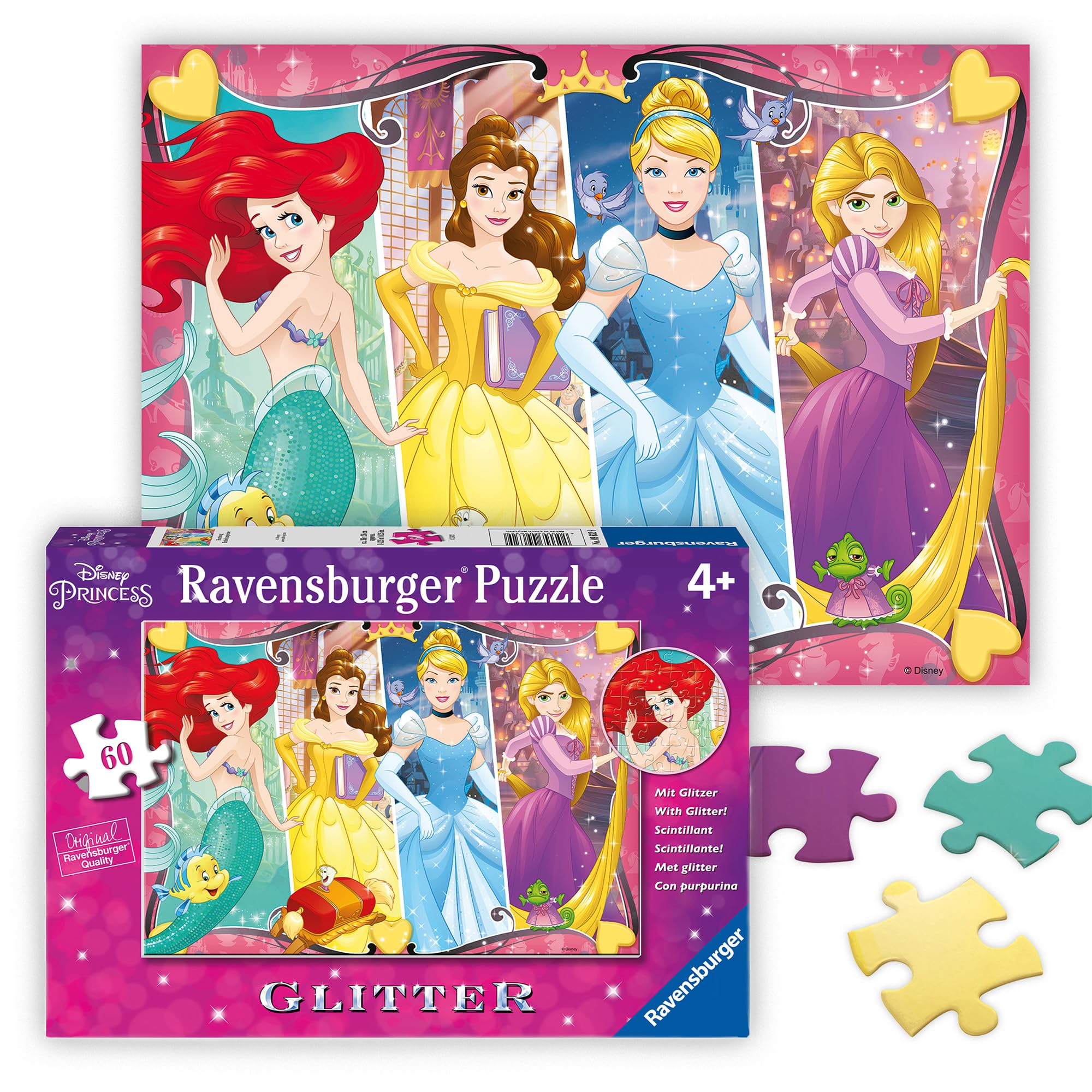
Sealed glitter detail and sturdy pieces make this 60-piece puzzle the just-right challenge for young princess fans starting their jigsaw journey. While more advanced puzzles like the 200-piece sea turtle design cater to older children ready for intricate images, this Ravensburger set stays firmly at a beginner-friendly 60 pieces with an irresistible sparkly finish.

Preschool girls moving beyond chunky wooden puzzles but not yet ready for 100+ pieces will find a forgiving first jigsaw experience. The Disney princess theme and bright colors hold attention, and the pieces are easy for 4- to 6-year-olds to handle independently. It's a thoughtful birthday or holiday gift, and the sealed glitter withstands repeated assemblies without flaking. Kids who have outgrown princesses or already breeze through 60-piece sets should look to the larger-piece-count options in this lineup instead.

Bottom line: A sparkling, sturdy first 60-piece puzzle that holds up to repeated use — a smart pick for young Disney princess fans starting on jigsaws.

#3

Ocean Turtles 200 pc

Ocean Turtles 200 pc

Older ocean lovers

Doodle Score 9.6/10
Check Price

Worth Noting

  • Image resolution may appear slightly soft to discerning eyes
Age
8+
Theme
Ocean turtles
Material
Cardboard/linen
Piece Count
200
Read the full review

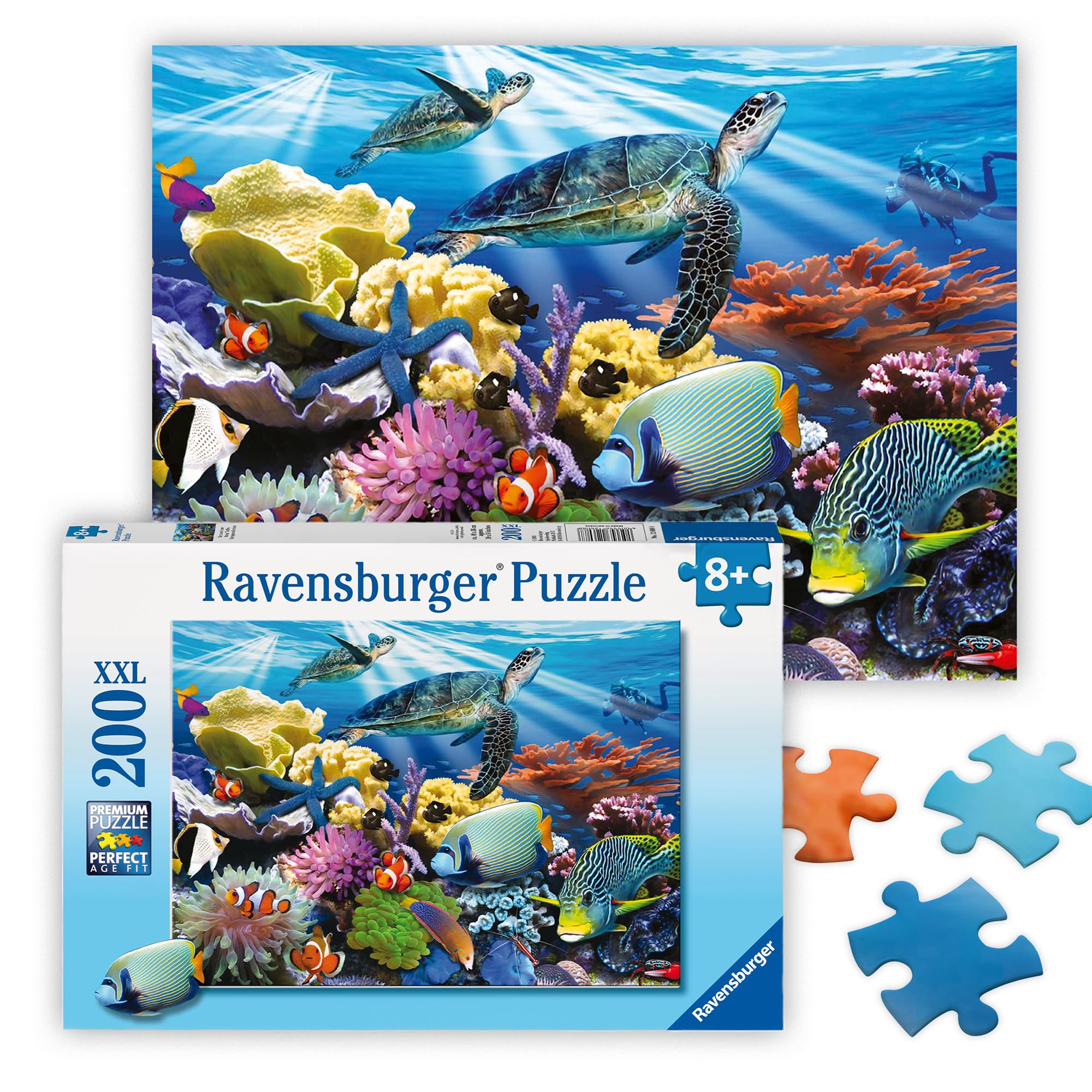
Where sparkly 60-piece princess puzzles suit first-timers, the Ocean Turtles 200-piece puzzle offers a more substantial challenge. The sea turtle image, full of coral and blues, hooks kids who crave a real picture to piece together. The piece fit is classic Ravensburger — a satisfying click that stays put, no sliding or frustration during assembly.

It targets older kids 8-12 and families who want a puzzle that earns a permanent spot on the shelf. The cardboard holds up to repeated assemblies, so the challenge stays fresh. The only tradeoff: the printed image resolution isn't photo-quality and can look slightly soft to a discerning eye. Once the vibrant sea turtles take shape on the table, that visual nitpick fades away.

Bottom line: For families upgrading from simple 60-piece glitter puzzles, this Ravensburger offers a bigger challenge and the reassuring click of tight-fitting pieces. The slightly soft print won't matter once the turtles are assembled on the table.

#4

Solar System Floor Puzzle

Solar System Floor Puzzle

Space-themed play

Doodle Score 9.6/10
Check Price

Worth Noting

  • The 10-inch diameter makes it more of a tabletop puzzle than a sprawling floor activity
  • With 70 pieces, the challenge runs out quickly for children over 6 who want 100+ piece puzzles
Age
3+
Theme
Solar system
Material
Cardboard
Piece Count
70
Read the full review

Where other round solar system puzzles clamp together so tightly that small children struggle to separate them, the TALGIC version uses easy-handling interlock that holds enough for play but releases without a fight. Sturdy, oversized pieces carry clear planet labels and names, so a preschooler can learn the order of Mercury through Neptune while building. The cardboard stands up to repeated assemblies, and the round shape keeps the focus on the sun at the center.

Space-obsessed 3- to 6-year-olds get the most from this puzzle's educational angle and just-right difficulty. The 10-inch footprint makes it a table activity — not a sprawling floor mat. Families who want a large floor puzzle or kids already breezing through 100 pieces should look at the oversized ocean scene from our top pick instead.

Tip: Set it up on a child-sized table or playmat; the 10-inch diameter is ideal for small workspaces.

Bottom line: For a preschool astronomy lesson disguised as a puzzle, this round solar system set delivers — just keep it on the table where its compact size shines.

#5

Kanoodle Brain Teaser

Kanoodle Brain Teaser

Travel brain teaser

Doodle Score 9.4/10
Check Price

Worth Noting

  • Small pieces pose a choking hazard for children under 3
Age
7+
Theme
Abstract logic
Material
Plastic
Piece Count
12
Read the full review

With 228 puzzles packed into a case smaller than a paperback, Kanoodle delivers solo brain-teasing that thrives where floor puzzles can't — car rides, restaurant tables, and airplane trays. The 12 plastic pieces click into a grid, and the challenge booklet guides solvers from simple 2D arrangements to complex 3D pyramids that test spatial reasoning and persistence. Build quality holds up to hundreds of solves, and the snap-shut case keeps everything together during travel. The difficulty curve ramps gradually, so kids who start with basic puzzles can grow into expert mode without feeling overwhelmed.

This is the right pick for logic-loving kids ages 7 and up who burn through puzzle books and want a screen-free mental workout, as well as adults who want a five-minute brain break. The small pieces are a choking hazard for children under 3, so households with curious toddlers need to store it well out of reach. And it's not a traditional jigsaw puzzle — there's no image to assemble, just a sequence of spatial reasoning problems that one person tackles at a time. That makes it less suited for collaborative family puzzle time, but ideal for solo entertainment in tight spaces.

Tip: Always close the snap‑shut case after play — the tiny pieces can be dangerous for under‑3s.

Bottom line: A compact, travel-friendly logic workout that rewards persistence; skip it if a toddler shares your home.

#6

Coogam Wooden Tangram

Coogam Wooden Tangram

Creative shape play

Doodle Score 9.4/10
Check Price

Worth Noting

  • Wood edges may chip or splinter after prolonged rough play
Age
3+
Theme
Tangram / shapes
Material
Basswood
Piece Count
40
Read the full review

Unlike step-by-step jigsaw puzzles that lock into one correct image, this tangram set encourages children to build anything they imagine — animals, shapes, or patterns — using 40 brightly colored basswood triangles, squares, and parallelograms. The open-ended design fosters creativity and spatial thinking, equally engaging a three-year-old stacking shapes and an older child inventing complex designs. A compact wooden board keeps pieces organized for tabletop or tray use.

It fits preschoolers who enjoy free-form construction and quiet independent play, whether at home or in a classroom. The open-ended nature supports early STEAM skills like shape recognition and spatial reasoning. The wood may splinter or chip with extremely rough handling, so supervise younger children or rougher players. Buyers seeking a traditional puzzle with a fixed solution will prefer a jigsaw, and those expecting heirloom-quality wood finish should consider pricier alternatives. For gentle builders, the smooth, non-toxic pieces and sturdy construction hold up well.

Tip: Periodically check edges for any roughness and sand lightly if needed.

Bottom line: A budget-friendly, creativity-sparking tangram set for quiet, imaginative play — just keep it away from overly enthusiastic hands to avoid wear.

#7

Brainometry STEM Puzzle

Brainometry STEM Puzzle

STEM solo play

Doodle Score 9.4/10
Check Price

Worth Noting

  • Blocks are smaller than expected, which can feel fiddly for younger fingers.
  • Only enough blocks for one child at a time; sharing requires taking turns.
Age
5+
Theme
STEM patterns
Material
Plastic/cardboard
Piece Count
34 blocks + 10 cards
Read the full review

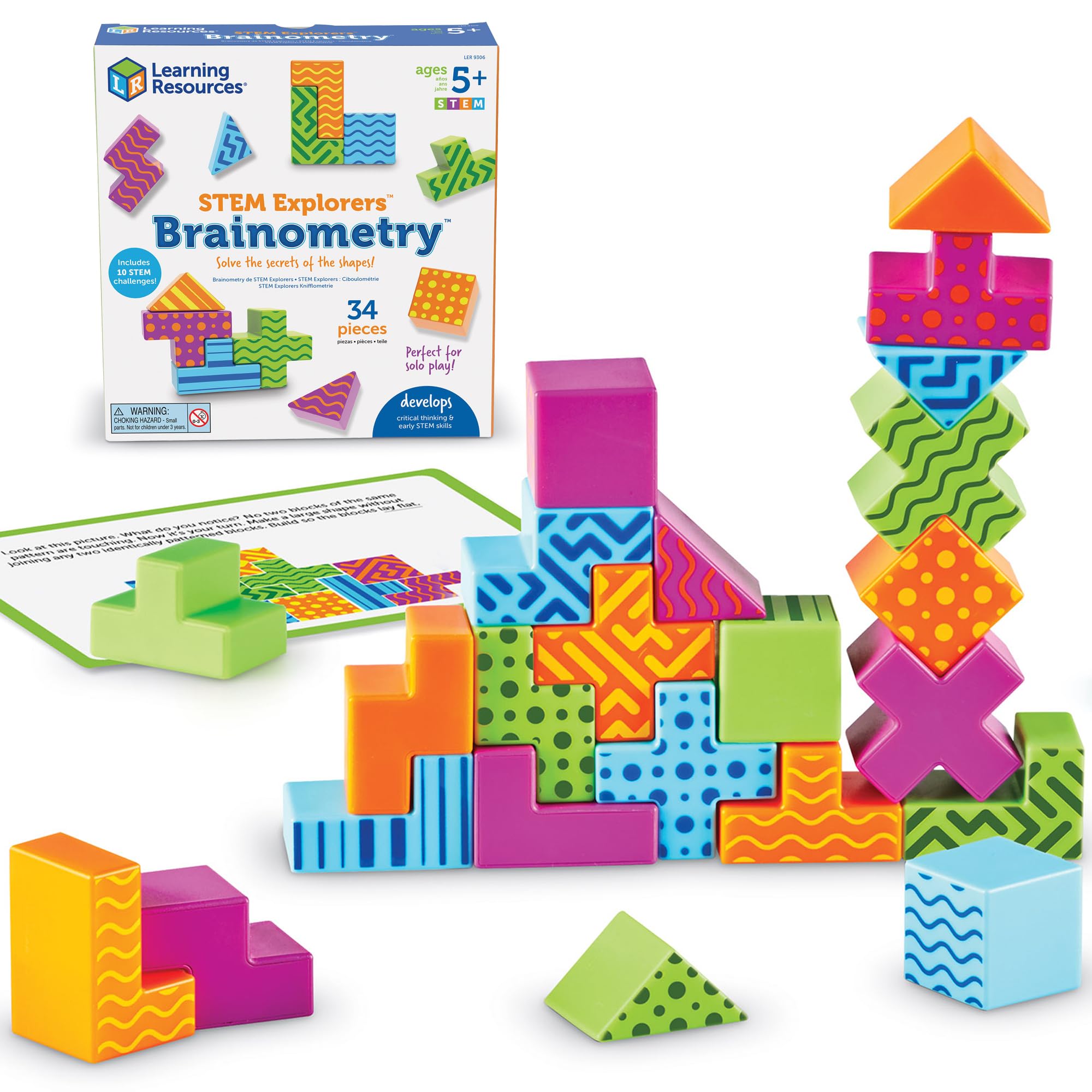
Where the top pick encourages group collaboration, Brainometry channels all the energy into a single child’s critical thinking. The 34 plastic blocks and wipe-clean challenge cards fit on a desk or table, keeping puzzle-solving self-contained. Unlike the pocket-sized Kanoodle set, Brainometry’s chunky shapes are easier to spot and pick up, though the 10 cards deliver fewer total puzzles — each is double-sided for extra mileage.

Kids 5–8 who enjoy pattern and logic tasks get the most from this set. It slides quietly into a classroom STEM center or a solo play session at home. The blocks are smaller than some families anticipate — fine for tabletop use but not suited to children who need larger manipulatives or to multiple kids sharing at once. As long as one child uses it at a time, the size and piece count are workable.

Tip: Keep the set at a dedicated table or desk for one child; younger siblings may find the small blocks frustrating.

Bottom line: A hands-on STEM brain teaser that builds logic skills for solo play — just know the blocks are compact and the set is intended for one child at a time.

#8

SYNARRY Solar System 70

SYNARRY Solar System 70

Space cute puzzle

Doodle Score 9.4/10
Check Price

Worth Noting

  • The tight interlocking can make piece separation tough for small hands, and edges may peel with repeated use.
Age
3+
Theme
Solar system (cute)
Material
Cardboard/wood blend
Piece Count
70
Read the full review

The vivid planet artwork and large, chunky pieces make this a hit for space-loving preschoolers — they can easily identify and place each planet. However, the pieces interlock so snugly that taking the puzzle apart can be a struggle for small fingers, and some edges may show peeling after repeated assembly. That snug fit makes it less forgiving than the other round puzzle in this set, so it suits kids who prefer a tight hold during play.

Tip: Wiggle pieces gently from the center outward to ease disassembly, and store flat to minimize peeling.

Bottom line: Best for a child who loves space and needs a puzzle that stays together during floor play — just know that disassembly may call for adult help.

#9

Super Hero 100 pc

Super Hero 100 pc

Superhero fans

Doodle Score 9.4/10
Check Price

Worth Noting

  • Piece edges may start to peel after several assemblies, reducing long-term durability.
  • Loose piece tolerances can cause false fits that frustrate kids working on the puzzle independently.
Age
5+
Theme
Spider-Man
Material
Cardboard
Piece Count
100
Read the full review

The Spider-Man artwork is vibrant and crisp, instantly grabbing the attention of young superhero fans. For the first few builds, the puzzle provides an engaging screen-free activity with satisfying piece fits. Over time, though, the cardboard edges can start to peel, and loose tolerances allow pieces to click into incorrect spots—a source of frustration for children who expect a precise match. This puzzle is best seen as a short-term treat, not a hand-me-down piece for multiple kids.

Bottom line: Suited for a Spider-Man-loving child who will enjoy the puzzle a handful of times before moving on. Families looking for a puzzle to share across siblings or last for years will find better durability elsewhere.

#10

USA Map Puzzle 70 pc

USA Map Puzzle 70 pc

Guided geography

Doodle Score 9.0/10
Check Price

Worth Noting

  • Chipboard material can bend or peel along edges with regular use
  • Pieces do not interlock, causing the completed map to separate easily unless held in place
Age
4-8
Theme
USA geography
Material
Chipboard
Piece Count
70
Read the full review

The Momo & Nashi map offers a tangible way for kids to learn state names, capitals, and shapes. Its bright, labeled pieces spark conversations during assembly, turning puzzle time into a cooperative geography session. The trade-off is the non-interlocking design — pieces sit flush but slide apart, so an adult needs to keep them aligned. This isn't a solo puzzle; it's a teaching tool that works when a grownup holds the map steady.

Bottom line: This puzzle suits guided geography lessons where an adult keeps the map aligned while kids focus on state shapes and capitals — not a fit for solo puzzling or families looking for a self-supporting jigsaw.

How to Choose

Piece Count: Matching Challenge to Skill

A 2-year-old handles chunky 4- to 12-piece puzzles, while a 6-year-old can manage 60-100 pieces. Jumping ahead too fast leads to frustration, and staying too low causes boredom.

But piece count isn't the whole story. A 48-piece floor puzzle with giant pieces is often easier than a 100-piece with small, confusing cuts. Look at piece size and image complexity, not just the number.

Material: Wood vs. Cardboard and Finish Quality

Wooden puzzles feel substantial and resist chewing, but painted surfaces may chip if your toddler mouths them. Natural unpainted wood avoids that trade-off but sacrifices colorful imagery.

Cardboard puzzles from quality brands use thick, linen-finished stock that resists peeling. Cheap cardboard can delaminate, leaving layers that lift and ruin the picture. For young kids, look for extra-thick, 2mm+ pieces.

Theme: Choosing Interest-Driven Puzzles

A puzzle with a beloved character or favorite animal gets put together again and again. A generic landscape may sit untouched. Let your child's current passion — dinosaurs, unicorns, Minecraft — guide the choice.

Educational themes like maps or planets can double as learning tools, but only if the construction supports repeated use. A non-interlocking map won't hold a child's attention long.

Age Appropriateness: Size and Complexity

Age labels are starting points, not absolutes. Some 4+ puzzles have tiny pieces unsuitable for small hands. Check dimensions and whether pieces are large enough for your child to grasp and rotate.

For toddlers, chunky wooden knobs help. For preschoolers, floor puzzles with large cardboard pieces build confidence. By age 8, standard-sized pieces in 150-200 counts challenge without overwhelming.

Durability and Interlocking: The Hidden Longevity Factor

Interlocking pieces that click and hold flat transform puzzling from a balancing act into an achievable task. Puzzles without interlocking tabs slide apart with the slightest bump, making them hard to complete solo.

Look for puzzles where pieces lock securely, even if they're lifted slightly. This is the biggest predictor of whether a puzzle will be used over and over or abandoned after one attempt.

Frequently Asked Questions