Outdoor Play

10 Best Binoculars for Kids of 2026: Real Optics That Survive Drops

Find kids binoculars that actually work for small hands and steady views, without the shake of adult compacts.

Many binoculars labeled 'for kids' are just standard compacts in bright colors. Slap a 10x or 12x magnification on a small body and call it a day. The problem is that much power makes the image shake like a washing machine when small hands try to hold steady.

The real trick to a first binocular isn't zoom — it's stability. A 6x or 8x binocular with rubber armor gives a kid a clear, still view and survives the inevitable drop. We've sorted through the noise to find the pairs that actually fit young hands and deliver usable optics.

#1

Vortex Bantam HD 6.5x32

Vortex Bantam HD 6.5x32

Young naturalists

Doodle Score 9.4/10
Check Price

Worth Noting

  • Eye relief is tight for eyeglass wearers, potentially causing discomfort during longer sessions
  • Premium price point compared to typical youth binoculars, requiring a higher initial investment
Weight
15.9 oz
Lens Quality
Ease of Focus
Center Focus
Magnification
6.5x
Read the full review

The Vortex Bantam HD 6.5x32 stands apart from the crowd of youth binoculars by offering genuine HD optics and a magnification that balances steadiness with reach. The 6.5x power keeps the image stable in small hands while the 32mm objective gathers ample light for dawn and dusk observations. This is a tool designed for a young naturalist who cares about what they see, not just a toy for casual peeping.

This binocular is best suited for families who treat optics as a long-term investment and have a child aged 8 or older already hooked on birding or hunting. The premium pricing reflects a lifetime warranty and build quality that will outlast several growth spurts. However, the 18.7mm eye relief may cause discomfort for eyeglass wearers, and the premium price tag will feel steep if the binocular is used only occasionally.

The rubber-armored body handles the inevitable drops and bumps of field use, and the center focus knob is smooth enough for small fingers to adjust quickly. The included tripod adapter adds stability for extended observation sessions. For the parent who wants to pass down a quality optic rather than replace a cheap pair every season, the Bantam HD makes a compelling case.

Tip: For eyeglass wearers, try adjusting the eyecups to the lowest setting; some find it usable, while others may prefer contacts for comfort.

Bottom line: For parents willing to invest in a binocular that will serve a serious young naturalist for years, the Vortex Bantam HD delivers professional-grade optics in a youth-friendly package — just budget for the higher upfront cost and check if the eye relief works for any eyeglass wearers in the house.

#2

Kidnoculars 2x

Kidnoculars 2x

Toddlers ages 2-5

Doodle Score 9.2/10
Check Price

Worth Noting

  • For preschoolers expecting to spot distant birds, the 2x magnification barely magnifies
  • Lenses may pop out after repeated drops on hard surfaces, especially in units used by very active toddlers.
Weight
7.1 oz
Lens Quality
Ease of Focus
Fixed Focus
Magnification
2x
Read the full review

The Kidnoculars are purpose-built for toddlers: fixed focus means no fiddling, the breakaway strap adds a layer of safety, and the 2x magnification is deliberately low to prevent the shakiness that frustrates young kids with higher-power optics.

This is a binocular for the preschool set — ages 2 to 5 who want to mimic grown-ups and look at clouds, trees, or backyard objects without needing to adjust anything. The tradeoff is immediate: older children (and parents) will notice the magnification barely brings anything closer. The lenses can also pop out over time if dropped repeatedly, so it’s best treated as a toy rather than a rugged field instrument.

Tip: Check the lens fit occasionally and avoid hard drops to reduce the chance of lenses popping out.

Bottom line: If your child is under 5 and you want a worry-free first binocular, this is the ideal choice. Just know it’s a toy, not a tool for real birdwatching.

#3

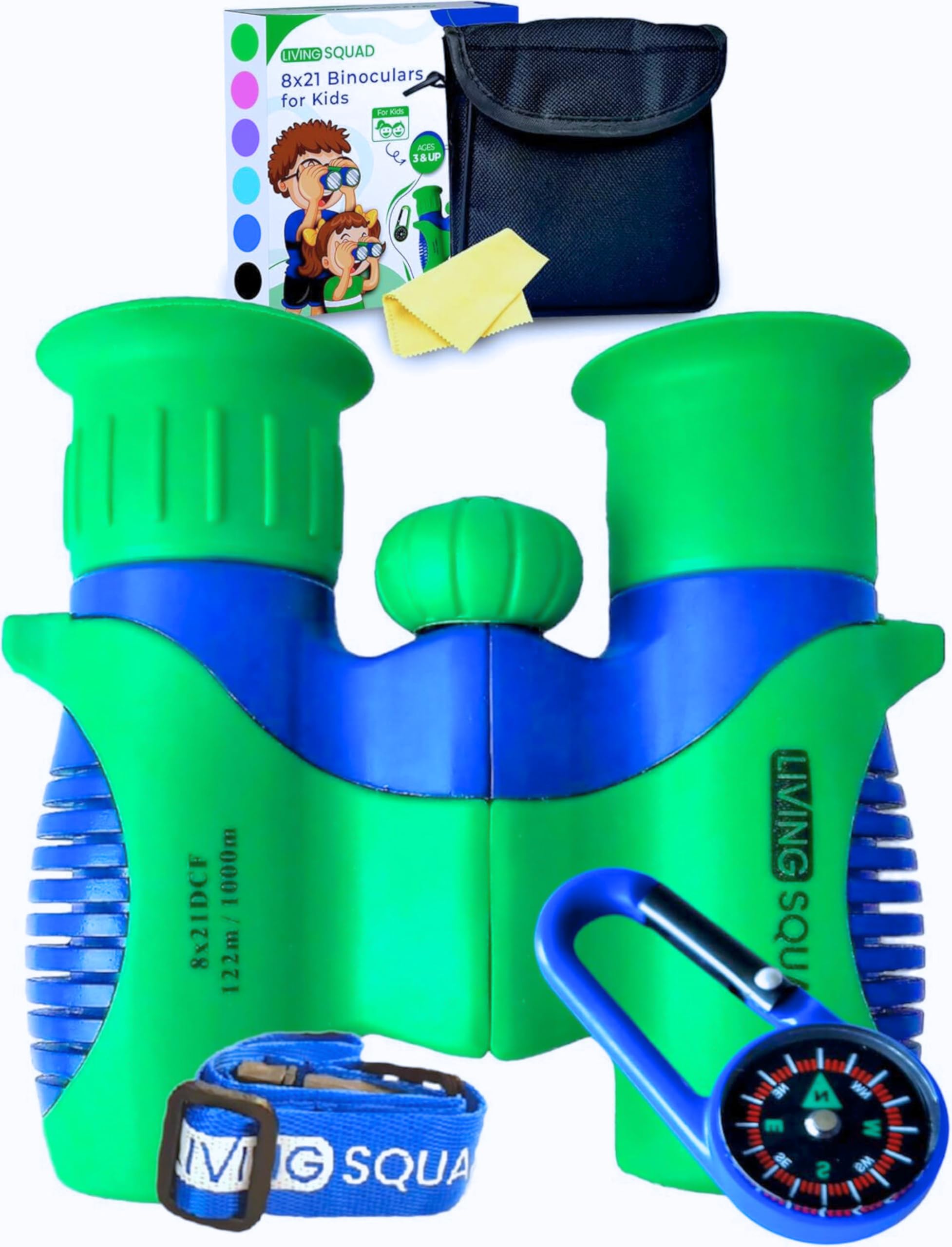
Living Squad 8x21

Living Squad 8x21

Adventurer play kits

Doodle Score 9.2/10
Check Price

Worth Noting

  • Eyepiece can detach after a drop, requiring occasional reattachment.
Weight
7.5 oz
Lens Quality
Roof
Ease of Focus
Manual
Magnification
8x
Read the full review

The Living Squad 8x21 stands apart with its included compass and carabiner, turning binocular use into an adventure tool. Optics are clear enough for daytime exploration, and the 8x magnification suits young hands well.

This kit is best for kids ages 4 to 10 who want real binoculars with extra play features, and for gift givers wanting a complete package. However, occasional eyepiece detachment after drops has been noted — it's less tank-like than the top pick (OBUBY) and better suited with supervision or careful handling. The 21mm objective also limits low-light use, so plan for sunny outings.

The rubberized body provides grip during active play, and the included case, neck strap, and carabiner add convenience. For the price, it's a feature-rich kit that encourages outdoor curiosity without demanding a big investment.

Tip: Before each adventure, give the eyepiece a gentle twist to ensure it's secure — a quick habit that prevents surprises.

Bottom line: For families wanting a feature-rich entry-level binocular that encourages outdoor play, the Living Squad delivers a solid package at a budget price — just keep an eye on the eyepiece after rough drops.

#4

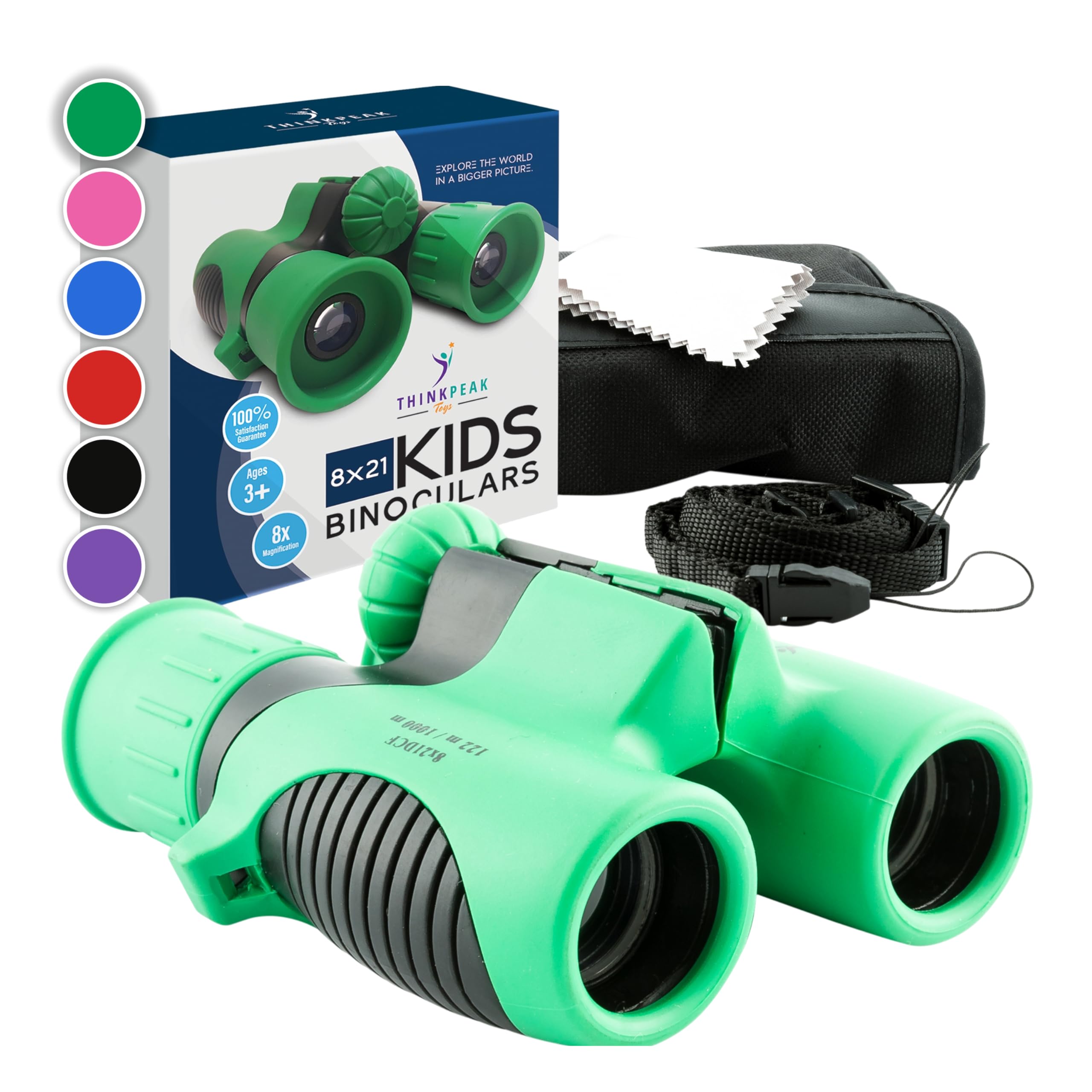
Think Peak 8x21

Think Peak 8x21

Mid-range performer

Doodle Score 9.2/10
Check Price

Worth Noting

  • Eyepiece may separate after hard impacts
Weight
8.8 oz
Lens Quality
BAK-4
Ease of Focus
Center Focus
Magnification
8x
Read the full review

Think Peak pairs 8x magnification with BAK-4 prisms at a moderate price, delivering clear daytime views for young explorers. The rubber-armored body provides a solid grip, though the leading youth binocular in this category has a slightly better record with heavy drops.

This binocular fits kids ages 5 to 12 who need a real tool without adult-sized heft (8.8 oz) or complex adjustments. The 21mm objective lens means low-light performance is limited — best kept for sunny hikes and backyard birding.

The center focus knob turns smoothly, and the textured grip gives small hands confidence during active use. Some units have shown eyepiece separation after significant impact, so packing in a padded case during transport is wise. Overall, the optics hold up well for the price.

Tip: Store in a padded case when not in use to protect the eyepieces during tumbles.

Bottom line: A capable mid-range option for parents who want real 8x optics without the premium price, best suited for daytime outdoor use.

#5

Hontry 10x25

Hontry 10x25

Family budget use

Doodle Score 9.2/10
Check Price

Worth Noting

  • Non-rubberized eyecups may feel hard against the face during extended use
  • 10x magnification is difficult for children under 10 to hold steady
Weight
9.6 oz
Lens Quality
Porro
Ease of Focus
Center Focus
Magnification
10x
Read the full review

The Hontry 10x25 offers clear, bright optics and a lightweight body that makes it easy to carry to ball games or the theater. Adults and older kids (10+) will find the center focus smooth and the 10x magnification rewarding for distant subjects. However, for children under 10, holding the 10x steady is a challenge — the shakiness reduces the viewing experience. The non-rubberized eyecups can also feel hard against the face after extended use. These limitations keep it from being a dedicated youth binocular, but as a budget family option where adults handle most of the viewing, it delivers strong value.

Bottom line: Best suited for families with older kids (10+) and adults who want a compact binocular for daytime sports or concerts, where the 10x reach is an asset and shakiness isn't a concern.

#6

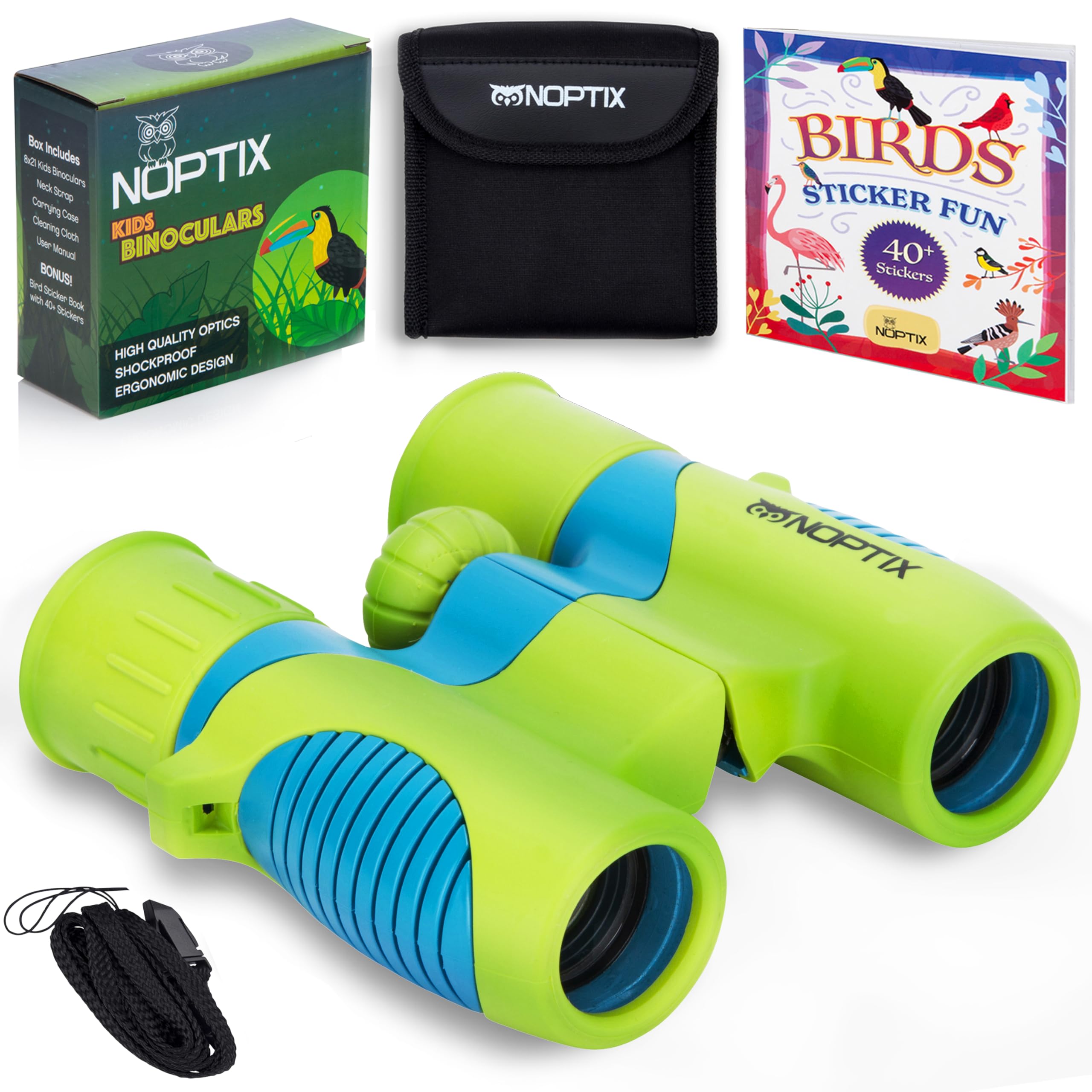
Noptix Real Kids 8x21

Noptix Real Kids 8x21

Bird watching kit

Doodle Score 9.2/10
Check Price

Worth Noting

  • Lenses can pop out with rough handling
  • Smaller than some buyers expect, though the size is appropriate for its target age group
Weight
9.2 oz
Lens Quality
Ease of Focus
Center Focus
Magnification
8x
Read the full review

The Noptix Real Kids 8x21 binocular has a rugged body that feels like a proper optical tool, not a flimsy toy. Young children can easily turn the center focus wheel and hold the compact frame steady. The included sticker book with 40 North American bird species turns backyard birding into a guided activity, motivating kids to look for specific birds. However, the lenses can pop out under rough handling, and the binocular is smaller than some adults expect — the size suits ages 4-8, but it is not built for drops or rough play. For a more durable alternative, the top pick in this roundup offers better impact resistance at a similar price.

Tip: The lens pop-out risk makes it ideal for seated, tabletop bird watching rather than hiking or playground use.

Bottom line: Best for families who want a complete birding kit for a young child and can supervise usage to avoid rough drops.

#7

OBUBY 8x21

OBUBY 8x21

Outdoor explorers

Doodle Score 9.0/10
Check Price

Worth Noting

  • Focus wheel can feel stiff on some units
  • 21mm objective limits brightness in low light; best for daytime viewing
Weight
7.5 oz
Lens Quality
BAK-4
Ease of Focus
Center Focus
Magnification
8x
Read the full review

The OBUBY 8x21 uses a rubber-armored body and center-focus wheel that survive drops from little hands. The 8x magnification is appropriate for kids — enough reach to spot birds but not so high that shakiness ruins the view. The 21mm objective keeps the binocular compact at 7.5 oz, ideal for small hands to hold steady.

Most units focus smoothly, but occasional stiffness in the focus wheel has been noted. This is a usability quirk rather than a breakage issue, and it often improves with use. The overall construction holds up well to the rough-and-tumble handling typical of outdoor play.

This binocular works best for children ages 4 to 12 who need a tough, simple optic for daytime use. The 21mm objective lens gathers less light than larger glasses, so views dim noticeably at dusk or in deep shade. For a summer-camp bird walk or backyard exploration in good light, it does the job well. Parents on a budget will appreciate that a replacement won't break the bank.

Tip: If the focus wheel feels stiff initially, working it back and forth a few times often loosens it.

Bottom line: If your child needs a binocular that can take a beating and won't cause frustration with shaky high magnification, this budget-friendly option delivers where it counts.

#8

ARTOMIDE 5x30

ARTOMIDE 5x30

Youngest users

Doodle Score 9.0/10
Check Price

Worth Noting

  • Image sharpness drops noticeably at the edges of the field.
  • Eyepieces can detach on some units during handling.
Weight
5.3 oz
Lens Quality
Roof
Ease of Focus
Center Focus
Magnification
5x
Read the full review

The ARTOMIDE 5x30 is built around its ultra-low magnification, which makes it one of the few binoculars a toddler can actually hold steady without image shake. The light weight (5.29 oz) and cute folding design appeal to young kids, and the price is easy on a parent’s wallet. That said, the tradeoff for the toddler-friendly specs is noticeable blur at the edges of the field, and a small number of units have eyepieces that can pop off during use. These are not binoculars for older kids who want sharp detail or for low-light conditions — they are purely for preschoolers exploring the backyard in good daylight.

Tip: Before handing them to a child, give each eyepiece a gentle twist to make sure it is snug — this can help prevent pop-offs.

Bottom line: These binoculars work best for toddlers (ages 3-6) who need a cheap, lightweight, low-magnification tool for casual outdoor play — not for kids who expect crisp, edge-to-edge clarity.

#9

LET'S GO! 4x30

LET'S GO! 4x30

Preschoolers 3-5

Doodle Score 9.0/10
Check Price

Worth Noting

  • For older kids seeking magnification, the 4x zoom will not deliver any real optical reach.
  • Rough handling by toddlers may cause plastic components to give way.
Weight
6.2 oz
Lens Quality
Roof
Ease of Focus
Manual
Magnification
4x
Read the full review

The included bird-watching manual and lightweight design make this an engaging first binocular for toddlers. The 4x magnification offers minimal zoom, so older kids expecting real magnification will be disappointed. Plastic construction has been noted to be fragile under rough handling, limiting its lifespan in active play.

Bottom line: This binocular works best as a no-regret starter for preschoolers who need a lightweight introduction to looking through lenses, with the bird manual adding educational value — but expect toy-level durability and no real zoom.

#10

FLYANT 200x25

FLYANT 200x25

Budget adults

Doodle Score 8.4/10
Check Price

Worth Noting

  • Focusing at close distances requires patience and steady hands
  • The 200x magnification claim is misleading; actual magnification is roughly 12x, which is too shaky for children and overpromises for adults.
Weight
6.4 oz
Lens Quality
Porro
Ease of Focus
Center Focus
Magnification
12x
Read the full review

The FLYANT 200x25 is a small, lightweight binocular that slips into a pocket without adding bulk. However, the advertised 200x magnification is grossly inflated; real-world use puts it around 12x, which introduces shakiness for younger users. Focusing at close distances can be finicky, requiring careful adjustment. This model is best left to budget-conscious adults who understand the true magnification and don't need a kid-friendly design — the false marketing and high shake make it inappropriate for children.

Bottom line: Fits budget-minded adults who want a compact daytime optic and can overlook exaggerated marketing — not for kids or anyone expecting true 200x reach.

How to Choose

Magnification: Start with 6x to 8x

Higher magnification makes every hand tremor more visible. A 10x or 12x binocular turns a child's natural unsteadiness into a blurry, bouncy image that leads to frustration and headaches.

An 8x binocular offers a wide field of view and a steady image that a young user can actually enjoy. For first-timers, 6x is even easier to hold still while still providing enough reach for birdwatching or exploring.

Weight and Size: Light and Small Grip

A heavy binocular tires a child's arms quickly, so weight under 10 ounces is ideal. The grip diameter matters too: adult compacts are often too thick for small hands to wrap around comfortably.

Look for models with a narrow center hinge or a body designed for smaller palms. Many youth-specific bins shave off weight by using lighter plastics, but that can trade off durability — rubber armor helps balance the two.

Ease of Focus: Center Knob vs Fixed

Center-focus knobs are intuitive — turn the dial until the image is sharp. But some knobs are stiff, making it hard for a child to adjust quickly. Test the tension before buying if possible.

Fixed-focus binoculars (like the Kidnoculars) require no adjustment, which is great for toddlers but limits usefulness. For kids 5 and up, a smooth center knob with a large grip is the sweet spot between simplicity and control.

Lens Quality: BAK-4 and Coatings

BAK-4 prisms deliver brighter, sharper images than BK-7 prisms, especially at the edges. Fully multi-coated lenses reduce glare and improve light transmission, making a big difference in overcast or shaded conditions.

Cheap lenses often suffer from chromatic aberration (color fringing) and poor edge sharpness. While expensive coatings aren't necessary for a first pair, a binocular with BAK-4 and at least one coating layer will outperform a bare plastic lens dramatically.

Frequently Asked Questions