Outdoor Play

12 Best Electric Scooter for Kids 2026: Reliable Models That Last

Find the best electric scooter for kids that actually lasts. This guide helps parents avoid exaggerated specs and find reliable models for ages 4-14.

Shopping for a kid's electric scooter often means wading through exaggerated claims about speed and battery life. Many parents report that budget models stop working after a few months, leaving a broken toy and a frustrated child. It's a frustrating experience that could be avoided with the right choice.

That doesn't mean you have to spend a fortune to get something reliable. The key is knowing which features actually matter – like a safe maximum speed, a foot sensor start, and a battery that holds a charge longer than a few rides. These details separate a good investment from a disappointment. A scooter that's easy to assemble and maintain saves you time and frustration down the road.

This guide highlights the scooters that deliver on their promises. You'll find picks for every age and budget, from ultra-safe first scooters to sturdy teen rides that can handle daily use. No hype, just honest advice on what works. Whether you're buying a first scooter for a 5-year-old or a faster model for a teen, this guide has you covered.

#1

Gyroor KS2

Gyroor KS2

Young beginners

Doodle Score 9.0/10
Check Price

Worth Noting

  • Low top speed (5 mph) may bore older kids after a few months
Range
Age Range
6-8 years
Max Speed
5 mph
Weight Capacity
121 lbs
Read the full review

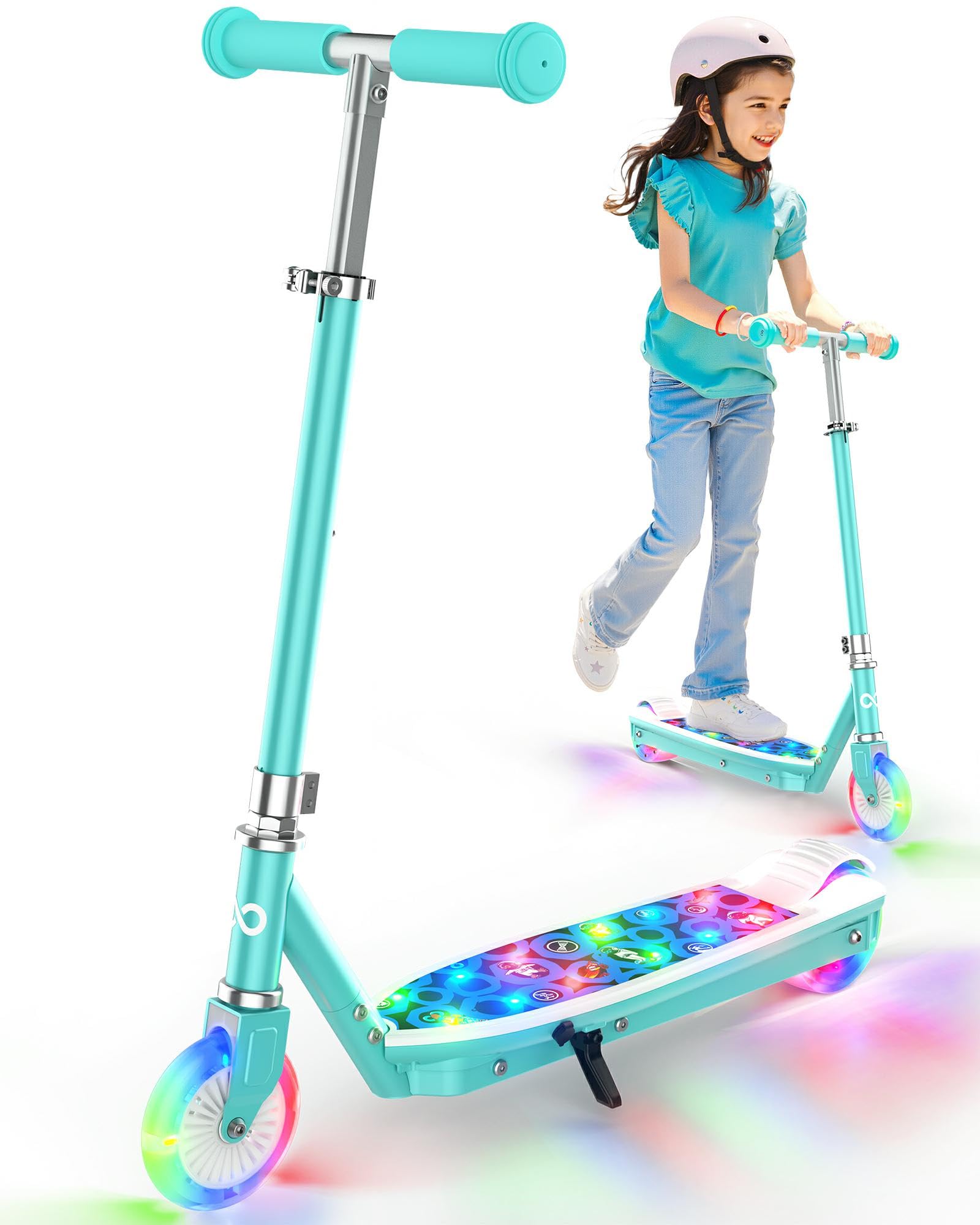
The Gyroor KS2's foot-activated start eliminates accidental throttle engagement, a common concern for young riders. Combined with a 5 mph top speed, sturdy 4-inch wheels, and colorful lights, this scooter makes learning intuitive and fun. Battery life is generous enough for neighborhood sessions, and the build handles typical bumps without issue.

This scooter is designed for children ages 6–8 who are taking their first ride. Safety-focused parents will appreciate the controlled speed and simple operation. The 5 mph limit means older or more adventurous kids may outgrow it quickly, so it's best reserved for the early learning phase.

Tip: Best suited for ages 6–8; if your child is older or more adventurous, consider a model with adjustable speed.

Bottom line: For a child's first electric scooter, the Gyroor KS2 offers unmatched peace of mind with no reliability concerns and a safe learning pace.
#2

FanttikRide C9 Pro

FanttikRide C9 Pro

Ages 8-12 progression

Doodle Score 9.0/10
Check Price

Worth Noting

  • Occasional motor error codes may interrupt rides, though typically resolvable.
  • Battery range can drop below the advertised 5 miles after months of use.
Range
5 mi
Age Range
8-12 years
Max Speed
5/8/10 mph
Weight Capacity
132 lbs
Read the full review

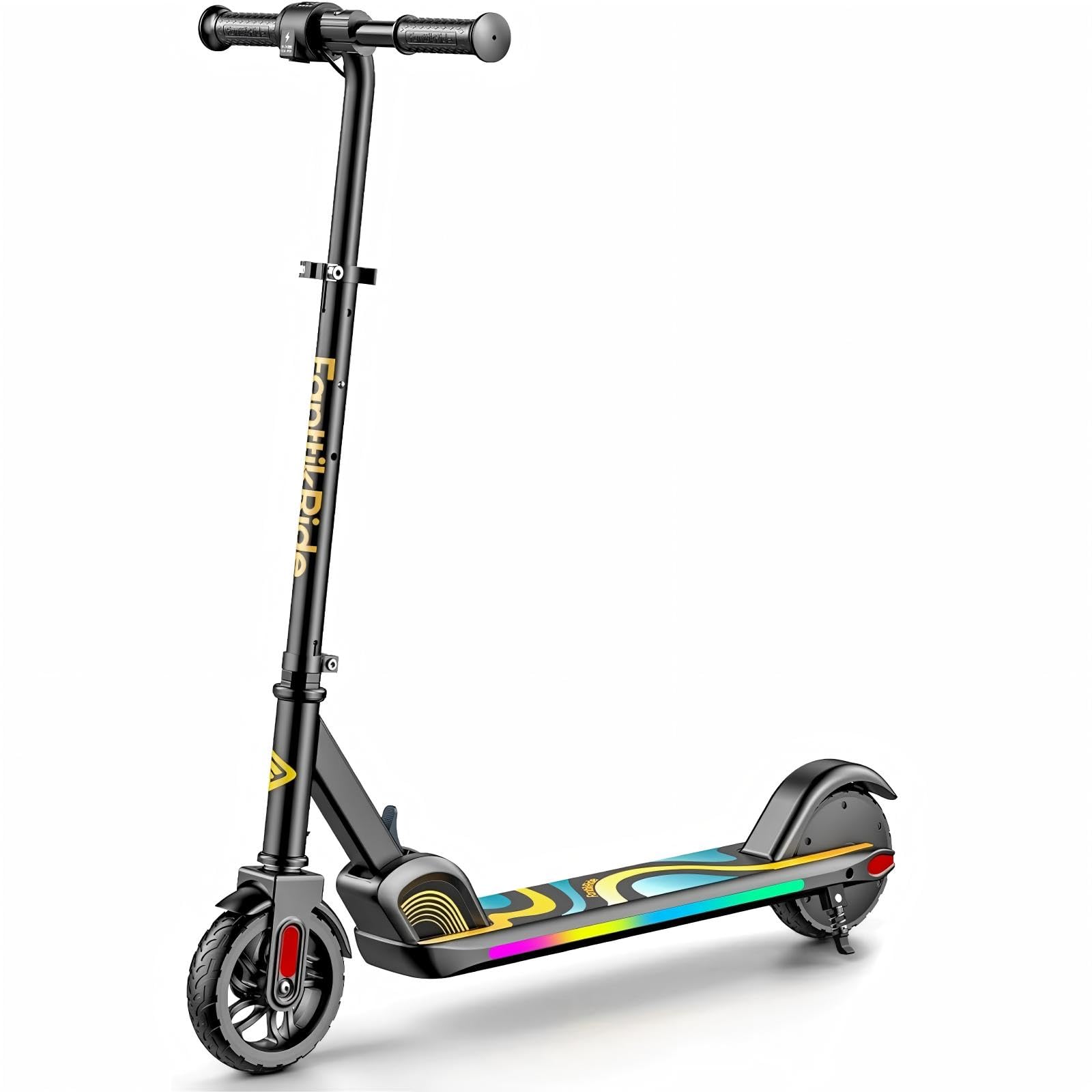
The FanttikRide C9 Pro offers three speed settings (5/8/10 mph) so kids can progress at their own pace, plus LED lights and a clear display that young riders enjoy. Assembly is straightforward and the build feels sturdy for the price. This scooter fits families who want adjustable speed progression without upgrading to a premium model, though battery life may shorten after a few months. For a simpler, safer first scooter, the top pick uses a foot-sensor start and has more consistent battery performance.

Tip: Avoid completely draining the battery before recharging to help maintain its capacity over time.

Bottom line: A practical mid-range pick for families who want adjustable speeds and kid appeal, provided daily riding distances are modest.

#3

WEELMOTION S31

WEELMOTION S31

Early adopters

Doodle Score 9.0/10
Check Price

Worth Noting

  • For daily heavy riding, durability over a full season has not been demonstrated.
Range
5 mi
Age Range
Max Speed
6-10 mph
Weight Capacity
175 lbs
Read the full review

The WEELMOTION S31 distinguishes itself with a sturdy aluminum build and battery performance that holds up well on short rides. It edges out the adjustable-speed competitor in overall construction quality, but the scooter is still building its usage history. This model suits parents who value material quality and are comfortable with a less-established track record.

Bottom line: A well-constructed scooter for parents who value build quality over an established reputation.

#4

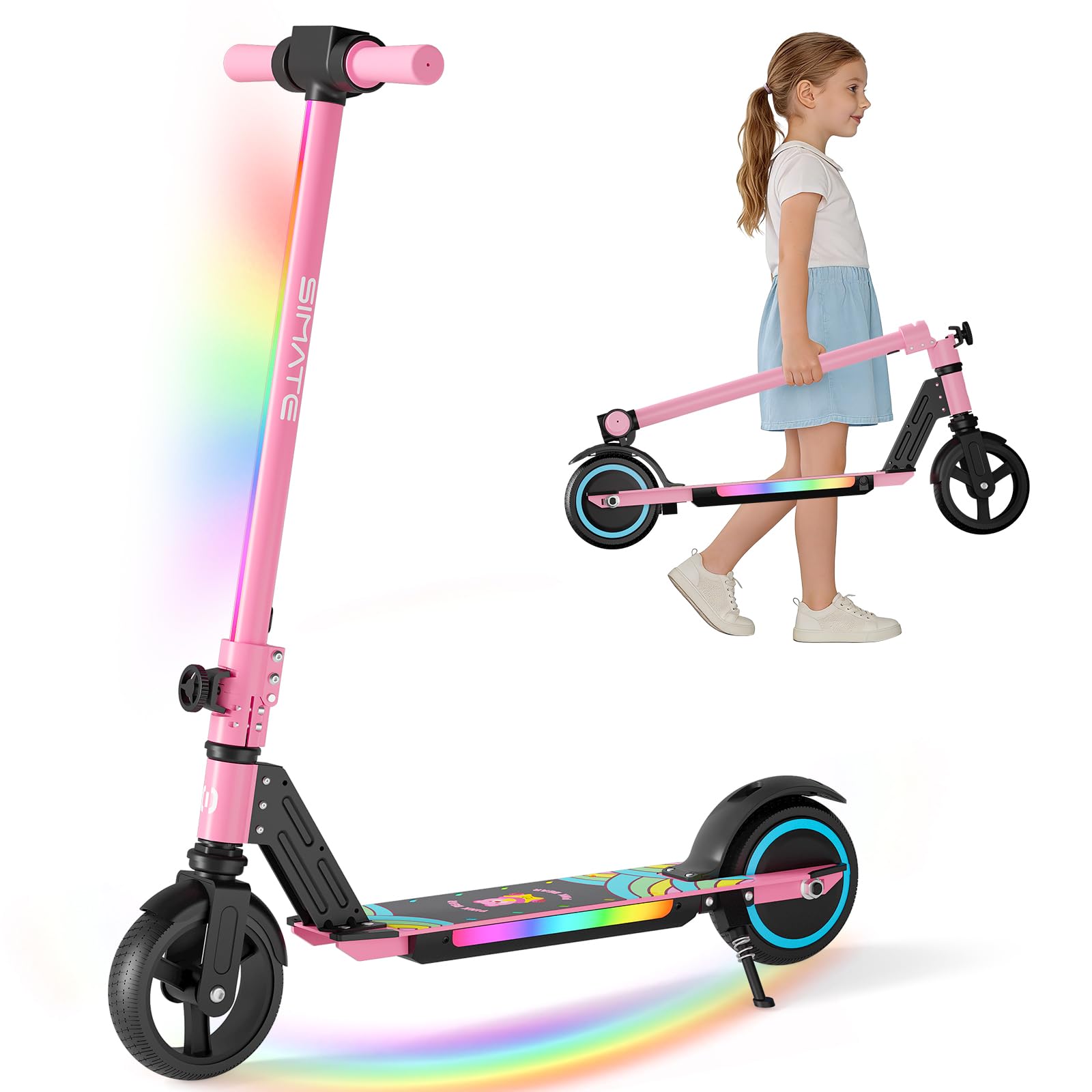
SIMATE S5

SIMATE S5

Sleek foldable option

Doodle Score 9.0/10
Check Price

Worth Noting

  • Some chargers may stop working early on.
Range
5 mi
Age Range
6-14 years
Max Speed
8.7 mph
Weight Capacity
154 lbs
Read the full review

The SIMATE S5 is easy to tote and store thanks to its foldable frame, and kids enjoy the colorful display. However, early battery and charger issues have been noted, and there aren't enough owner reports to confirm long-term durability for daily use.

Bottom line: Worth considering if portability and visual appeal matter more than a proven battery track record.

#5

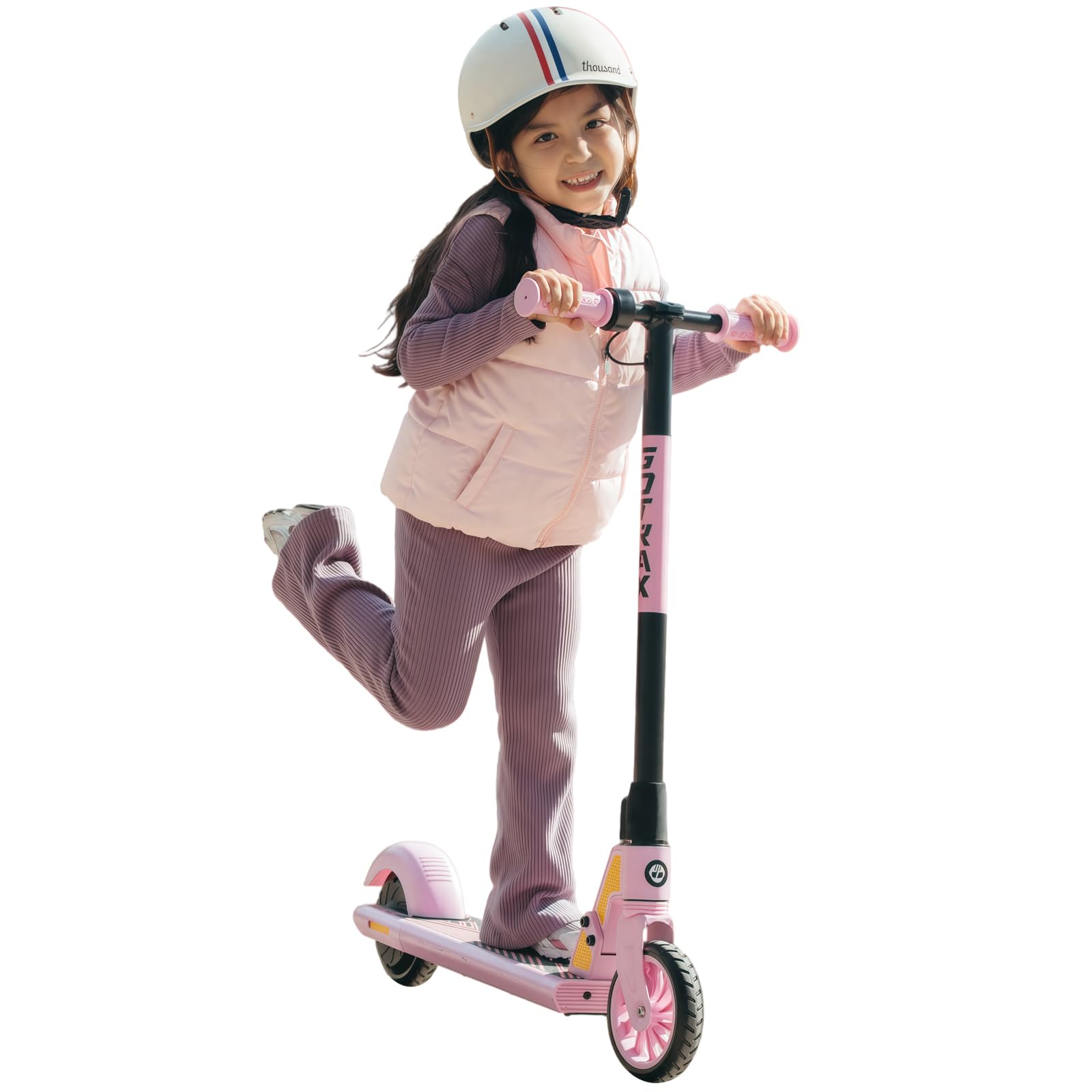
Gotrax GKS Mini

Gotrax GKS Mini

Budget first scooter

Doodle Score 8.8/10
Check Price

Worth Noting

  • Battery can lose capacity over time
  • Scooter may stop working with heavier use; better suited for light, supervised play
Range
3.75 mi
Age Range
6-12 years
Max Speed
7.5 mph
Weight Capacity
120 lbs
Read the full review

The GKS Mini is easy to assemble and intuitive for kids learning to ride. Its 7.5 mph top speed and 3.75-mile range suit short neighborhood rides, but unlike the Gyroor KS2's worry-free reliability, this model has battery and power issues that may surface after a few months. It works best for budget-conscious parents of 6-8 year olds who will use it gently on weekends — not for daily commuting or rough play.

Tip: Charge fully before first use and store indoors to prolong battery life.

Bottom line: A capable first scooter if used lightly and occasionally — expect to replace sooner than more robust options.

#6

Razor E200

Razor E200

Teens 13+

Doodle Score 8.8/10
Check Price

Worth Noting

  • Battery capacity can shorten noticeably within months, reducing ride time below 40 minutes.
  • Chain may loosen or detach over time, requiring regular adjustment.
Range
8 mi
Age Range
13+ years
Max Speed
12 mph
Weight Capacity
154 lbs
Read the full review

The Razor E200's welded steel frame and 12 mph top speed make it a genuine step up for teens ready to move past kid-focused scooters. The 8-inch wheels and 154-pound weight limit accommodate older riders, and the hand brake offers controlled stops. However, the sealed lead-acid battery can lose capacity within months of regular use, and the chain may need occasional tightening or replacement.

Tip: Keep a chain tool in your garage and plan on swapping the lead-acid battery every 12-18 months for consistent ride times.

Bottom line: Best suited for teens 13 and up who want a sturdy, faster scooter and are willing to perform occasional maintenance and budget for a battery replacement down the road.

#7

Segway C2 Lite

Segway C2 Lite

Brand-conscious buyers

Doodle Score 8.8/10
Check Price

Worth Noting

  • Battery life may fall short of the advertised 8.7-mile range during active use
Range
8.7 mi
Age Range
6-10 years
Max Speed
9.9 mph
Weight Capacity
110 lbs
Read the full review

The Segway C2 Lite carries UL2272 certification and three speed modes for beginners, a reassuring choice for brand-conscious parents. Battery life can be shorter than the 8.7-mile claim, and some units may not function after a month, so it's best for light, occasional use.

Bottom line: For parents who prioritize safety certifications over extended range, this scooter suits occasional short trips.

#8

Razor Pocket Mod Petite

Razor Pocket Mod Petite

Novelty design

Doodle Score 8.8/10
Check Price

Worth Noting

  • Battery may stop holding charge after limited use.
Range
40 min
Age Range
7+ years
Max Speed
8 mph
Weight Capacity
110 lbs
Read the full review

This ride-on turns heads with its retro moped design and padded seat, making it a hit for kids who want something unique. The 8 mph speed and 110 lb weight limit suit younger riders, though assembly can be frustrating and battery life may fade sooner than expected.

Bottom line: Best for a child who will use it occasionally for short rides around the driveway, rather than daily neighborhood trips.

#9

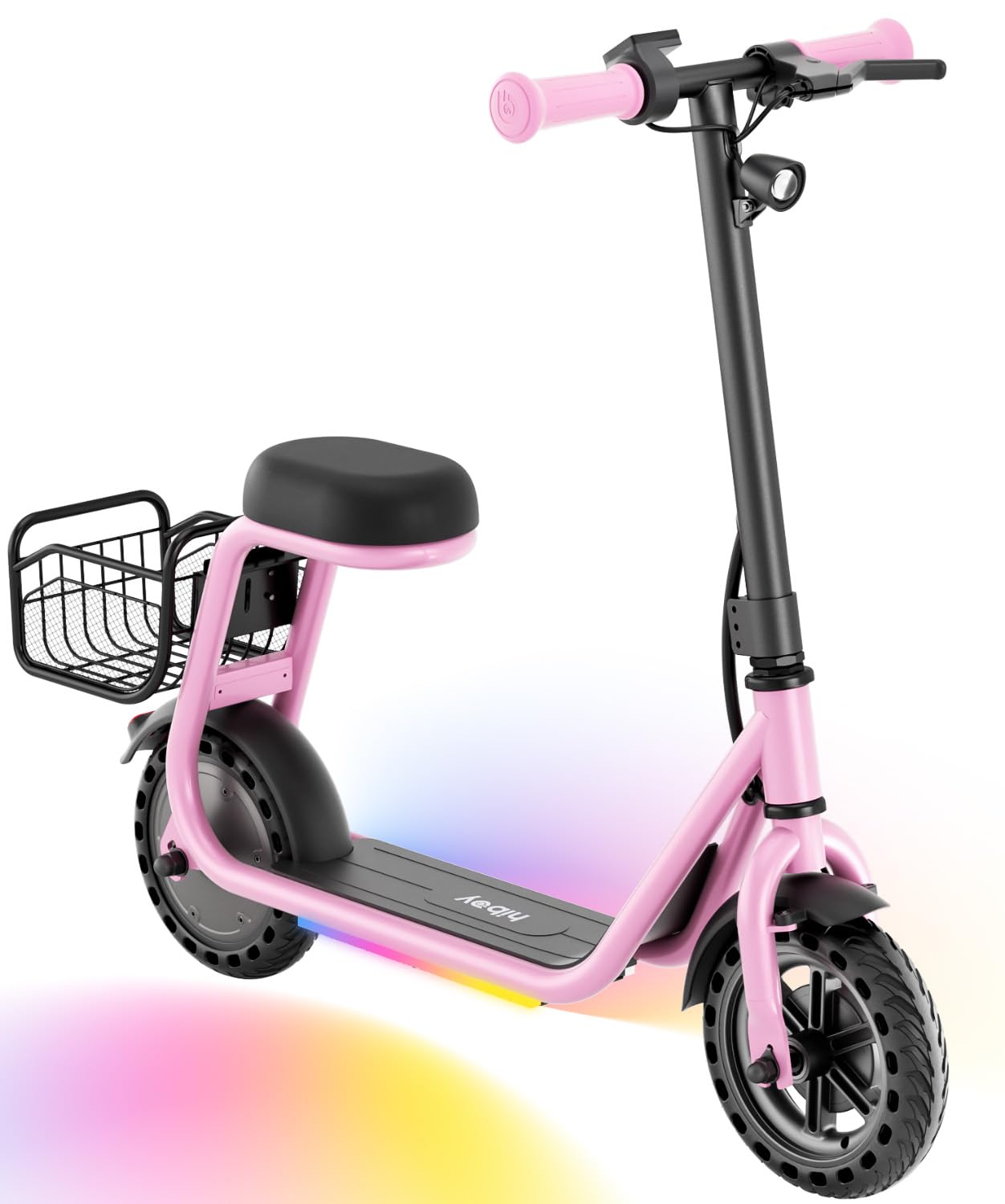
Hiboy Q2 Lite

Hiboy Q2 Lite

Seated young kids

Doodle Score 8.6/10
Check Price

Worth Noting

  • At 25.8 pounds, the scooter is too heavy for a child to lift
  • Battery range (5 miles) can be shorter when used at higher speeds or by heavier riders.
Range
5 mi
Age Range
4-10 years
Max Speed
4/6/9.3 mph
Weight Capacity
110 lbs
Read the full review

The Hiboy Q2 Lite stands out with a padded seat and three speed modes (4, 6, or 9.3 mph) on a stable, well-built frame – a rare fit for the youngest riders. The speed settings and 8.5-inch wheels give new riders a controlled introduction to electric scooting.

This is best for children ages 4-7 who enjoy sitting while riding and for parents who prioritize comfort over portability. The scooter’s 25.8-pound weight means a parent will carry it, and the 5-mile battery range is suited to shorter, gentler outings rather than extended trips or heavier riders.

Tip: Stick to flat, smooth surfaces and gentle throttle use to get the most out of the battery range.

Bottom line: If you have a 4-7 year old who wants a seated ride and you’re fine carrying the scooter yourself, this is a focused, comfortable option that prioritizes stability over portability.

#10

LINGTENG E8

LINGTENG E8

Ultra-budget starter

Doodle Score 8.6/10
Check Price

Worth Noting

  • Fasteners may loosen, affecting handlebar stability over time
  • Charger can fail after several weeks; battery life is inconsistent
Range
10 mi (claimed)
Age Range
6-10 years
Max Speed
4/6 mph
Weight Capacity
110 lbs
Read the full review

Under $70, the LINGTENG E8 is one of the most affordable ways to introduce a child to electric scooters. Its low speed settings and simple controls make it very easy for kids ages 6–8 to pick up, and the built-in lights add a fun element during short neighborhood rides. However, where the budget price shows is in build quality — screws can loosen over time, and the handlebar assembly may become unstable with regular use. Battery life also varies, and the charger can stop working after a few weeks. This scooter works best for occasional, gentle use on smooth pavement, not for daily adventures or older, heavier riders.

Tip: Check and tighten all screws before each ride; keep the charger plugged in overnight to gauge actual range.

Bottom line: If you need the lowest entry price and your child is a gentle, occasional rider under 8, the LINGTENG E8 will work — just expect to tighten screws and possibly replace the charger within a few months.

#11

Gyroor H30 Max

Gyroor H30 Max

Feature-rich alternative

Doodle Score 8.6/10
Check Price

Worth Noting

  • Electronics may stop functioning after short use in some units
Range
10 mi
Age Range
8-12 years
Max Speed
6/8/10 mph
Weight Capacity
132 lbs
Read the full review

The Gyroor H30 Max delivers the fun kids want most – a Bluetooth speaker, bright LED lights, and three speed settings (up to 10 mph) – all at a reasonable cost. That’s a strong mix for neighborhood cruising. The tradeoff is reliability: some units may develop motor or electrical issues early on, so it’s less consistent than the top pick (Gyroor KS2) for parents who prioritize long-term dependability over entertainment features.

Bottom line: Best for kids who prioritize lights and music over long-term consistency, and for moderate neighborhood use rather than daily commuting.

#12

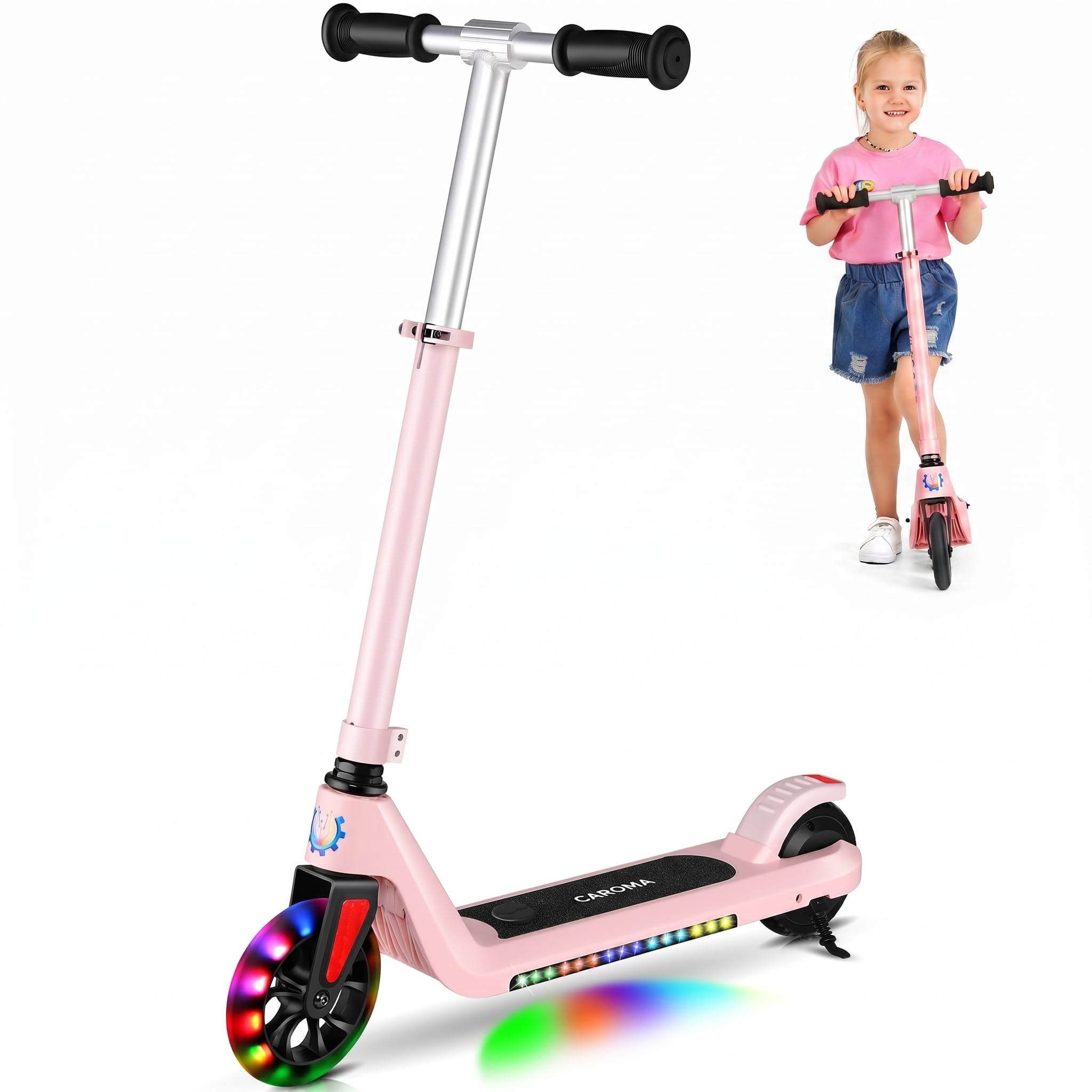
Caroma E32

Caroma E32

Budget contender

Doodle Score 8.6/10
Check Price

Worth Noting

  • Some units may arrive non-functional, requiring replacement.
Range
6 mi
Age Range
6-14 years
Max Speed
4/8 mph
Weight Capacity
132 lbs
Read the full review

This scooter assembles quickly and offers two speed modes suitable for kids ages 6-8. The 8 mph max is adequate for gentle neighborhood rides, but the misleading 15 mph claim and possible out-of-box issues limit its appeal to buyers who accept these boundaries.

Bottom line: A budget pick for buyers who accept the 8 mph cap and are willing to check for functionality upon arrival.

How to Choose

Choose the Right Top Speed for Your Child's Age and Confidence

Higher top speed requires more stopping distance and can make a young rider panic. A 5 mph limit is ideal for ages 6-8 because it lets them focus on balance rather than controlling speed. Scooters with adjustable speed modes let you lock in a safe pace and increase it as skills grow.

Scooters that start at 10 mph often have a jerky throttle response that can throw a beginner off balance. Look for a kick-to-start feature that prevents accidental acceleration. The trade-off is that slower scooters may bore older kids quickly, so consider your child's riding experience before choosing.

Battery Life: What Advertised Miles Really Mean

Advertised range is measured on flat roads at low speed with a light rider. In real use, kids accelerate, ride on grass, and go up gentle slopes – all of which drain the battery faster. Expect the actual range to be 40-60% of what the box claims, especially after a few months of use.

Battery chemistry matters: most budget scooters use lithium-ion cells that degrade with each charge. Frequent full discharges shorten lifespan. For daily riding, look for a model with at least 5 miles of real-world range so the scooter doesn't die mid-playdate. A removable battery makes replacement easier.

Weight Capacity and Frame Durability

Exceeding the weight limit strains the motor and battery, causing slower speed and faster wear. It can also warp the frame or loosen joints. A higher weight limit usually means a sturdier frame, but the scooter itself will be heavier and harder for a child to carry.

For a 6-year-old, a 110-120 lb limit is fine. Teens need at least 150 lbs to handle daily wear. Check the deck material – aluminum is lighter and rust-resistant, while steel is stronger but adds weight. A foldable frame helps with storage but can develop hinge looseness over time.

Age Recommendations and Adjustable Features

Age ranges are rough guidelines. A 7-year-old may outgrow a 6-10 scooter within a year, while an adventurous 6-year-old might be ready for an 8+ model. Adjustable speed modes let you match the scooter to your child's growth, extending its usable life.

Kick-to-start (no throttle until the scooter is moving) is safer for beginners than a thumb throttle. Some scooters also have a foot brake vs. hand brake – foot brakes are intuitive for young kids but less effective at higher speeds. Look for a design that matches your child's coordination.

Why UL2272 Certification Matters

UL2272 is a safety standard that tests the scooter's electrical system for fire and shock hazards. Models without it may use cheaper batteries and chargers that can overheat or fail. Certification adds to the cost, but it's a worthwhile investment for peace of mind.

Even certified scooters require proper charging habits – never leave a battery charging overnight or in extreme temperatures. A UL2272 label means the maker has invested in safety testing, which often correlates with better overall quality control. However, certification alone doesn't guarantee durability.

Frequently Asked Questions