Outdoor Play

6 Best Kids Bike of 2026: The Ones That Teach Balance Safely

Which kids bikes actually teach balance and avoid safety defects? This guide highlights the best balance bikes for toddlers and which pedal bikes to skip.

Shopping for a kids bike can feel like a gamble. Many popular models from well-known brands arrive with loose pedals, non-functional brakes, or bent frames. Parents end up spending more time fixing than riding. But even high-rated bikes often hide critical safety defects that only become apparent after purchase.

That is why this guide shifts focus to balance bikes. These no-pedal bikes teach balance naturally, and the market is remarkably free of the quality problems that plague pedal bikes. The right balance bike will last through multiple children and set your toddler up for an easy transition to a pedal bike later. We highlight the trade-offs between ultra-stable 4-wheel designs for the youngest riders and versatile 2-wheel models that span years.

#1

Strider 12" Sport Balance Bike
Strider 12" Sport Balance Bike

Ages 1-4

Doodle Score 9.6/10
Check Price

Worth Noting

  • Higher upfront cost than basic balance bikes
  • No footrest or hand brake, so children who want to coast with feet up or need a brake will need a pedal bike later.
Weight
6.7 lbs
Frame Material
Alloy Steel
Wheel Size & Adjustability
12 in, seat 11-17 in
Read the full review

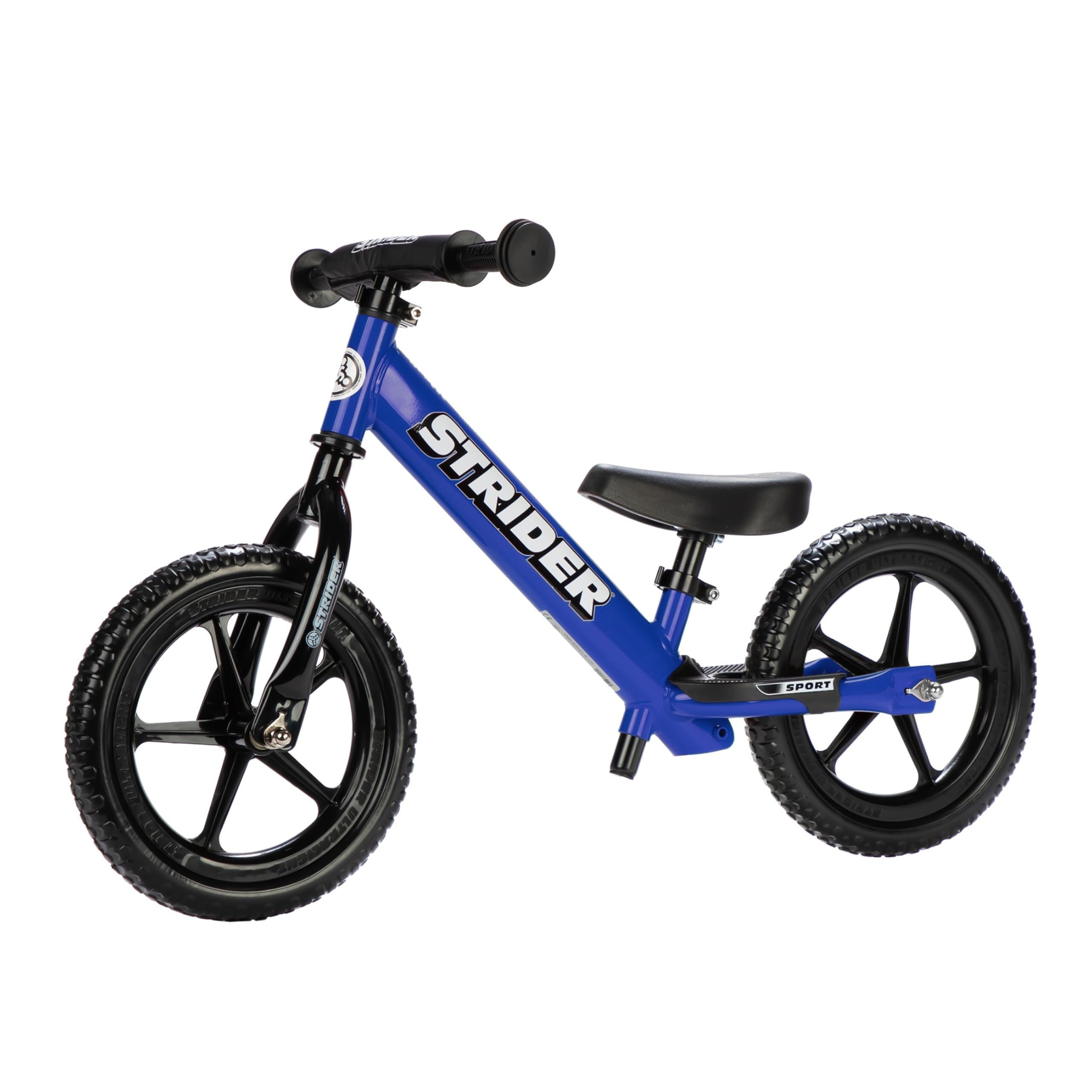
With an 11-to-17-inch seat height range and a 6.7-pound frame, the Strider adjusts in seconds without tools, letting a child move from tentative balancing to confident gliding across grass, gravel, and pavement. The foam rubber tires never go flat and provide consistent traction on varied surfaces.

Children develop gliding and steering control quickly on this bike, and most transition to a pedal bike with little to no training wheels. The steel frame holds up through multiple riders, and the tool-free adjustability keeps pace with growth spurts without needing a trip to the garage.

This balance bike fits parents who want a single purchase that lasts from a child's first wobbly steps at age 1 through the pre-pedal years at age 4. It lacks a footrest or hand brake — features that are not typical for balance bikes but worth noting if those are priorities for your child's next bike.

Bottom line: For families who want one balance bike that lasts through toddlerhood and holds strong resale value, the Strider 12" Sport sets the benchmark in adjustability and durability.

#2

SEREED Baby 4-Wheel Balance Bike

SEREED Baby 4-Wheel Balance Bike

First birthday gift

Doodle Score 9.6/10
Check Price

Worth Noting

  • Seat height maxes out around 18 inches, so taller toddlers may outgrow the bike before 24 months.
Weight
3.5 lbs
Frame Material
Aluminum
Wheel Size & Adjustability
6.7 in
Read the full review

The SEREED stands apart from typical two-wheel balance bikes with its four-wheel layout, which removes the tipping risk that can discourage new walkers. At 3.5 pounds, toddlers can easily pick it up and carry it, making it less intimidating than heavier options. This design prioritizes immediate confidence over long-term adjustability — a clear tradeoff against the longer-lasting two-wheel alternative that can accommodate a child from age one to four.

This bike is best suited for parents of toddlers just starting to walk, typically between 12 and 18 months. The seat height tops out around 18 inches, so taller or larger toddlers may outgrow it before their second birthday. For families who plan to pass the bike down or need a short-term confidence builder, this limitation is manageable. On smooth surfaces indoors or on paved paths, the four wheels roll smoothly and require no balancing effort from the child.

Tip: Measure your child's inseam before purchase; if they already have an 18-inch inseam, a two-wheel balance bike with a wider seat height range will last longer.

Bottom line: If your toddler is between 12 and 18 months and you want the safest possible introduction to balancing, this is the bike to start with. Plan to upgrade to a longer-adjusting model around the second birthday for continued use.

#3

JMMD 6-in-1 Convertible Bike

JMMD 6-in-1 Convertible Bike

18mo-5yr convertible

Doodle Score 9.6/10
Check Price

Worth Noting

  • Pedals stay stationary in push mode, which may confuse children learning foot placement.
  • Hand brake lever is stiff and may be difficult for small children to squeeze effectively.
Weight
~15 lbs
Frame Material
Aluminum
Wheel Size & Adjustability
12 in rubber
Read the full review

The JMMD 6-in-1 starts as a parent-steered trike, then converts to a balance bike, and finally to a pedal bike with training wheels and brakes. The aluminum frame folds for storage, and rubber tires handle pavement and grass alike. This approach saves parents from buying separate bikes for each stage.

This bike suits families who want a single purchase to last from toddlerhood to preschool. However, in push mode the pedals remain stationary – children's feet rest on them, which may delay the natural pedaling motion. Additionally, the hand brake lever requires more grip strength than many 3- and 4-year-olds can muster, so younger riders will rely on the parent push handle or foot braking.

Tip: In push mode, position the pedals so your child's feet rest flat; this helps them focus on balancing rather than foot placement.

Bottom line: A practical multi-mode bike for parents who value a single, foldable solution – but expect to supervise braking and pedal learning in the early push mode stages.

#4

SEREED 2-Wheel Balance Bike

SEREED 2-Wheel Balance Bike

Ages 2-3 budget

Doodle Score 9.6/10
Check Price

Worth Noting

  • On polished indoor floors, the foam tires can lose traction, requiring supervision to prevent falls.
Weight
7.8 lbs
Frame Material
Carbon Steel
Wheel Size & Adjustability
11 in, seat 12.6-17.1 in
Read the full review

The SEREED balance bike brings tool-free seat and handlebar adjustments and a 110-pound weight capacity — features typically found on models costing twice as much. For toddlers aged 2-3 using the bike on carpet, grass, or dirt, this delivers strong value. Unlike the top pick's air tires, the SEREED's foam wheels lose traction on polished indoor floors, so it's best kept on surfaces that provide natural grip.

This bike suits families who want an affordable option for outdoor or carpeted indoor use. The slip risk on smooth tile or hardwood means it is not ideal for unsupervised play in living rooms or kitchens. Parents comfortable supervising on those surfaces will find the adjustment convenience and build quality well above the price point.

Bottom line: For budget-conscious families planning outdoor or carpeted use, this balance bike offers premium-like adjustments without the premium price.

#5

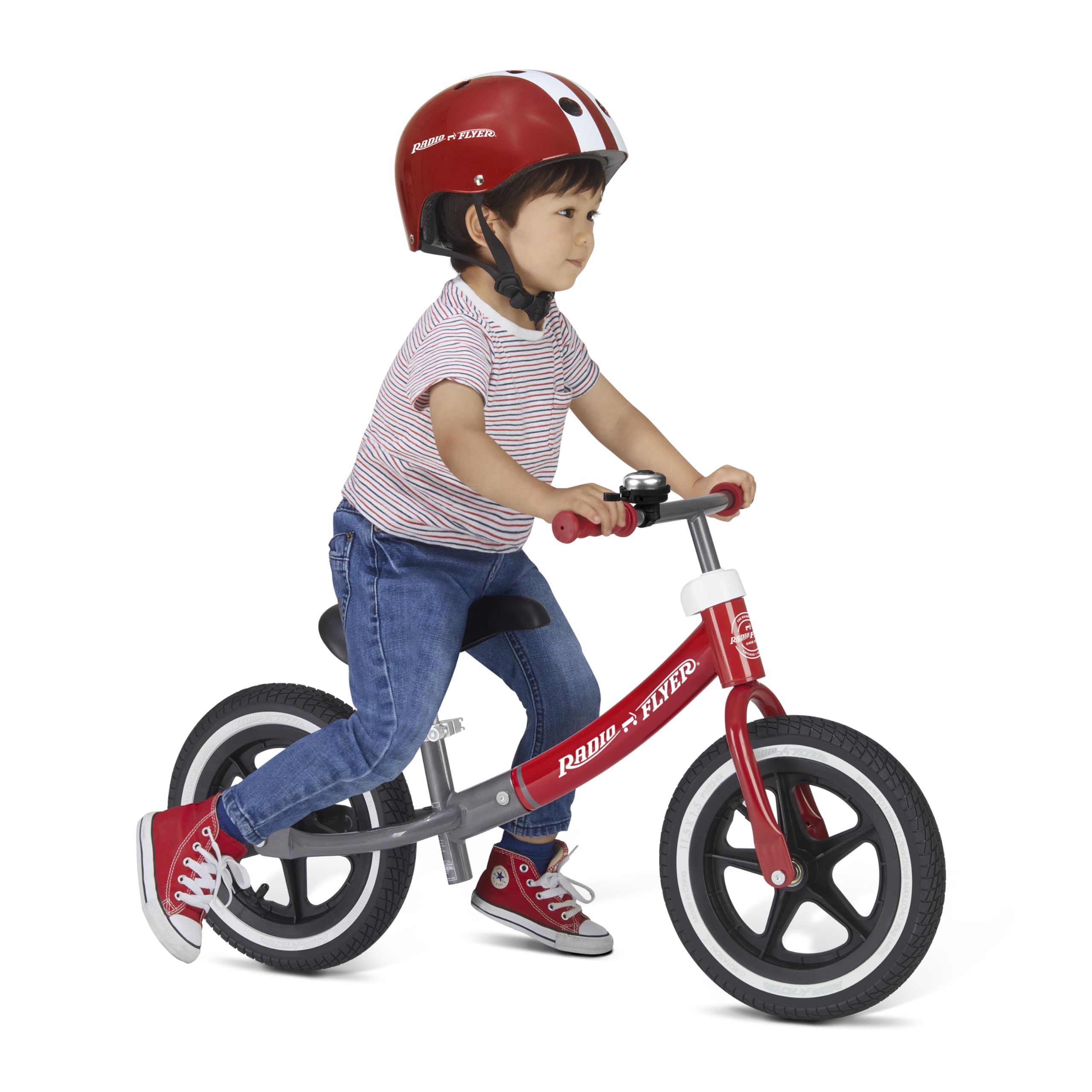
Radio Flyer Air Ride 12"

Radio Flyer Air Ride 12"

Ages 2-4 terrain

Doodle Score 9.4/10
Check Price

Worth Noting

  • Some units arrive with missing or damaged parts (bent rims, missing valve caps, broken bell).
  • Seat height may not accommodate taller toddlers past age 3 or 4, limiting multi-year use.
Weight
7.94 lbs
Frame Material
Steel
Wheel Size & Adjustability
12 in air
Read the full review

Real rubber air tires on the Radio Flyer Air Ride absorb bumps on uneven terrain far better than any foam-tire balance bike we tested. That makes it the go-to choice for toddlers who’ll spend most of their time on grass or gravel. It’s about a pound heavier than the top pick, but still light enough that most 2- and 3-year-olds can carry it themselves.

This bike is best for families who prioritize ride comfort over the lightest possible frame. However, some units can arrive with missing parts (bell, valve caps) or bent rims — inspect the box as soon as it lands. The seat also doesn’t adjust as high as the Strider, so taller toddlers may outgrow it sooner, closer to age 4 than 5.

Tip: Open the box immediately and check for missing parts or bent rims — Radio Flyer’s customer service can send replacements if needed.

Bottom line: If your toddler rides mostly on grass or gravel and you’re willing to inspect the bike upon delivery, the Radio Flyer Air Ride offers a noticeably cushier ride. For lighter weight and broader adjustability, the Strider remains the more versatile pick.

#6

KRIDDO Toddler Balance Bike 2 Year Old

KRIDDO Toddler Balance Bike 2 Year Old

Ages 2-3

Doodle Score 9.2/10
Check Price

Worth Noting

  • Tire wear and frame flex can occur under frequent use on uneven surfaces.
  • Construction consistency varies between units; some may feel less robust than premium bikes.
Weight
6.6 lbs
Frame Material
Carbon Steel
Wheel Size & Adjustability
12 in
Read the full review

Kriddo offers tool-free seat and handlebar adjustments, a comfortable saddle, and a 110-pound weight capacity — specs that rival premium models at half the cost. Assembly takes minutes with clear instructions, and the included sticker plate lets kids personalize their ride.

This bike suits parents of 2- to 3-year-olds who ride mostly on sidewalks and driveways. The lightweight carbon steel frame and EVA foam tires keep it simple, but some units have tires that wear faster and a frame that may feel less solid than a Strider, so heavy daily use on rough surfaces can accelerate wear.

Tip: Inspect the EVA foam tires for wear after a few months of daily riding; they don't go flat but can lose grip over time.

Bottom line: For parents wanting a capable balance bike under $50 without the premium label, the KRIDDO is a smart buy — just keep the riding surfaces smooth and expect some variation in build quality.

How to Choose

Wheel Size & Seat Adjustability

Wheel size determines how easily a bike rolls over bumps and cracks. Smaller wheels (6-12 inches) require more effort to push over uneven ground, making them best for smooth indoor or pavement use. A wider seat height range allows the bike to grow with your child; look for a range of at least 5 inches to get two or more years of use.

Measure your child's inseam before buying: they should be able to stand flat-footed over the top tube with the seat at its lowest. A bike with a maximum seat height too low will be outgrown quickly, while one that starts too high will be unsafe for a beginner.

Weight

A heavy bike is the number one reason toddlers struggle. Bikes over 15 lbs are difficult for a 2-year-old to control, steer, or stop. Lighter bikes (under 8 lbs) let kids learn balance naturally without fighting the bike's mass.

Aluminum frames are typically lighter than steel but cost more. For a balance bike, the weight savings are worth the premium. A 3.5-lb bike like the SEREED 4-wheel is almost effortless for a 1-year-old, while a 25-lb pedal bike can frustrate a 5-year-old learning to ride.

Frame Material

Steel frames are durable and inexpensive but add weight. Aluminum frames shed pounds and resist rust, which is useful if the bike is stored outdoors. For balance bikes, weight matters more than rust resistance because they are often kept indoors.

Carbon steel is a common mid-ground: heavier than aluminum but cheaper. Alloy steel like Strider's balances weight and strength. Avoid bikes with plastic or composite frames for regular use — they flex under riding stress and can crack.

Frequently Asked Questions