Outdoor Play

9 Best Ride On Toy for Toddlers of 2026: Quiet, Easy-Assemble Picks That Fit

Find the best ride-on toy for toddlers aged 1-3 that actually lasts, assembles easily, and fits your child's size without being outgrown in months.

Finding a ride-on toy that matches your toddler's age, size, and your patience for assembly is trickier than it should be. Many push cars arrive with frustrating instructions and missing parts, while balance bikes can be outgrown before your child masters balance.

Battery-powered lights and sounds on character-themed toys often stop working within weeks, leaving you with a silent shell. The real divide, however, is between a stable, lightweight first bike that builds balance and a push car that doubles as a stroller for neighborhood walks.

Both have their place, but most families will prioritize either easy setup and long-lasting mechanical simplicity or the convenience of a push handle and storage. This guide highlights the ride-ons that get the core job right without hidden frustrations.

#1

SEREED Baby Balance Bike

SEREED Baby Balance Bike

First balance bike

Doodle Score 9.6/10
Check Price

Worth Noting

  • Bike is sized for 12-18 months; toddlers over 18 months may find it too small within months.
Type
Balance Bike
Features
Age Range
12-24 months
Weight Capacity
55 lbs
Read the full review

The SEREED Baby Balance Bike combines a lightweight 3.5-pound aluminum frame with four-wheel stability, making it a stable platform for toddlers taking their first balancing steps. Assembly requires no tools — the main body snaps together in under a minute.

Toddlers aged 12 to 18 months take to the bike quickly, using its broad base to scoot and glide without tipping. The compact size is deliberate: it fits small riders well, but children over 18 months or on the taller side may outgrow it within a few months. This makes it a focused tool for the earliest balance practice rather than a long-term ride-on.

Tip: If your child is already 15 months or on the taller side, measure their inseam to confirm fit; this bike is best for early riders who will outgrow it quickly.

Bottom line: This is the right balance bike for parents who want a lightweight, stable first bike for a young toddler and plan to use it during the 12-18 month window.

#2

Radio Flyer Busy Buggy

Radio Flyer Busy Buggy

Sensory play toy

Doodle Score 9.6/10
Check Price

Worth Noting

  • Steering wheel does not turn; the car only moves straight, limiting maneuverability.
  • The steering wheel may detach with rough handling, though this varies between units.
Type
3-in-1 Walker/Ride-On
Features
17 activities, anti-tip, storage
Age Range
1-3 years
Weight Capacity
42 lbs
Read the full review

The Busy Buggy focuses on sensory engagement and walking support rather than independent steering. Its 17 activities keep toddlers busy, and the wide base helps prevent tipping as they push or ride. Assembly is fast with no tools required.

Best for toddlers 12-24 months who enjoy hands-on play over speed or steering. The steering wheel is fixed, so motion is limited to straight lines – fine for indoor cruising but not for kids who want to turn corners. The occasional wheel detachment is possible with rough use, but overall build quality holds up well.

Tip: For a child who enjoys steering, this may disappoint – best for straight-line cruising and activity play.

Bottom line: A good value for families who want a sensory-rich walker and ride-on, provided steering isn't a priority.

#3

Umatoll Balance Bike

Umatoll Balance Bike

Budget balance bike

Doodle Score 9.6/10
Check Price

Worth Noting

  • Frame is compact and may be too small for toddlers over 18 months or taller children
Type
Balance Bike
Features
Light-up wheels
Age Range
12-24 months
Weight Capacity
55 lbs
Read the full review

The Umatoll Balance Bike sets itself apart from the leading SEREED with its colorful light-up rear wheels that add a dose of fun to each ride. Assembly requires no tools: the pieces snap together in minutes, a clear advantage for parents who want to avoid wrestling with instructions. The 3.3-pound aluminum frame makes it easy for a toddler to carry and maneuver on their own.

This bike suits toddlers who are just starting to walk and balance, typically from 12 to 18 months. The seat adjusts, but the overall frame is compact – children over 18 months or those with a longer inseam may outgrow it quickly. If your child is already walking confidently, a larger model like the SEREED will offer more room to grow.

Tip: Measure your child's current inseam against the seat height range (roughly 9–12 inches) to confirm fit before purchase – the frame doesn't stretch beyond early toddler sizes.

Bottom line: A fun, lightweight first balance bike that delivers on easy assembly and visual appeal – best for the 12–18 month window before your child needs a longer frame.

#4

Kiddieland Mickey Activity

Kiddieland Mickey Activity

Mickey fans

Doodle Score 9.6/10
Check Price

Worth Noting

  • No push handle for parental steering and smaller size limits use to younger toddlers.
Type
Activity Ride-On
Features
Music, lights, toy phone
Age Range
12-36 months
Weight Capacity
Read the full review

This Mickey ride-on delivers engaging play with music, lights, a toy phone, and under-seat storage — all in a compact, durable frame suited for indoor use. It's a hit with toddlers but lacks a push handle for parental guidance and its smaller size fits younger children best.

Bottom line: Best for Mickey fans aged 1-2 who play indoors, and as a gift where parent steering isn't needed.

#5

Step2 Push Around Buggy

Step2 Push Around Buggy

Stroller alternative

Doodle Score 9.4/10
Check Price

Worth Noting

  • Steering wheel and wheel attachments can loosen or detach with regular use
Type
Push Car
Features
Quiet wheels, fold handle, storage
Age Range
18 months - 3 years
Weight Capacity
50 lbs
Read the full review

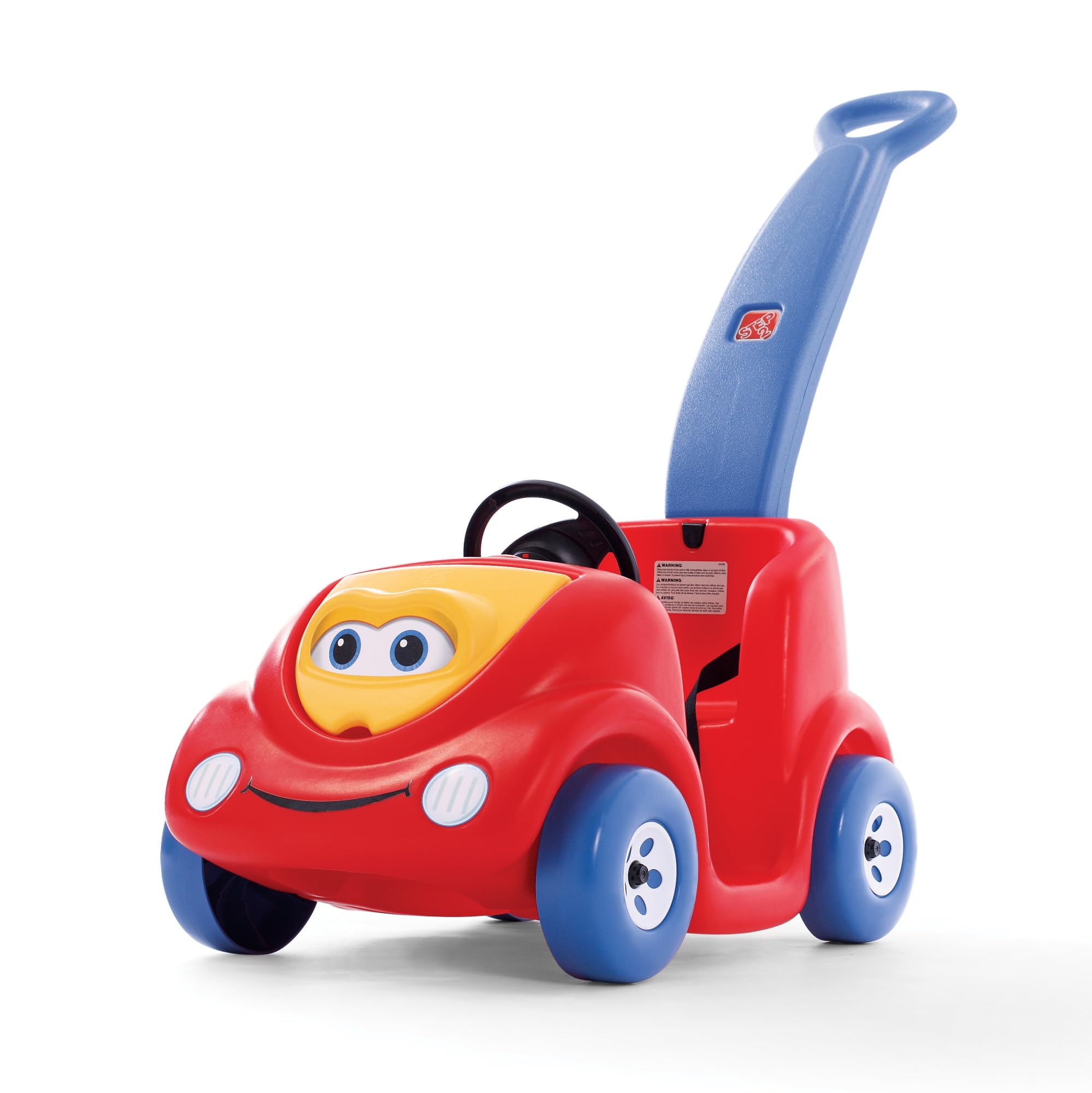
The Step2 Push Around Buggy rolls quietly on whisper-ride wheels and folds down for easy storage — a stroller alternative that parents appreciate. Under-hood storage adds room for snacks or toys during walks. This car suits toddlers 18 months to 3 years who enjoy being pushed around the neighborhood or indoors. The steering wheel and wheels can detach after extended use, so periodic inspection helps catch wear early.

Tip: Inspect steering wheel and wheel attachments every few months; tighten any loose parts to prolong the toy's lifespan.

Bottom line: Best for parents who want a quiet, easy-to-push car with on-board storage for short trips, but plan to check the wheels and steering periodically for loosening.

#6

YBIKE Pewi

YBIKE Pewi

Early walkers

Doodle Score 9.4/10
Check Price

Worth Noting

  • Tipping can occur if the child leans far to one side, requiring supervised play.
Type
Walker/Ride-On
Features
Age Range
9-36 months
Weight Capacity
44 lbs
Read the full review

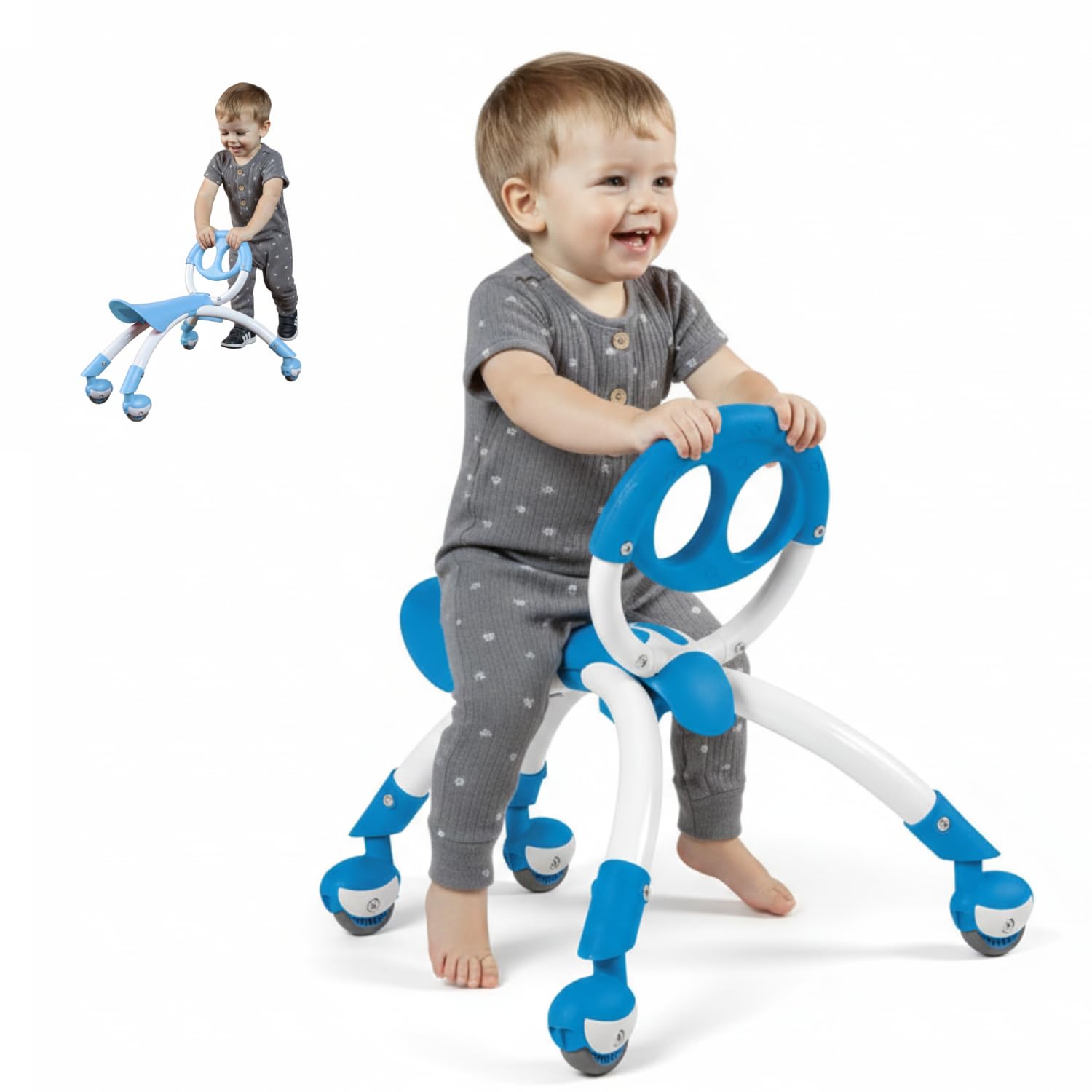
The YBIKE Pewi's 360° caster wheels let toddlers pivot and steer with minimal effort, making it easier to learn walking balance than a fixed-wheel push car. Where the SEREED balance bike focuses on gliding stability for slightly older riders, the Pewi is better suited to the unsteady first steps of a 9-month-old.

Best for parents of 9- to 18-month-olds who want a single toy that supports walking practice and then transitions to ride-on cruising. The light aluminum frame and smooth wheels work well indoors. Some units may tip if the child leans far sideways, so active supervision is needed – this is less of a concern for cautious riders on flat surfaces.

Tip: Place the Pewi on carpet or foam mats to reduce tipping risk on hard floors.

Bottom line: The Pewi suits families focused on early walking development in a single indoor toy – expect to stay close during active riding.

#7

Step2 Roller Coaster

Step2 Roller Coaster

Active play

Doodle Score 9.4/10
Check Price

Worth Noting

  • Platform may wobble on non-carpeted floors, affecting stability during coasting
  • Some units arrive with missing track pieces, requiring a replacement
Type
Roller Coaster Ride-On
Features
9-ft track, no tools
Age Range
2-5 years
Weight Capacity
50 lbs
Read the full review

Unlike a push car or balance bike, this ride-on turns hallway or playroom into a mini coaster run. The track clicks together in minutes, no tools needed, and toddlers build gross motor skills as they climb to the top and coast down. The repeated back-and-forth keeps energetic 2-5 year olds occupied without constant adult pushing.

That said, this suits families who want an active indoor/outdoor toy rather than a parent-steered push car. The platform may wobble on uneven floors — carpet or a level surface helps. And some boxes have arrived missing track pieces, so inspect contents right away. For toddlers under 2, the climbing and speed may be too much; this is best for kids ready to walk and climb confidently.

Tip: Set up the track on a flat carpeted surface to reduce platform wobble and keep the ride smooth.

Bottom line: Best for families seeking an active indoor/outdoor ride-on that builds gross motor skills, but be prepared to check for missing pieces upon delivery.

#8

Radio Flyer Scoot 2

Radio Flyer Scoot 2

Convertible scooter

Doodle Score 9.2/10
Check Price

Worth Noting

  • Plastic build may feel flimsy; less durable than other Radio Flyer toys.
Type
Convertible Ride-On/Scooter
Features
Age Range
1-4 years
Weight Capacity
44 lbs
Read the full review

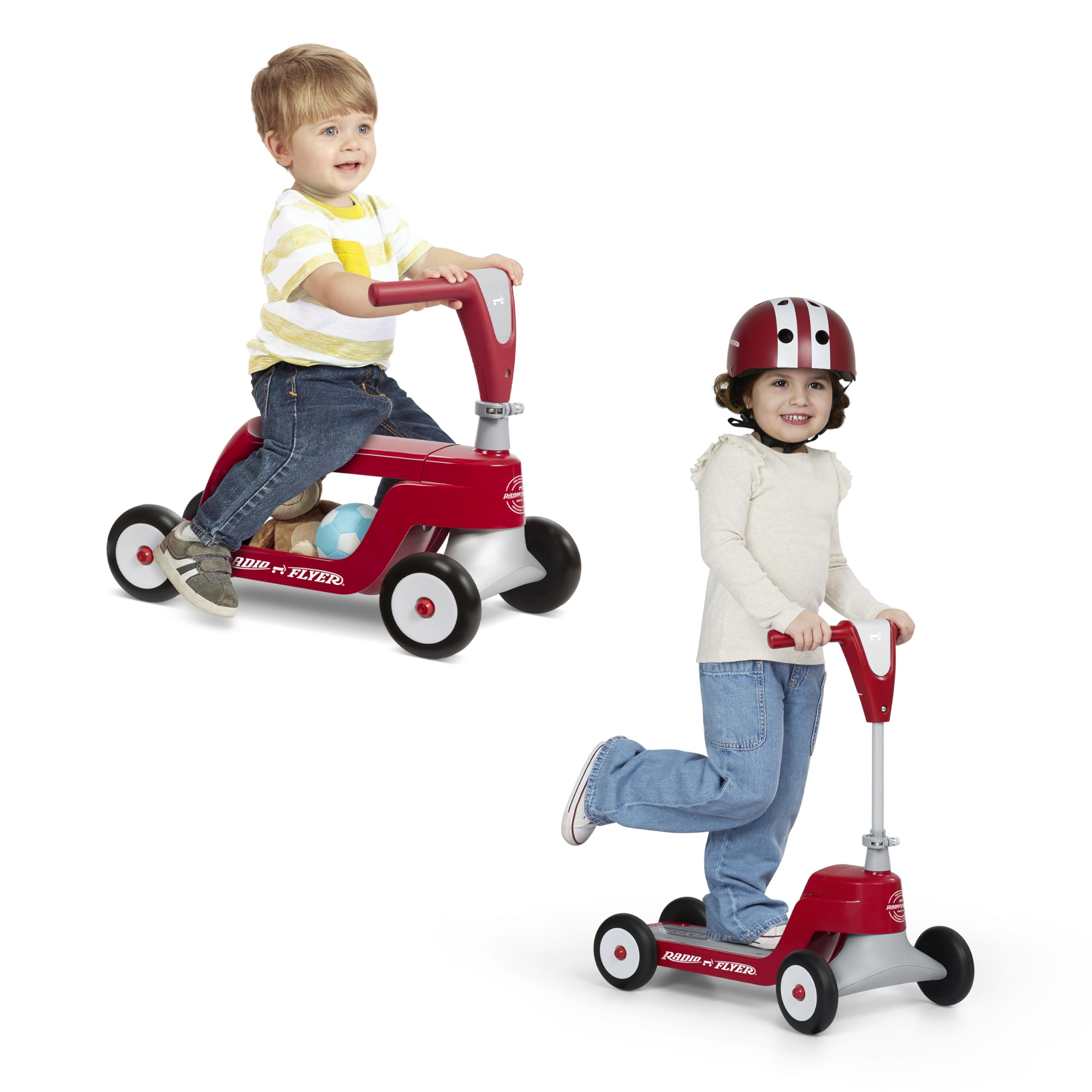
The Radio Flyer Scoot 2 offers a clever convertible design: toddlers first use it as a foot-to-floor ride-on, then later as a 4-wheel scooter. However, the plastic construction is not as sturdy as typical Radio Flyer toys, making it better suited for light indoor use rather than daily outdoor play.

Bottom line: Best for budget-conscious parents who want a convertible option for occasional indoor use and are okay with lighter build quality.

#9

Little Tikes Push Racer

Little Tikes Push Racer

Budget push car

Doodle Score 9.0/10
Check Price

Worth Noting

  • Setting up the racer can be time-consuming with minimal instructions and parts that need extra effort to fit.
Type
Push/Ride Racer
Features
Age Range
9-36 months
Weight Capacity
50 lbs
Read the full review

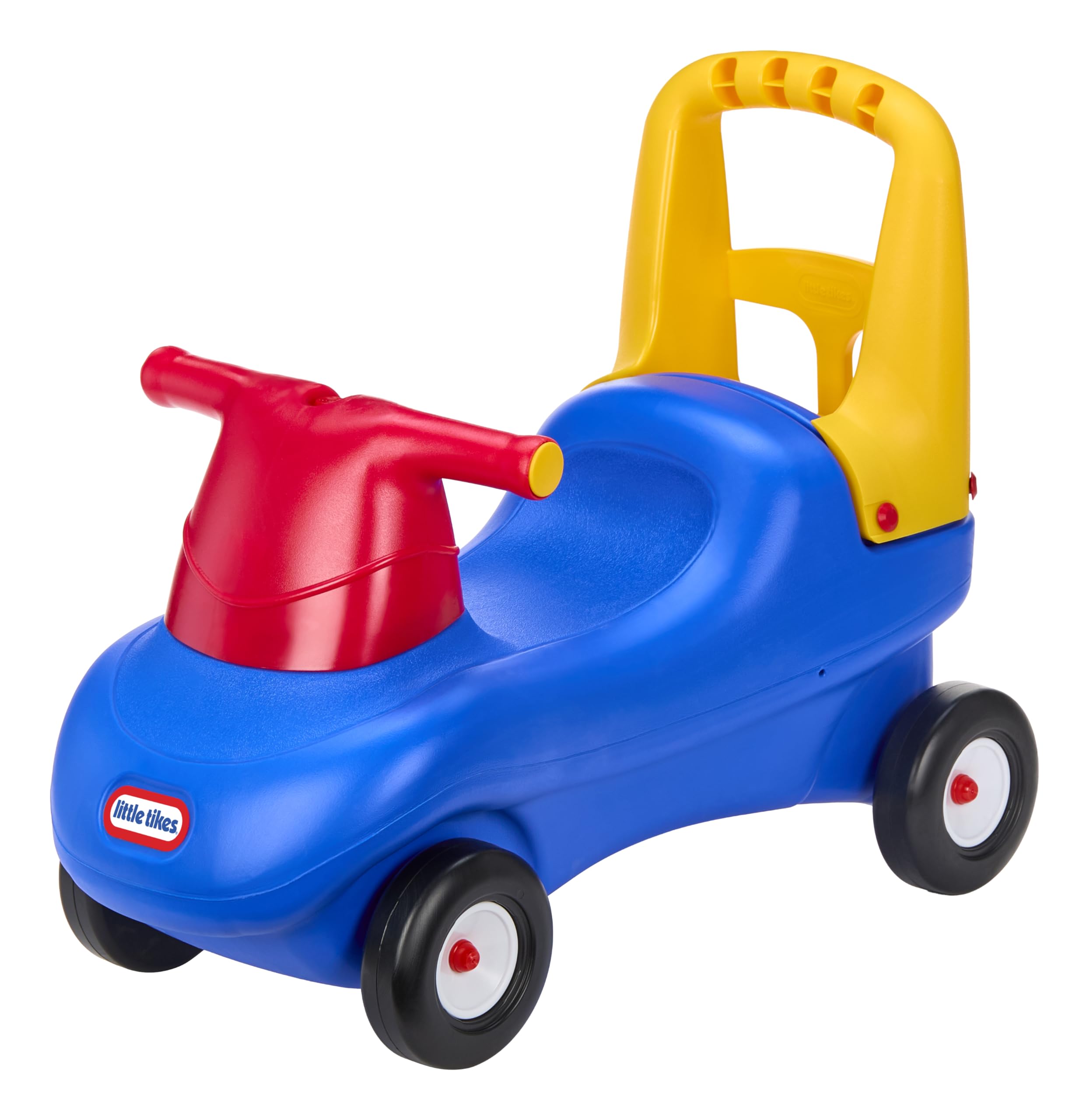
This Little Tikes racer offers durable plastic construction that holds up through multiple kids, and at a budget-friendly price it is hard to beat for pure longevity. The catch: assembling the parts is a real chore, with instructions that can be unclear and pieces that may require force to fit. For parents who do not mind a challenging setup, the racer delivers lasting value; for those wanting a quick unbox-and-go experience, simpler top picks avoid this friction.

Bottom line: Best for patient parents who want a durable, no-frills ride-on that will outlast their child's toddler years and can tolerate a lengthy assembly process.

How to Choose

Type of Ride-On

Balance bikes build balance and coordination by having toddlers use their feet to push, but they offer no parent control. Push cars give you a steering handle and storage but limit your child's independence. Walker/ride-ons like the YBIKE Pewi serve both roles early on. Choose based on whether you want your child to explore freely or prefer to guide them on walks.

Weight Capacity

Most ride-ons support 42 to 55 pounds. A higher capacity means the toy will last through growth spurts, but the frame may be heavier. If your toddler is in the 95th percentile for weight, skip models with a 42-lb limit to avoid premature outgrowing. For average-sized toddlers, 50 lbs is sufficient for at least two years of use.

Age Range

Age labels are guidelines, not guarantees. Many balance bikes listed for 12-24 months become too small by 18 months, especially for tall children. Look for adjustable seats or convertible designs that extend usability. A fixed-seat balance bike may only last six months, while an adjustable one can serve until age three.

Assembly Difficulty

No-tool assembly models snap together in minutes and are the top choice for hassle-free setup. Push cars often require tools, and reviews frequently cite missing screws and unclear instructions. If you dread assembly, prioritize models that explicitly advertise 'no tools required' and check recent reviews for assembly complaints.

Features

Lights, sounds, and interactive activities can boost engagement, but battery-powered elements often fail within months. Mechanical features like a working horn or a functional steering wheel are more reliable. For character-themed toys, the fun factor is high but longevity is lower than plain mechanical models.

Frequently Asked Questions