Pretend Play

11 Best Pretend Phone of 2026: Ones That Last Beyond the First Week

Which pretend phones actually survive toddler play without breaking within days. Find durable, educational picks for ages 1-5.

Many pretend phones end up broken within days, leaving toddlers disappointed and parents frustrated. But not all phones are built the same. This guide focuses on the models that withstand real toddler play and offer genuine educational value.

The choice often comes down to motor skill development versus interactive learning. A pull-along phone builds balance, while a handheld phone teaches numbers and songs. Both have merits, but the right fit depends on your child's age and interests.

Understanding these trade-offs ensures you pick a phone that lasts longer than the packaging.

#1

LeapFrog Chat & Count Phone

LeapFrog Chat & Count Phone

Toddlers learning numbers

Doodle Score 9.4/10
Check Price

Worth Noting

  • Volume is low, so it may be hard to hear in noisy environments
Age Range
18 months-5 years
Durability
Survives drops, rough handling
Volume Control
Fixed, low sound
Educational Content
Numbers, songs, emoji games
Read the full review

The LeapFrog Chat and Count Emoji Phone combines number-learning, songs, and pretend calls in a toy that survives drops and rough handling. The LCD screen animates emoji reactions, and the push-to-talk button lets toddlers mimic real phone conversations. Buttons respond to presses reliably, and the toy holds attention during car rides and quiet play sessions.

The volume is on the lower side, which means this phone works best in quiet environments like a living room or car interior. In a noisy daycare or outdoor setting, the sound may be hard to hear clearly. The 3 AAA batteries (included) power hours of play, and the phone's compact size fits small hands.

This phone suits toddlers aged 18 months to 3 years who are starting to learn numbers and enjoy interactive music. Parents looking for a screen-free, durable phone that doesn't mimic a real smartphone's complexity will find this fits well. The low volume is a tradeoff: it won't disrupt quiet spaces, but it's not suited for loud play areas.

Tip: In noisy environments, the low volume may be hard to hear; use in quiet spaces or car rides.

Bottom line: For toddlers learning numbers and imaginative play, this phone delivers durable, educational fun without the noise of a real phone.

#2

Fisher-Price Chatter Telephone

Fisher-Price Chatter Telephone

Crawling babies walkers

Doodle Score 9.4/10
Check Price

Worth Noting

  • For pretend calling, the handset cord is too short to reach the ear without lifting the entire phone
  • The rotary dial may stop rotating properly after limited use in some units
Age Range
12 months+
Durability
Plastic body, moving eyes
Volume Control
None, fixed ringing
Educational Content
None, role-play only
Read the full review

The Fisher-Price Chatter Telephone is a pull-along toy built for gross motor development, not for holding up to the ear. Its moving eyes and bell ring provide classic engagement, but the handset cord is too short to reach the ear without lifting the phone. Unlike the top-pick LeapFrog Chat and Count, which focuses on numbers and interactive calls, this telephone prioritizes walking and pulling play.

This toy suits crawling babies and early walkers (12–18 months) who enjoy dragging a toy behind them. Parents seeking a screen-free, budget-friendly option will appreciate the nostalgic design, though the rotary dial may loosen with use and the cord length limits pretend calling. It is not a substitute for a modern interactive phone with adjustable volume or lights — those features are absent by design.

Tip: Let toddlers pull the phone by the body and use the handset as a separate prop — the cord length suits dragging, not holding.

Bottom line: The Chatter Telephone is a distinct option for parents who prioritize motor skills and nostalgic charm over interactive phone features. It delivers on its pull-toy promise, but the short cord and dial durability mean it is best for supervised pulling play rather than independent pretend calls.

#3

Disney Princess Phone

Disney Princess Phone

Disney Princess fans

Doodle Score 9.4/10
Check Price

Worth Noting

  • Only available in Disney Princess design, limiting appeal to children who prefer other themes
  • Some units may experience sound failure after replacing batteries
Age Range
3 years+
Durability
Survives multiple drops
Volume Control
Adjustable, clear sound
Educational Content
Preschool games, numbers
Read the full review

Adjustable volume and clear audio set this Disney Princess phone apart from budget character phones that often blast sound at one fixed level. The educational number games are engaging enough to hold a toddler's attention while teaching early counting skills, and the volume slider lets parents lower the noise without losing clarity.

This phone is a natural fit for Disney Princess fans ages three to five who want a sturdy pretend phone they can drop and carry. The build handles rough play well, though a small number of units may develop sound failure after a battery change – a risk worth knowing but unlikely to affect most buyers given the overall durability.

Bottom line: For Disney Princess fans who value clear sound and volume control, this phone delivers reliable play at a reasonable price – just keep a spare set of batteries handy.

#4

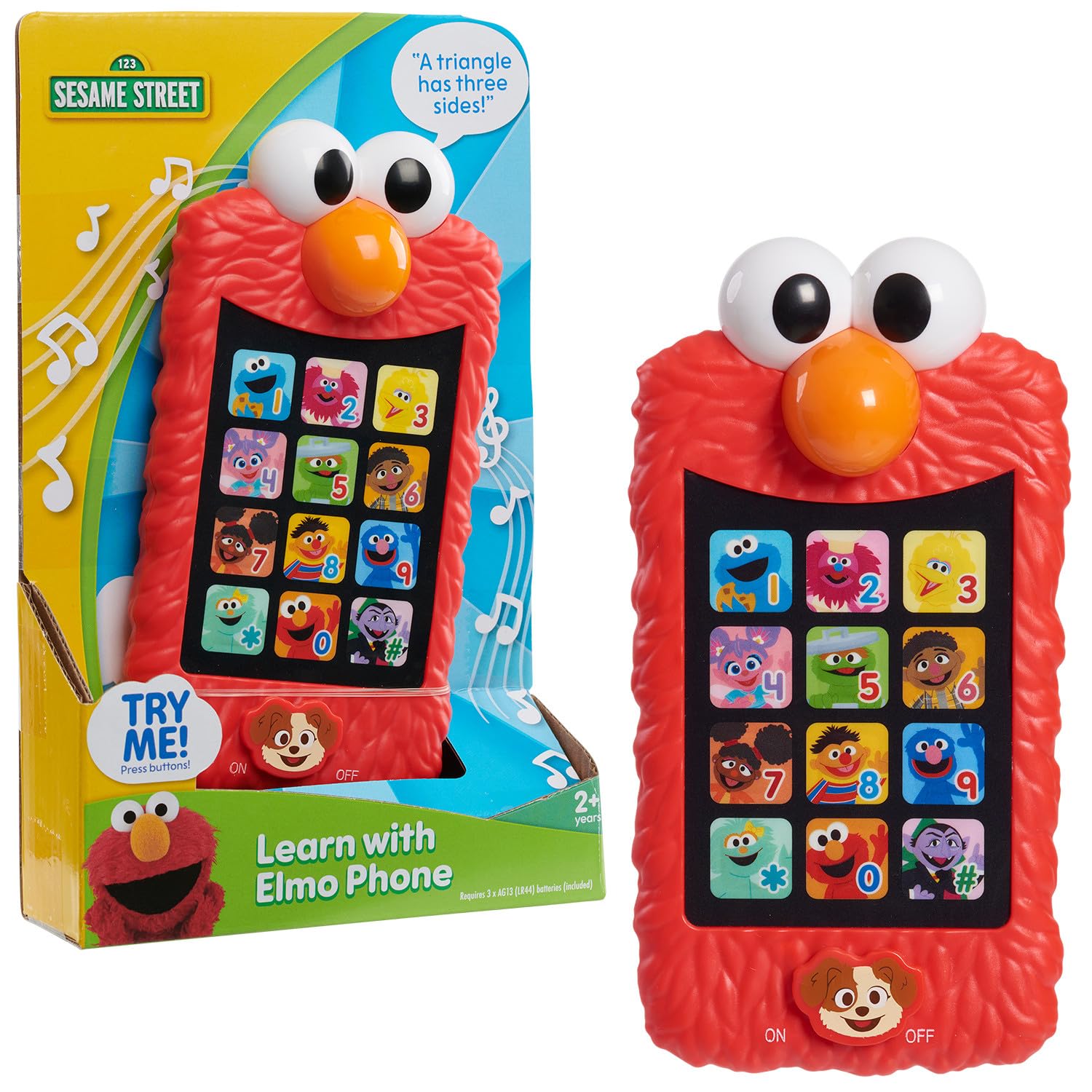
Elmo Learn Phone

Elmo Learn Phone

Sesame fans 2-4

Doodle Score 9.2/10
Check Price

Worth Noting

  • Demo mode volume is high until the tag is removed; a simple step not everyone notices immediately.
  • Plastic construction feels less sturdy than premium pretend phones
Age Range
2 years+
Durability
Lightweight plastic body
Volume Control
None
Educational Content
12 learning themes, Spanish
Read the full review

Elmo's voice guides toddlers through counting, colors, shapes, and basic Spanish phrases across 50+ interactive responses. The chunky design fits small hands and the low price makes it an easy add to a toy collection.

This phone suits Sesame Street fans ages 2–4 who want a simple pretend play experience. The initial demo mode volume can be loud until the tag is removed — a quick fix. The plastic shell is less sturdy than higher-priced options, so it's best for gentle play rather than rough handling.

Tip: Remove the demo tag before first use to avoid overly loud volume.

Bottom line: If your toddler loves Elmo and you want a low-cost introduction to educational pretend play, this phone delivers — just remove the demo tag first.

#5

Infantino Flip Phone

Infantino Flip Phone

Infants 6-12mo

Doodle Score 9.2/10
Check Price

Worth Noting

  • Sound volume may be too low for active play settings.
  • Mirror attachment can come loose with repeated use.
Age Range
3 months-5 years
Durability
Shatterproof, rugged
Volume Control
Fixed, low
Educational Content
Bilingual phrases
Read the full review

The flip-phone design with built-in mirror and bilingual Spanish/English phrases offers sensory delight for crawling babies. Sound output is modest though, and the mirror can detach over time. This works as a safe first phone for sensory exploration, but toddlers expecting louder, more interactive play will find it limited.

Bottom line: Best for babies exploring textures and mirrors, but not for toddlers seeking a louder, more interactive pretend phone.

#6

BABYFUNY 15-Func Phone

BABYFUNY 15-Func Phone

First phone 12-18mo

Doodle Score 9.2/10
Check Price

Worth Noting

  • Some units may have buttons that become unresponsive after a few weeks.
  • In some cases, half the buttons can stop responding, reducing functionality.
Age Range
12 months-5 years
Durability
BPA-free plastic
Volume Control
None
Educational Content
15 functions, music
Read the full review

Safe, shatterproof materials and 15 touch-sensitive functions (music, animal sounds, numbers) make this a low-cost introductory phone for 12–18 month olds. It delivers enough variety to distract during short car rides or plane trips. The main caveat: some units develop unresponsive buttons after a few weeks, so it suits supervised play or occasional use rather than daily rough handling.

Bottom line: This phone fits best as an inexpensive, safe first phone for supervised play or travel distraction, where occasional button unresponsiveness is an acceptable tradeoff.

#7

WEOLULI Kids Smartphone

WEOLULI Kids Smartphone

Kids 4-8 camera

Doodle Score 9.2/10
Check Price

Worth Noting

  • Durability can be inconsistent
  • Some units may stop charging or lose function within months of use.
Age Range
3-10 years
Durability
Sturdy plastic body
Volume Control
Fixed, moderate
Educational Content
Games, habit tracker
Read the full review

The WEOLULI Kids Smartphone impresses with its realistic design, dual camera with fun frames, and educational games that support learning and routine. The habit-tracking feature is a thoughtful addition for parents. However, build consistency varies — some units may stop charging or working after a few months, and lighter drops can lead to breakage. This limits its suitability as a long-term daily toy.

Bottom line: Suitable for creative play and learning routines, provided you're comfortable with possible charging issues over time.

#8

VTech Call & Chat Phone

VTech Call & Chat Phone

Toddlers 2-4 numbers

Doodle Score 9.0/10
Check Price

Worth Noting

  • Speaker volume may be too quiet for toddlers to hear clearly in a noisy room or during car rides.
  • Some units have shown unresponsive buttons or stopped working after limited playtime.
Age Range
2-5 years
Durability
Plastic body, buttons
Volume Control
Fixed, low
Educational Content
10 apps, phone numbers
Read the full review

The VTech Call and Chat Learning Phone stands out for letting parents input actual contact numbers, turning pretend play into a tool for memorizing digits and even 911. Ten apps cover letters, numbers, and time concepts in a playful way. However, the speaker volume is modest — fine for a quiet room but easily drowned out by background noise. Build quality varies between units; some owners note that buttons can become unresponsive after a few days of use. This phone is best chosen when the programmable feature is the priority and the toy will be used in calm, supervised settings rather than dropped into a diaper bag or played with at full volume.

Bottom line: A good choice if you specifically want your toddler to learn real phone numbers and you can supervise play in a quiet spot where lower volume and occasional button issues won’t derail the experience.

#9

KAKTIN Kids Smartphone

KAKTIN Kids Smartphone

Tech kids 4-8

Doodle Score 9.0/10
Check Price

Worth Noting

  • Screen freezing or unresponsive buttons may occur in some units shortly after purchase.
Age Range
3-11 years
Durability
Plastic body
Volume Control
Fixed, moderate
Educational Content
26 letters, landmarks
Read the full review

This KAKTIN phone packs a 2.8-inch touchscreen, dual cameras, and educational content covering 26 letters and 24 world landmarks, plus a habit tracker to encourage routines. The camera with sticker effects gives kids a creative outlet for pretend photography. However, screen freezing shortly after purchase has been noted in some units, making it best suited for supervised play sessions rather than daily rough handling.

Bottom line: A decent option for tech-interested kids ages 4-8 who want a camera and habit tracking, but the risk of screen freezing means it's not for unsupervised daily use.

#10

Luoba Kids Smartphone

Luoba Kids Smartphone

Tech-savvy kids

Doodle Score 9.0/10
Check Price

Worth Noting

  • Some units may stop working or fail to charge after a few months of use.
  • Screen and casing can crack when dropped - best for supervised settings.
Age Range
3-12 years
Durability
Plastic body, 8GB
Volume Control
Fixed, moderate
Educational Content
13 puzzle games, apps
Read the full review

The Luoba Kids Smart Phone offers a realistic smartphone experience with dual cameras, 8GB storage, and 13 puzzle games - enough to keep a tech-savvy 4-8 year old engaged in creative pretend play. However, build quality is a known compromise: some units may stop working or fail to charge, and the screen can crack with drops. This makes it best for supervised play sessions rather than as a daily driver.

Bottom line: Works well for supervised play where a child wants a realistic camera phone with games, and you're willing to accept potential reliability tradeoffs. For a sturdier daily toy, consider simpler alternatives.

#11

Learning Resources Teach Phone

Learning Resources Teach Phone

Preschoolers phone skills

Doodle Score 8.8/10
Check Price

Worth Noting

  • Recording is limited to one message at a time, requiring re-recording for different numbers.
  • Some units may develop unresponsive buttons or a persistent dial tone after a few months of use.
Age Range
3-10 years
Durability
Sturdy plastic build
Volume Control
Adjustable volume, mute
Educational Content
Phone numbers, 911 training
Read the full review

Unlike toy phones that just play songs and sound effects, the Learning Resources Teaching Telephone lets parents program real home and emergency numbers. The 911 training mode walks children through the steps of dialing and speaking to an operator, and the volume control (with a mute option) makes it usable in quieter spaces without being overwhelming.

This is a focused tool for families who want to teach phone safety and number memorization rather than open-ended pretend play. The recording function holds only one message at a time, so practicing multiple numbers means re-recording each time—fine for emergency drills but not for varied play. Some units have shown unresponsive buttons or a stuck dial tone after a few months, so buying from a retailer with a good return policy is worth considering.

Tip: Pre-record the most important number first (e.g., a parent's cell or 911) and re-record as your child masters each one.

Bottom line: A specialized teaching tool for parents who prioritize phone-safety education and are willing to work around the single-message recording limit and occasional quality variance.

How to Choose

Durability

Cheap plastics and poor battery contacts cause early failures in many budget phones.

Phones that survive drops typically use reinforced casing and secure battery compartments, like those from LeapFrog. Look for brands that mention drop resistance in their descriptions.

Volume Control

Many cheap phones have fixed volume that is either too loud or too quiet. Adjustable volume allows parents to set a comfortable level for different environments, but it adds cost and complexity.

If you need a quiet toy for car rides, consider a model with a mute switch or at least a volume dial. Without it, you may end up with a toy that's either ignored or returned.

Educational Content

Not all educational features are equally engaging. Look for toys that require active participation, like pressing buttons to hear numbers or songs, rather than just playing random sounds.

Interactive elements, like counting games or pretend calls, improve learning retention. Avoid phones that only play a loop of songs without any interactive challenge.

Realistic Interactivity

Lights and sounds mimic real phones and capture toddlers' attention. But some toys overload with distracting effects that can overstimulate rather than engage.

Choose a toy that balances fun with learning. Features like a moving screen animation or a pretend call button are more valuable than random sound effects.

Age Appropriateness

Button size and complexity should match your child's fine motor skills. For infants under 1, large, easy-to-press buttons and no small parts are essential.

For older toddlers, more buttons and features encourage exploration. Age ranges on boxes are a starting point, but watch for whether the toy requires precise finger movements or can be mashed easily.

Frequently Asked Questions