RC & Vehicles

10 Best RC Airplane of 2026: Affordable 4-Channel Warbirds That Fly Better

The best RC airplanes for beginners and hobbyists that actually fly well and survive landings.

Many RC airplanes under $50 are lightweight foam gliders that fly poorly in any breeze and break on the first hard landing. The frustration of watching a new plane cartwheel across the pavement or fly away because it can't handle a gust is common.

Spending just a bit more opens up a different category: 4-channel warbirds with gyro stabilization that offer real control and durability. These models come with flight modes that let beginners learn safely and progress to aerobatics.

The trade-off is that the most capable trainer from the serious hobby brands costs more and may require separate battery and transmitter. This guide focuses on the options that deliver the best flying experience for the money, whether for a child's first toy or your own entry into the hobby.

#1

HobbyZone AeroScout S2

HobbyZone AeroScout S2

Serious hobbyists

Doodle Score 9.0/10
Check Price

Worth Noting

  • No battery or charger included
  • Included transmitter has no screen and minimal adjustment options
Gyro
SAFE technology
Channels
4
Flight Time
15-20 min (batt separate)
Flight Modes
3 modes
Read the full review

The HobbyZone AeroScout S2 combines SAFE technology with a durable foam airframe that handles wind well and is straightforward to repair after minor mishaps. The tradeoff: you must buy a LiPo battery and charger separately, adding $50-$100 to the initial cost. This makes it a deliberate choice for adults who are serious about learning RC flight and want a proper trainer, rather than a casual toy for kids.

Tip: Buy a 3S 2200mAh LiPo and a balance charger – the combination costs around $60 and gives 15-20 minute flights.

Bottom line: For adults committed to the RC hobby and willing to invest in separate battery and charger, the AeroScout S2 offers a forgiving learning experience with genuine SAFE technology. If you want a truly all-in-one budget-friendly package, the top pick Volantexrc P51D is a better value.

#2

Volantexrc T28 Trojan

Volantexrc T28 Trojan

Durable beginner warbird

Doodle Score 9.0/10
Check Price

Worth Noting

  • Landing gear may bend on rough landings, requiring careful touchdown technique.
Gyro
Xpilot 6-axis
Channels
4
Flight Time
20 min per battery
Flight Modes
3 modes
Read the full review

The T28 Trojan delivers the same 4-channel control and Xpilot stability as the top-ranked P51 Mustang, but with a prop-saver that pops off on hard impacts to protect the airframe. That added crash resilience, along with three flight modes and a 20-minute flight time, makes it a practical choice for beginners who want a classic warbird. The included battery and transmitter reduce upfront cost, so new pilots can start flying immediately. With three stability modes, pilots can progress from beginner to intermediate without buying a new plane.

Bottom line: A well-rounded beginner warbird with prop-saver peace of mind and room to progress.

#3

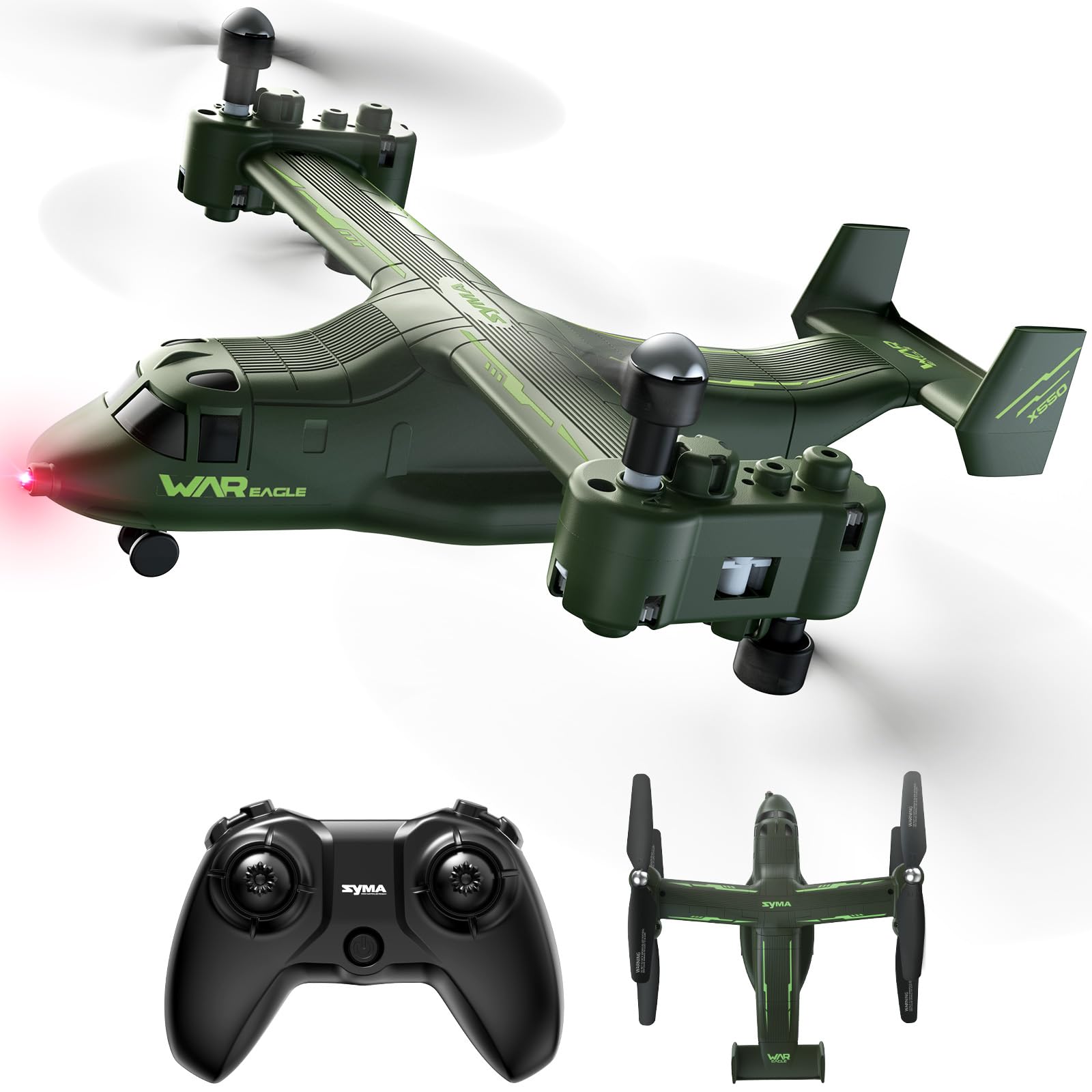
SYMA X550 Stunt

SYMA X550 Stunt

Casual stunt flying

Doodle Score 8.8/10
Check Price

Worth Noting

  • Flight time may be shorter than expected in some units.
  • A small number of planes have motor or electronics issues after limited use.
Gyro
6-axis gyro
Channels
4
Flight Time
20 min per battery
Flight Modes
Stunt modes
Read the full review

The SYMA X550 delivers stunt capabilities at a price that's hard to beat — 360 flips and one-key takeoff/landing make it immediately fun for kids and adults new to RC. The 6-axis gyro keeps things stable during basic maneuvers, though it's not designed for serious trainer-style learning.

This is a solid pick for anyone wanting a low-cost, playful aircraft that doesn't require prior flying experience. Battery life can be short in some cases, and occasional motor issues have been noted, so it's best suited for casual sessions rather than all-day flying.

Tip: Having a second battery ready extends playtime without waiting for recharges.

Bottom line: A fun, affordable stunt plane for casual flyers who don't need long flight sessions and can accept occasional reliability quirks.

#4

MAXBECK SU-35 Glider

MAXBECK SU-35 Glider

Ultra-budget glider

Doodle Score 8.8/10
Check Price

Worth Noting

  • Nose may deform and tail can break on hard landings
Gyro
Auto-balance
Channels
2
Flight Time
20-30 min total
Flight Modes
Read the full review

The MAXBECK SU-35 Glider launches easily and its foam body handles gentle rough landings without issue, making it a fun park toy for young children. However, the 2-channel control limits turns and climb to basic movements, and the nose can deform or tail may break on harder impacts — best for calm-weather play rather than serious flying.

Bottom line: A good pick for a child's first glider in a park on calm days, but not for anyone wanting more than basic steering or flying in breeze.

#5

Volantexrc P51D Mustang

Volantexrc P51D Mustang

First-time RC buyers

Doodle Score 8.6/10
Check Price

Worth Noting

  • Landing gear and foam nose can crack on rough touchdowns; prop pop-off helps but doesn't prevent airframe damage.
  • Motor and battery reliability varies; some units may overheat or lose power after repeated use.
Gyro
Xpilot 6-axis
Channels
4
Flight Time
20 min per battery
Flight Modes
3 modes
Read the full review

The Volantexrc P51D Mustang delivers stable, controlled flight straight out of the box thanks to its 6-axis Xpilot gyro and three selectable modes. Beginners can start in Beginner mode with limited bank angles, then progress to Intermediate and Expert as skills improve. The included two LiPo batteries provide up to 20 minutes of flight time each, and the 656-foot range gives ample room to explore.

For first-time RC airplane buyers seeking a real warbird experience, this model strikes a solid balance between capability and approachability. The RTF package includes everything needed to fly — transmitter, batteries, charger, and spare propellers. However, the foam airframe and landing gear can take damage on hard landings; the propeller pop-off feature reduces shock but doesn't protect the fuselage entirely. This makes it best suited for pilots 14 and older who are willing to practice on grass or smooth surfaces.

Tip: Grease your landings and avoid hard surfaces to keep the airframe intact longer.

Bottom line: If you want a genuine 4-channel warbird that grows with your skills without a big investment, this is the most practical starting point.

#6

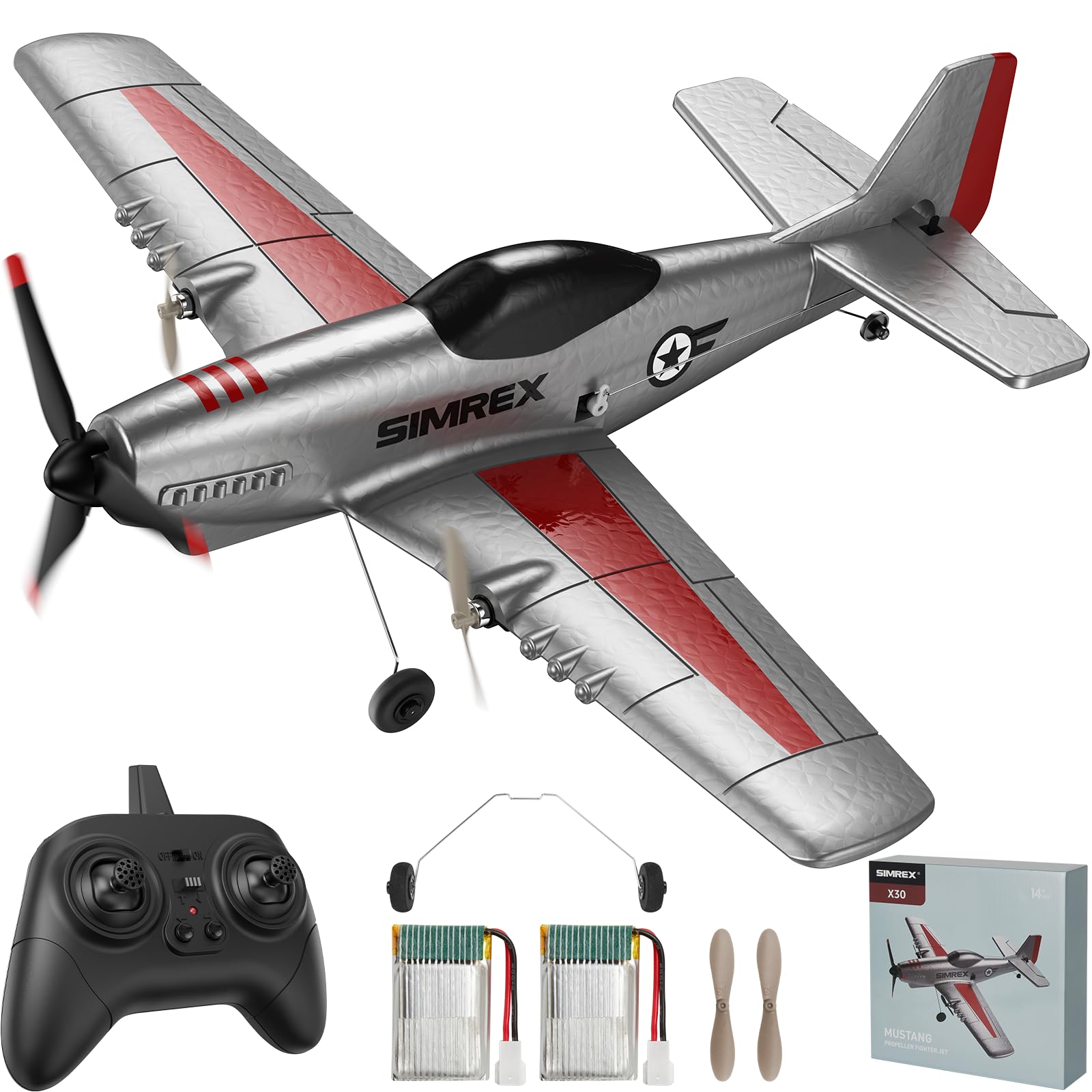
SIMREX P51 Glider

SIMREX P51 Glider

3-channel gyro

Doodle Score 8.6/10
Check Price

Worth Noting

  • Landing gear may break on rough landings
Gyro
6-axis gyro
Channels
3
Flight Time
40 min total (2 batt)
Flight Modes
Read the full review

This 3-channel glider offers a 6-axis gyro for stable flight and comes with two batteries for about 40 minutes of total airtime, making it a decent pick for casual park flying. However, the landing gear can break on hard landings, and some users feel the price is high for the build quality. A cheaper option like the SYMA X550 provides more fun for less money.

Bottom line: A suitable choice for casual flyers who value flight time and have a forgiving landing area, but those on a budget may prefer the SYMA X550.

#7

HobbyZone Carbon Cub

HobbyZone Carbon Cub

Advanced beginners

Doodle Score 8.6/10
Check Price

Worth Noting

  • Requires separate transmitter, battery, and charger (BNF Basic)
Gyro
SAFE technology
Channels
4
Flight Time
15-20 min (batt separate)
Flight Modes
3 modes
Read the full review

The HobbyZone Carbon Cub S 2 delivers a realistic scale experience with SAFE stabilization, making it a capable trainer for flyers who already have a Spektrum transmitter. However, as a BNF Basic model, it does not include a transmitter, battery, or charger – a significant extra investment for those without existing gear.

Bottom line: Ideal for experienced hobbyists with a Spektrum transmitter who want a scale trainer with advanced stability.

#8

HAWK'S WORK 2CH Cessna

HAWK'S WORK 2CH Cessna

Young children

Doodle Score 8.4/10
Check Price

Worth Noting

  • Landing gear and wings can crack or detach when the plane impacts the ground hard.
  • Lightweight airframe drifts noticeably in a light breeze, requiring near-calm conditions.
Gyro
Self-stabilization
Channels
2
Flight Time
30 min total (2 batt)
Flight Modes
Read the full review

This two-channel Cessna keeps things as simple as they get — a single stick controls left-right turns and a throttle button manages climb. That stripped-down design, combined with self-stabilizing gyro and a sub-$45 price, makes it the lowest-commitment option for seeing if a young kid enjoys steering a plane.

It works best for children age five to eight flying with adult supervision in a park on calm days. The foam airframe and landing gear can snap on hard landings, so expect repairs — but the low cost softens that trade-off. Two batteries deliver roughly 30 minutes of total flight time, enough for a handful of short sessions before recharging.

Tip: Fly over tall grass and cut throttle just before touchdown to reduce impact stress on the landing gear.

Bottom line: Buy this only if you want the absolute minimum investment to see if a young child enjoys flying — no 4-channel complexity, no tolerance for wind or hard landings.

#9

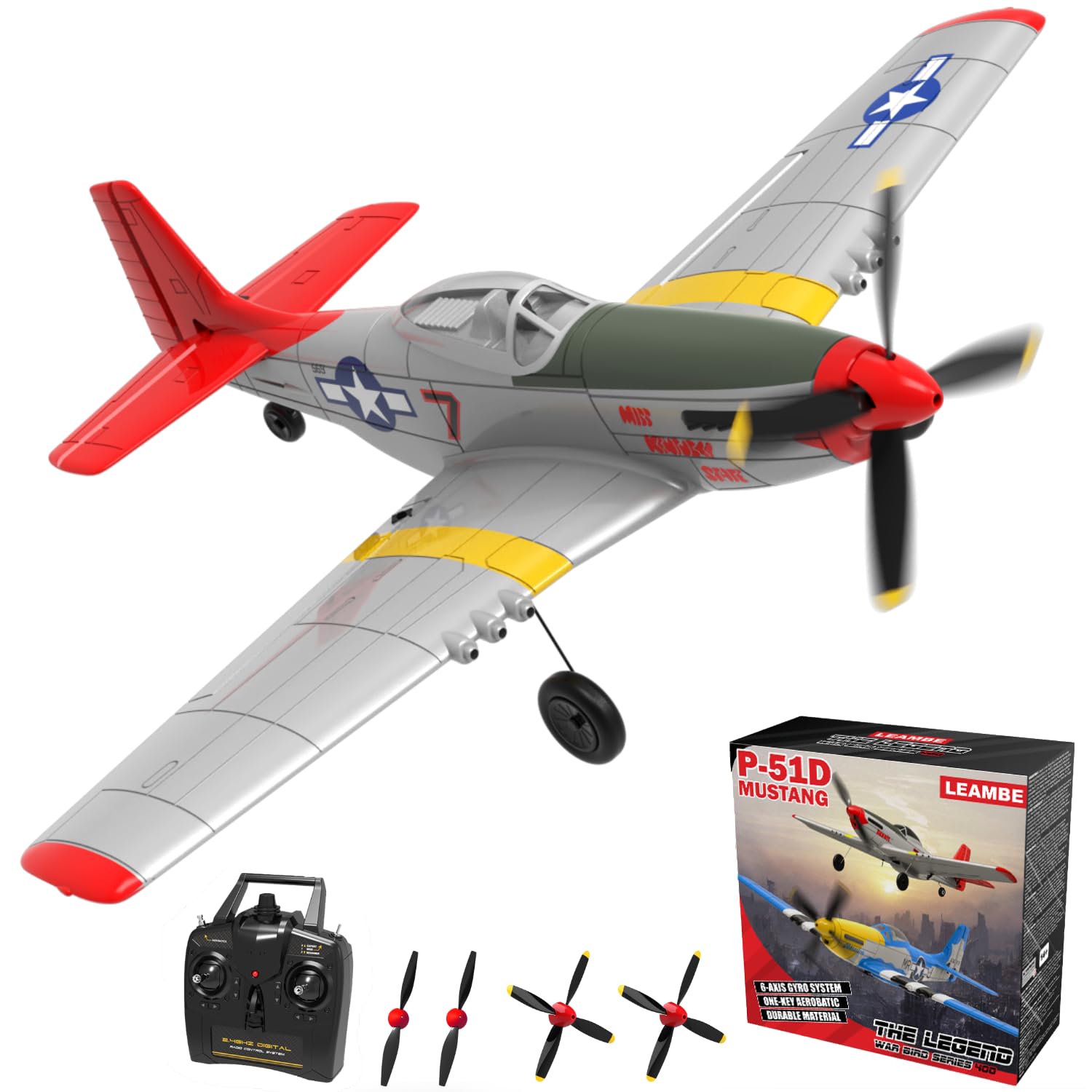
LEAMBE P51 Mustang 4CH

LEAMBE P51 Mustang 4CH

Budget warbird beginner

Doodle Score 8.4/10
Check Price

Worth Noting

  • Propeller retention can loosen on grass landings; wing damage noted in some cases
Gyro
Xpilot 6-axis
Channels
4
Flight Time
12 min (batt not incl)
Flight Modes
3 modes
Read the full review

Four-channel P51 Mustang with Xpilot gyro at a budget price – a functional entry into warbird flying. Build quality varies: propeller retention can loosen on grass landings, and occasional motor or electronics issues have been noted. The Volantexrc P51D provides more consistent durability for a similar investment.

Bottom line: Best for budget-minded hobbyists who can handle occasional repairs and want a 4-channel warbird to learn on.

#10

HAWK'S WORK 3CH P51

HAWK'S WORK 3CH P51

Kids step-up

Doodle Score 8.4/10
Check Price

Worth Noting

  • Nose damage is possible on hard landings
Gyro
6-axis gyro
Channels
3
Flight Time
20 min per battery
Flight Modes
2 takeoff modes
Read the full review

This step-up from basic 2-channel planes offers forgiving gyro-assisted flight and two takeoff modes that kids enjoy. The foam airframe, however, can suffer nose damage during landings, and motor reliability varies between units. The 4-channel competition at a similar budget provides more control and better durability for the same money.

Bottom line: Fits kids advancing from 2-channel who are comfortable with occasional foam repairs and want a taste of warbird control.

How to Choose

Channels: 2, 3, or 4

2-channel planes only control throttle and rudder, turning by spinning the plane. This makes them difficult to steer accurately and nearly impossible to fly in any wind.

3-channel adds elevator for pitch control, allowing loops and basic maneuvering. 4-channel adds ailerons for banking turns, giving you full control for aerobatics and precise flight. For outdoor flying, 4-channel is the recommended minimum.

Gyro Stabilization

A 6-axis gyro automatically corrects the plane's attitude, keeping wings level and reducing the effect of gusts. Without it, a beginner's plane will wobble and crash much more often.

All modern beginner-friendly planes include some form of gyro. Look for '6-axis gyro' or proprietary systems like SAFE or Xpilot. These systems also enable flight modes that limit aircraft angles for safe learning.

Flight Modes

Flight modes adjust control sensitivity and bank limits. Beginner mode reduces maximum bank angle and control throws, letting the pilot focus on throttle and direction without stalling.

Intermediate unlocks more control, and Expert gives full aerobatic freedom. A plane with switchable modes allows a single aircraft to grow with the pilot, avoiding the need to buy a new plane as skills improve.

Battery Life and Spares

Most RTF planes include one battery giving 10-20 minutes of flight. Charging takes 30-60 minutes, so carrying a spare battery doubles your flying time. Extra batteries cost $10-20 and are a worthwhile investment.

Some premium models (like HobbyZone AeroScout S2) do not include a battery or charger. Check the package contents carefully to avoid an unexpected $50-100 expense for a compatible LiPo battery and charger.

Build Material: EPP vs EPS Foam

EPP foam is flexible and resistant to cracking on impact, making it ideal for learners who will crash. EPS foam is lighter but brittle; it dents and cracks easily, and repairs are more difficult.

Most budget toy-grade planes use EPS foam and break on hard landings. Hobby-grade models often use EPP or a composite foam that offers better durability. If you expect frequent crashes, prioritize EPP or a model with good replacement parts availability.

Frequently Asked Questions