RC & Vehicles

9 Best Toy Rockets of 2026: Picks That Survive Real Kid Play

Find a toy rocket that won't break after four stomps, whether you need a toddler-friendly launcher, a dueling set, or a buildable model rocket.

A toy rocket that launches is pure magic — until the stand collapses or the foam nose tears on impact. Many parents discover that rockets marketed with impressive altitude claims and 'easy assembly' don't hold up to the way kids actually play. Flimsy plastic joints and thin foam are often the hidden trade-off behind a low price.

The right rocket for your backyard isn't about the highest advertised feet, but about matching the launch mechanism to your child's age and stomping enthusiasm. Kid-powered stomp rockets excel for toddlers who love active, screen-free play, while motorized and model rockets require older kids, wide-open spaces, and a fair tolerance for delicate handling.

This guide focuses on the specific features that separate a one-afternoon novelty from a toy that gets pulled out every weekend. By understanding how each type actually performs under repeated launches — and which parts tend to give way first — you can pick a rocket that fits your family's play pattern instead of one that ends up in a junk drawer.

#1

Stomp Rocket Jr (8 Rockets)
Stomp Rocket Jr (8 Rockets)

Toddlers & preschoolers

Doodle Score 9.2/10
Check Price

Worth Noting

Age
3+
Max Altitude
up to 100 ft
Launch Method
Stomp
Build Material
Foam rockets, plastic stand
Read the full review

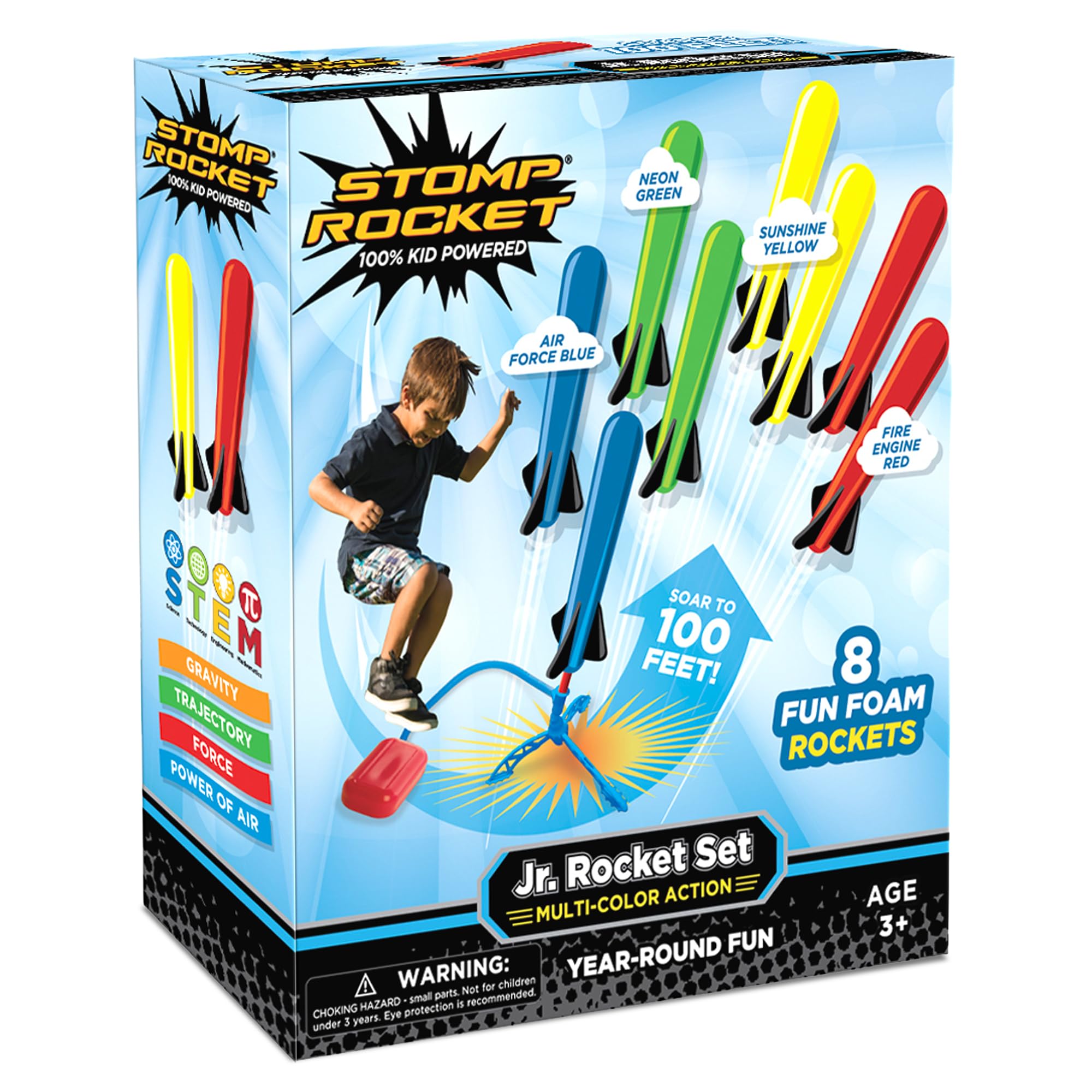
The Stomp Rocket Jr turns a simple stomp into instant flight — 100-foot launches with zero assembly stress. Eight lightweight foam rockets and a kid-powered launcher mean no batteries, no charging, and playtime that starts the moment the box opens. Even a three-year-old can load and stomp independently, and the laughter lasts long after the last rocket lands.

The tradeoff is durability at this price point. The plastic stand needs careful placement on firm ground, and the rockets handle grassy touchdowns better than pavement. With light, supervised use by small children, the set can deliver dozens of afternoon launch sessions. Heavy stomping or hard surfaces will accelerate wear.

This is the go-to rocket for families with toddlers and preschoolers who want screen-free outdoor energy without complex setups. It's also a hit as a birthday gift for 3- to 5-year-olds, especially for parents who accept a simple DIY upkeep. The launch stand is flimsy and often requires duct tape reinforcement; expect to order extra rockets as foam noses tear.

Tip: Wrap duct tape around the stand joints before first use to prevent wobble and extend playtime.

Bottom line: For families with 3-5 year olds seeking screen-free fun, the Stomp Rocket Jr delivers unmatched entertainment value — just budget for a roll of duct tape and a spare rocket pack.

#2

Stomp Rocket Dueling (8 Rockets)

Stomp Rocket Dueling (8 Rockets)

Siblings & playdates

Doodle Score 9.2/10
Check Price

Worth Noting

  • Rockets can tear or lose shape with repeated enthusiastic landings.
  • One launch pad may occasionally misfire, and the stand requires a level surface for stability.
Age
5+
Max Altitude
up to 200 ft
Launch Method
Stomp dueling base
Build Material
Foam rockets, plastic stand
Read the full review

Where the classic Stomp Rocket Jr. keeps the experience solo, this Dueling set mounts two launch pads side by side on a single stand. Two kids stomp at the same time, turning a backyard launch into a head-to-head competition — whose rocket goes higher or lands first. The kid-powered design needs no batteries or charging, and the stand assembles without tools in a couple of minutes. With a claimed 200-foot ceiling, the dual launches feel dramatic, though the practical height is closer to what a child's stomp can deliver.

It's built for siblings, friends, or party play where head-to-head action matters. The dueling feature isn't necessary for a young toddler's first stomp rocket — the top pick's single launcher is simpler and more forgiving. One caveat: one side of the launcher may occasionally fail to trigger, and the stand needs a flat, firm surface to stay stable; on uneven ground you'll spend time repositioning. But for a two-kid showdown, the occasional hitch doesn't erase the fun.

Tip: Test each launch pad before play and set the stand on pavement or packed dirt; even slight warping can prevent the second rocket from firing.

Bottom line: The dueling format gives two kids a screen-free reason to compete, which a single-pad launcher can't match. Anticipate occasional misfires and keep a few extra rockets handy — the tradeoff is worth it for sibling rivalry.

#3

Mafbeanl Motorized Rocket

Mafbeanl Motorized Rocket

Parachute recovery fans

Doodle Score 9.2/10
Check Price

Worth Noting

  • Fins can detach on landing, particularly on hard surfaces, and may need to be reattached.
  • The body may crack after repeated hard impacts, so grass landings are necessary for longevity.
Age
8+
Max Altitude
up to 200 ft
Launch Method
Motorized
Build Material
Plastic rocket, rechargeable battery
Read the full review

Motorized launches with a parachute deploy system give this rocket a satisfying return-to-earth loop that other motorized rockets lack. The dual altitude settings and USB-C charging enable multiple flights on a single charge, while the auto-deploy parachute brings the rocket down gently. That sets it apart from motorized rockets that rely on rotor-blade descent, which can end with harder landings.

This rocket is best for kids 8 and up who love watching a parachute unfold mid-flight. It needs wide-open grassy fields and calm conditions — on pavement or packed dirt, the fins may detach and the body can crack after a few impacts. Wind easily drifts the parachute, so pick a still day. Families with limited space or children prone to dropping the rocket should steer clear.

Bottom line: A motorized rocket that delivers impressive parachute descents and multiple launches per charge, best reserved for large grassy fields where fragile fins avoid hard ground.

#4

Otoseth Rocket Launcher (8 Pk)

Otoseth Rocket Launcher (8 Pk)

Budget-conscious families

Doodle Score 9.2/10
Check Price

Worth Noting

  • Stand can loosen over time with heavy stomping; may need occasional tightening
  • Spare parts are harder to find than for the Stomp Rocket Jr.
Age
3+
Max Altitude
up to 100 ft
Launch Method
Stomp
Build Material
Foam rockets, plastic stand
Read the full review

The Otoseth Rocket Launcher packs 8 foam rockets, an adjustable stand, and 100-foot stomp launches into a package that costs notably less than the name-brand alternative. The quick, tool-free setup and soft foam rockets make it a hit with toddlers — even 3-year-olds manage the stomp-and-launch action after a single demonstration. Build quality feels more solid than the low sticker price suggests, and the launch angle adjustment adds a touch of variety to each flight.

This is the budget-friendly choice for families introducing a 3- to 5-year-old to outdoor stomp rockets who don't want to pay a premium for the brand name. The stand can loosen after repeated heavy stomping — a quick twist usually tightens it back up — and replacement parts aren't as easy to come by as for the Stomp Rocket Jr. But for a first rocket toy that will see moderate use, the Otoseth delivers more than enough smiles per dollar.

Tip: Give the stand connections a quick twist every few sessions; they can work loose after enthusiastic stomping.

Bottom line: For a first stomp rocket that introduces a 3-year-old to outdoor launching without stretching the gift budget, the Otoseth hits the sweet spot — fun, easy, and wallet-friendly.

#5

Estes Tandem X Launch Set

Estes Tandem X Launch Set

DIY model rocketry

Doodle Score 9.0/10
Check Price

Worth Noting

  • Kits may arrive with a missing nose cone or other component; launch pad quality varies.
  • Launch controller may fail to fire igniters; some launches need multiple attempts.
Age
10+
Max Altitude
up to 1,150 ft
Launch Method
Model rocket engine
Build Material
Plastic/paper rockets, plastic pad, controller
Read the full review

Unlike the ready-to-fly rocket in this comparison, the Tandem X kit centers on the build process. You get two rockets—the Crossfire with its sleek fins and the classic Amazon—each taking roughly an hour to assemble. The included launch pad and controller are simple enough for a beginner to operate. Once built, the Crossfire can reach 1,150 feet on a C6-7 engine, while the Amazon tops out around 600 feet, delivering the genuine thrill of a real hobby rocket.

Designed for ages 10 and up, this kit targets families who want a project, not an instant toy. You'll need to purchase rocket engines and recovery wadding separately—the box makes that clear. The hands-on construction and the excitement of launching your own rocket are the main draw. Some kits arrive with a missing nose cone or a launch controller that won't power up. Carry a spare igniter and be prepared to possibly source a replacement part. This isn't a push-button experience; it's a hobby that rewards patience and troubleshooting.

Tip: Keep spare igniters and fresh batteries on hand — the controller sometimes needs a second press to fire.

Bottom line: For families willing to troubleshoot occasional quality hiccups and buy engines separately, this kit delivers the authentic thrill of building and launching your own rockets—a genuine STEM experience that ready-to-fly models can’t match.

#6

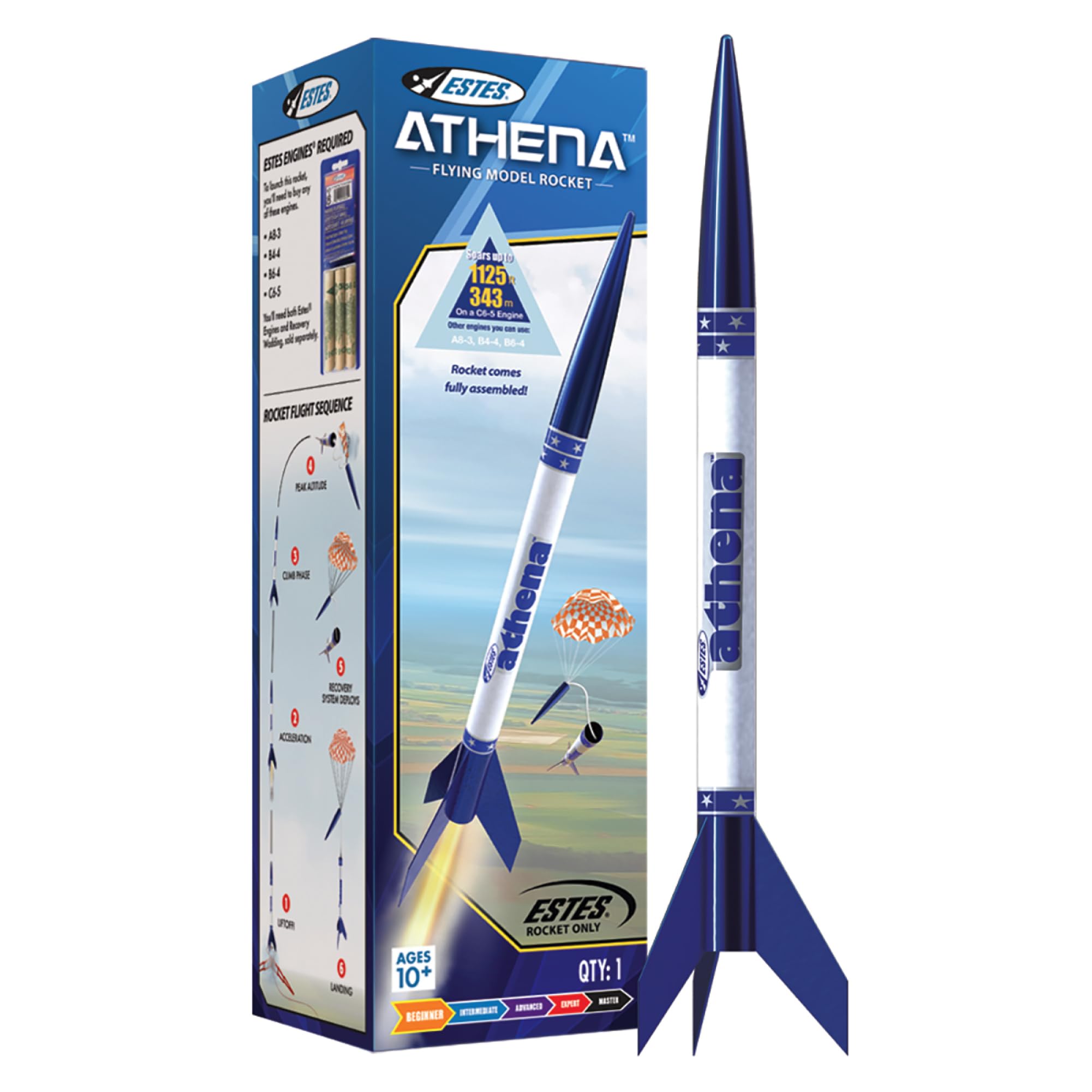
Estes Athena Rocket

Estes Athena Rocket

Instant launches

Doodle Score 9.0/10
Check Price

Worth Noting

  • Parachute deployment can be inconsistent, and a failed chute may cause the rocket to crash or drift away.
Age
10+
Max Altitude
up to 1,125 ft
Launch Method
Model rocket engine
Build Material
Plastic rocket, parachute
Read the full review

The Athena skips the building phase entirely — it comes fully assembled, so you just pack the parachute, insert an engine, and you're ready to launch. This contrasts with buildable starter kits that require hours of cutting, gluing, and painting before the first flight. On a C6-7 engine, the rocket soars up to 1,125 feet, delivering a genuine model-rocketry rush in minutes rather than days.

This instant-gratification format appeals to kids who want to launch right away and adults who don't want a craft project. The catch: parachute deployment is not foolproof. In some launches, the chute may fail to eject, and a hard landing can crack the body or send the rocket drifting out of sight. If the thought of losing the rocket on its maiden flight feels like a dealbreaker, the top pick's buildable kit offers a sturdier recovery experience — at the cost of upfront building time.

Tip: Practice packing the parachute loosely and check for snags before each flight to reduce deployment risk.

Bottom line: A quick-start model rocket for those who value flight over building — just be ready to lose it if the parachute doesn't cooperate.

#7

Ninja Blast Dino Rocket Launcher

Ninja Blast Dino Rocket Launcher

Dino-loving toddlers

Doodle Score 9.0/10
Check Price

Worth Noting

  • Foam rockets can tear, and the launcher may crack under enthusiastic stomping
Age
3+
Max Altitude
up to 100 ft
Launch Method
Stomp
Build Material
Foam rockets, plastic stand
Read the full review

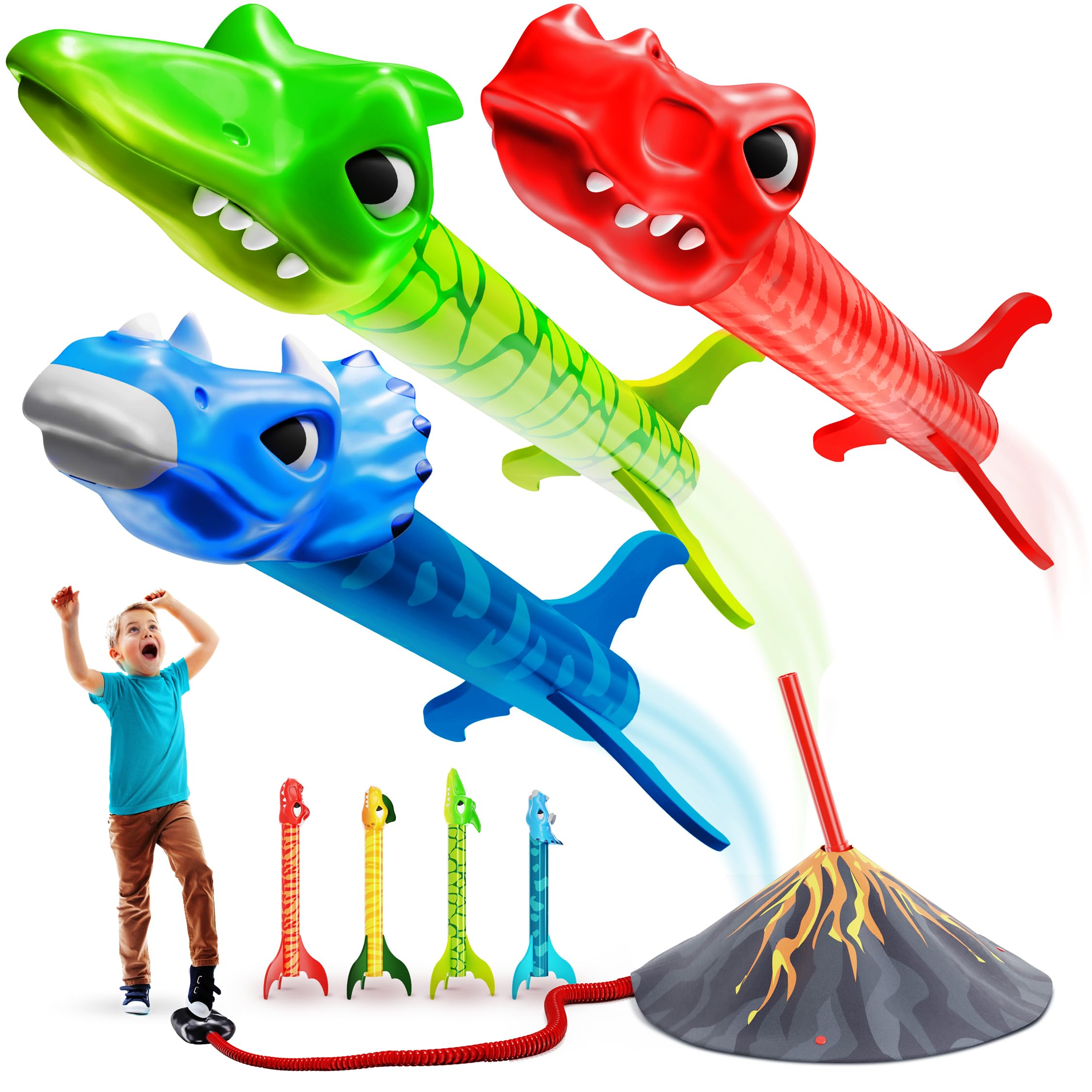
The four foam rockets with smiling dinosaur faces instantly appeal to toddlers, and the stomp mechanism is simple enough for a 3-year-old to launch on their own. Rockets can reach impressive heights when stomped gently. However, the foam may tear on impact and the plastic launcher can crack under enthusiastic stomping, making this a short-lived novelty. It suits a dinosaur-loving child whose parents understand it may only last a handful of play sessions before things start to break down.

Bottom line: Best as a delightful short-term surprise for a dinosaur-obsessed 3-year-old whose parents know it may not survive many play sessions.

#8

National Geographic Power Rocket

National Geographic Power Rocket

Rotor descent fans

Doodle Score 9.0/10
Check Price

Worth Noting

  • Altitude may fall short of the advertised 200 feet; actual performance varies.
  • The rocket body and fins can crack after a few landings, limiting lifespan.
Age
8+
Max Altitude
up to 200 ft
Launch Method
Motorized
Build Material
Plastic rocket, rechargeable battery
Read the full review

The motorized launch and helicopter-style rotor descent give liftoffs a unique flair that space-loving kids enjoy. The plastic body and fins can crack within the first few landings, and the altitude may not match the advertised 200 feet. This rocket suits a one-time spectacle — a birthday party with gentle handling — rather than daily play. The rotor landing is a neat touch, but the build isn't intended for long-term durability.

Tip: Launch over grass to soften landings and protect the fins, and don't expect top altitude on every flight — fully charging the battery helps performance.

Bottom line: Ideal for a one-time spectacle like a birthday party with a child who handles it gently, not for repeated outdoor play.

#9

Refresh Slingshot Rocket Launcher

Refresh Slingshot Rocket Launcher

Slingshot fans

Doodle Score 8.8/10
Check Price

Worth Noting

  • The plastic slingshot handle can crack under tension after a few pulls, ending play.
  • Foam rockets may split along the seam after hard landings, impairing flight.
Age
6+
Max Altitude
up to 250 ft
Launch Method
Slingshot
Build Material
Foam rockets, plastic slingshot
Read the full review

The pull-and-release slingshot action sends foam rockets soaring far with a loud scream, and reloading is quick enough to maintain a fast-paced game. Build quality, however, can be unreliable. This is a short-lived novelty best suited for a few backyard sessions rather than lasting outdoor play.

Bottom line: Pick this for a beach day or a park outing where chasing rockets is part of the fun, and don't expect it to become a toy chest staple.

How to Choose

Launch Method

Stomp rockets are kid-powered — a jump on an air bladder sends a foam rocket skyward. This keeps play active and battery-free, but the stand absorbs all that stomping force and is often the first component to crack or collapse. Motorized rockets use a rechargeable fan or propeller; they launch with a button press and are quieter, but the plastic fins and charging ports are easily damaged by hard landings or drops.

Model rockets use a disposable solid-fuel engine ignited electrically. They reach the highest altitudes but require you to buy engines and recovery wadding separately, and a faulty igniter or parachute can mean losing the rocket on the first flight. Slingshot launchers are manual pull-and-release toys that send rockets far, but the foam rockets split under tension and the handle often fails over time.

Maximum Altitude

Advertised heights are measured under ideal conditions — no wind, perfect launch angle, fresh rocket. In real backyards, a stomp rocket labeled '100 feet' may only reach 60–70 ft, and a motorized rocket claiming 200 ft can struggle if the battery isn't fully charged or the parachute deploys early. For model rockets, altitude depends heavily on the engine chosen, not just the kit’s potential.

Rather than chasing the top number, consider what height suits your space. A 100-ft stomp rocket is plenty for most suburban yards, while a 1,000-ft model rocket demands a large, clear field away from trees and power lines.

Number of Rockets

A set with eight rockets sounds generous, but foam rockets are consumable. After a few hard stomps, the nose can split or the body can tear, so a larger initial count only delays the next purchase. Check whether the manufacturer sells replacement rockets separately — without that, the launcher becomes useless when the foam wears out.

For motorized and model rockets, the rocket body is typically the airframe itself, so a broken fin or cracked hull means replacing the entire unit. Parachutes and rotor blades add recovery complexity but also create new failure points on landing.

Age-Appropriateness

Age labels matter because they signal both dexterity requirements and stomping force expectations. Stomp rockets for ages 3+ use a lighter stomp mechanism that a toddler can operate, but older, stronger siblings who jump too hard may snap the stand immediately. Motorized rockets for ages 8+ demand delicate handling during charging and landing; a younger child who treats it like a stomp rocket will likely break the fins.

Model rockets (10+) add building, igniter safety, and recovery tracking. They are rewarding as a parent-child project, but solo play is rare — adult supervision is essential for safe launches and to troubleshoot misfires.

Build Quality and Durability

Plastic launch stands are the weak link in most stomp rockets. Look for reinforced joints or a stand that can be taped to the ground without blocking the air hose. Foam rockets vary in density: softer foam tears less on impact but can deform over time; denser foam flies faster but may split at the seam after repeated landings.

For motorized and model rockets, the landing system is the biggest durability variable. Parachute packing must be precise — a tangled chute means a ballistic fall. Fin attachments that are glued rather than molded as one piece often detach on the first few flights. Examine how the fin mounts and whether the charging port cover seals tightly to prevent dirt from killing the circuit.

Frequently Asked Questions