STEM & Learning

13 Best Microscope for Kids 2026: Get Honest Magnification That Actually Works

Why cheap microscopes claim 1000x but deliver 200x. Which models give young scientists real glass optics and frustration-free viewing.

Many digital microscopes for kids advertise 1000x magnification, but the actual useful zoom is around 200x or less. That leaves parents frustrated when blades of grass look blurry. This guide cuts through the hype to find microscopes that deliver honest specs and keep kids engaged.

The real choice isn't between digital and analog — it's between a toy that entertains and a tool that teaches. For a child's first real microscope, glass optics and a stable focus mechanism matter more than inflated numbers. We focused on build quality, ease of use, and accessories that encourage exploration.

Whether your child is a preschooler who learns best through audio or a budding biologist ready to examine cells, there's a microscope here that fits their stage — without the guesswork.

#1

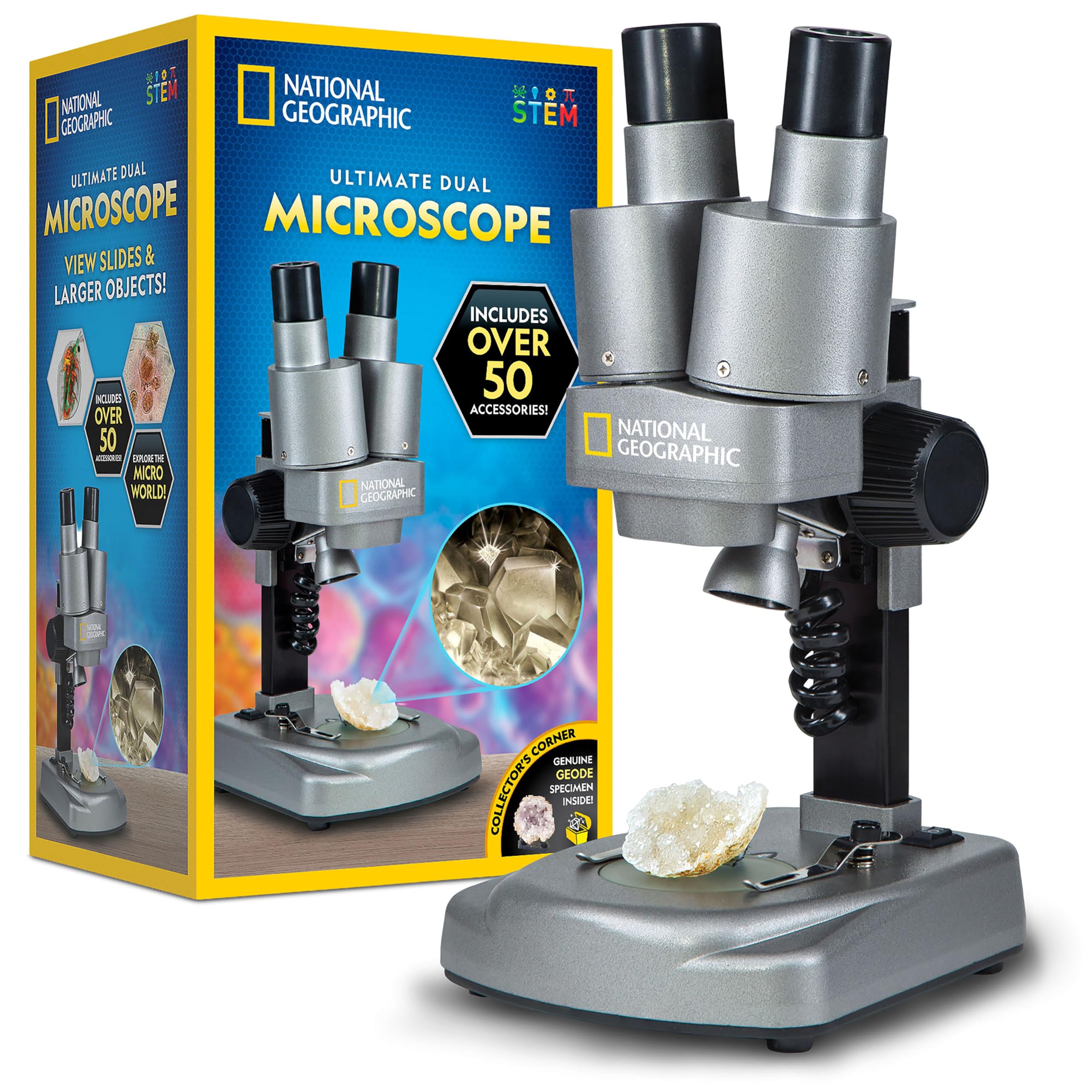
Nat Geo Dual LED Microscope
Nat Geo Dual LED Microscope

Young scientists 6-10

Doodle Score 9.2/10
Check Price

Worth Noting

  • A small number of units arrive with broken glass slides or non-functioning lights.
Focus Type
Manual focus (knob)
Accessories
10 prep slides + kit
Body Material
Metal/glass
Viewing Method
Eyepiece
Read the full review

The metal body and glass lenses set this microscope apart from plastic alternatives. Image quality is sharp at both magnifications, and the large focus knobs make adjustments simple for small hands. The dual LED system provides even lighting for both slides and solid objects.

This kit suits children ages 6 to 10 who show genuine curiosity in biology. The 50x limit means it won't show individual cells, but it handles insects, fabric, and prepared slides with clarity. Not a toy for casual play or toddlers.

Tip: Inspect the slides and LED lights upon arrival; if damaged, Amazon’s return policy covers it.

Bottom line: Backed by high ratings and consistent praise for durability and image quality, this is the traditional microscope to buy for a child ready to look beyond digital screens.
#2

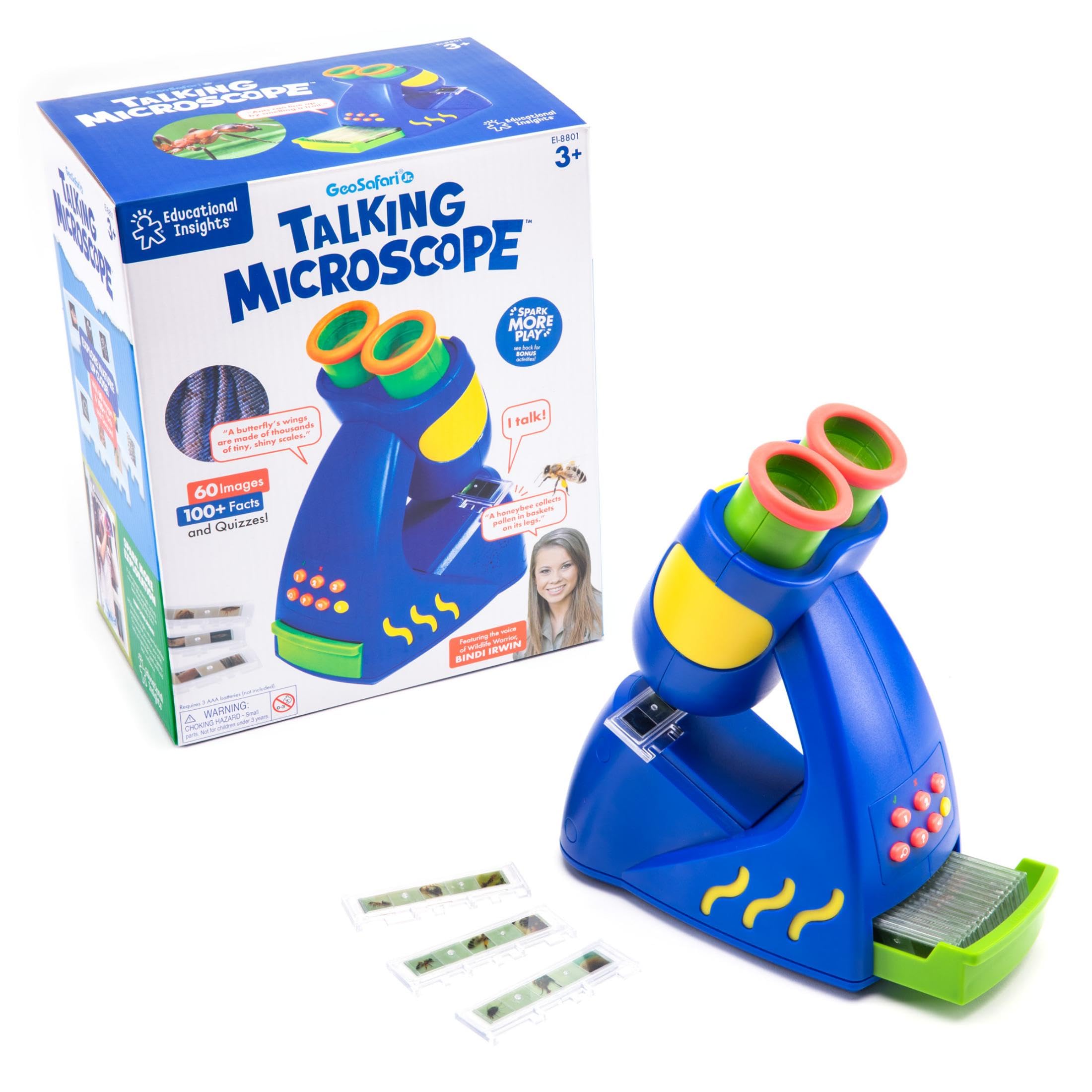
Educational Insights Talking Microscope

Educational Insights Talking Microscope

Preschoolers 3-5

Doodle Score 9.2/10
Check Price

Worth Noting

  • Slide drawer latch may not stay closed, allowing slides to spill out.
  • Some slides can break and the drawer may arrive with damage; check on delivery.
Focus Type
Automatic (no focus)
Accessories
20 slides, 60 images
Body Material
Plastic
Viewing Method
Slideshow screen
Read the full review

The GeoSafari Talking Microscope captivates young learners with audio facts and quiz mode narrated by Bindi Irwin, requiring no focusing or adult setup. It includes 60 images on 20 slides and two modes (facts and quiz) that keep children ages 3-5 engaged for hours. Parents appreciate the screen-free design and simple operation — slides clip in and play automatically. The slide drawer latch may not stay closed, causing slides to spill, and some slides can break; inspect the unit upon arrival.

Tip: Inspect the slide drawer and slides when you open the box; the latch and slides may need extra care.

Bottom line: Good for preschoolers who want an introduction to science without the frustration of focusing, though the slide storage can be finicky.

#3

WINWEND Digital 1000X

WINWEND Digital 1000X

Kids 4-10 digital

Doodle Score 9.2/10
Check Price

Worth Noting

  • Effective magnification is around 200x despite the 1000x claim
  • Focus can be tricky on some units, leading to occasional blurry images
Focus Type
Manual focus
Accessories
Built-in photo storage
Body Material
Plastic
Viewing Method
2.0" screen
Read the full review

The WINWEND digital scope offers a crisp 2-inch screen and intuitive controls that let kids snap photos and explore without squinting into an eyepiece. Unlike the top pick's analogue optics, this is built for screen-loving children ages 4-10 who want instant visual feedback and shareable pictures. The advertised 1000x magnification is digital zoom — effective real-world zoom is around 200x, which is fine for examining coins, leaves, and bugs.

Tip: If the image appears blurry, adjust the focus wheel slowly — some units require fine-tuning for sharp images.

Bottom line: For families who want a digital screen and photo-sharing without the complexity of an analogue microscope, the WINWEND delivers an engaging experience within its realistic magnification limits.

#4

Odatay 4K Digital

Odatay 4K Digital

Outdoor 3-12

Doodle Score 9.2/10
Check Price

Worth Noting

  • Advertised 1000x magnification is not achievable; actual on-screen zoom is around 30x.
Focus Type
Manual focus
Accessories
32GB SD card included
Body Material
Plastic
Viewing Method
2.4" screen
Read the full review

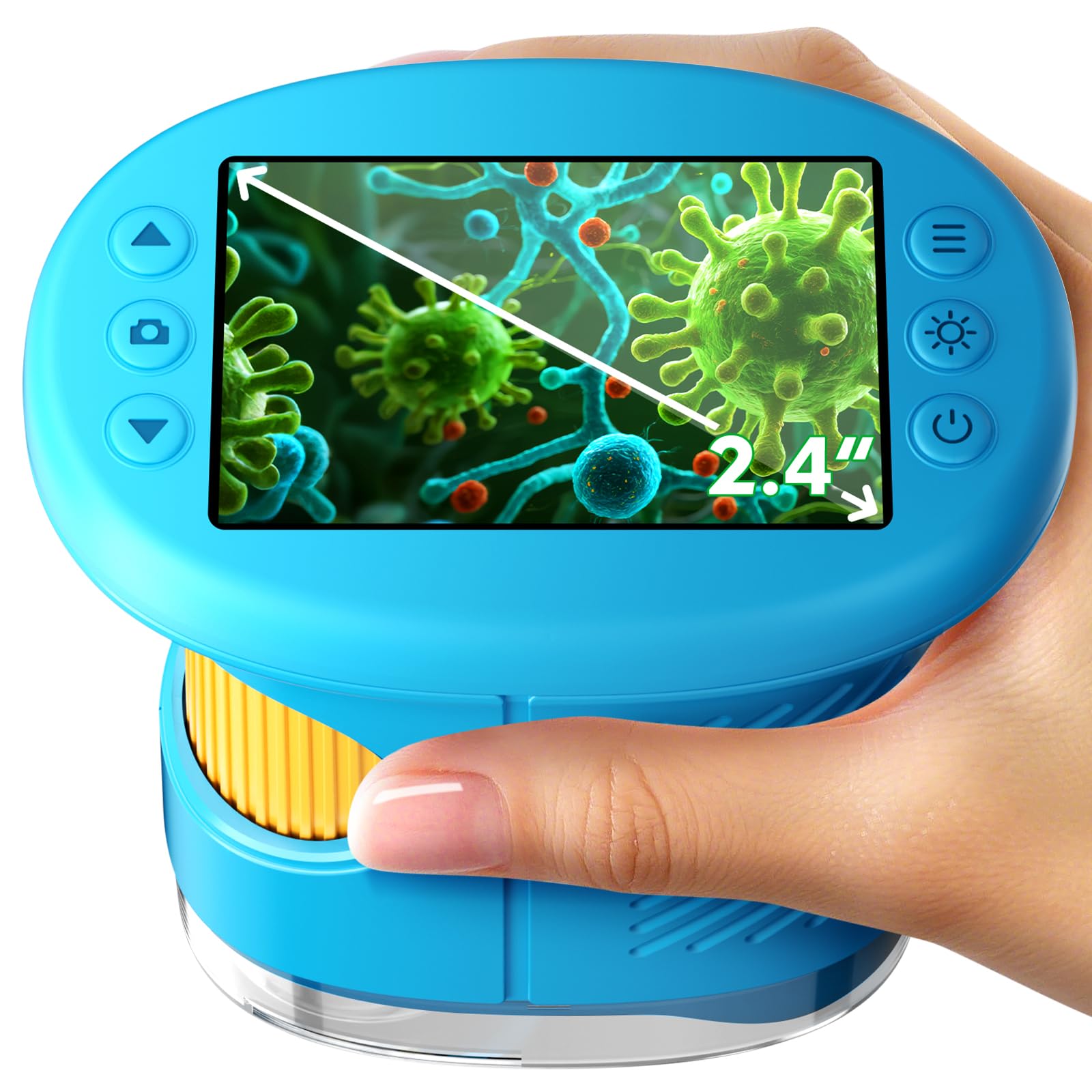
The Odatay's 2.4-inch IPS screen is the largest among digital handheld microscopes at this price, delivering clear images that multiple kids can view at once. The included 32GB SD card makes photo sharing immediate — no extra purchases needed. The advertised 1000x magnification is a marketing exaggeration; actual on-screen zoom is around 30x, which is typical for these budget scopes. Best for kids ages 3-12 who prefer a screen-based experience and want to document their nature finds without fumbling with an eyepiece.

Tip: Remove the protective film from the lens before first use to avoid focus issues.

Bottom line: For families who want a screen-based microscope with easy photo sharing, this is a solid option — just ignore the magnification number.

#5

Acoath Digital Miniscope

Acoath Digital Miniscope

Kids 3-8 digital

Doodle Score 9.2/10
Check Price

Worth Noting

  • Advertised 1000x magnification is not achievable; useful zoom is around 200x.
Focus Type
Manual focus
Accessories
Built-in 200 photos
Body Material
Plastic
Viewing Method
2.0" screen
Read the full review

This budget digital microscope delivers bright images that young kids can capture with simple button presses. Its advertised 1000x zoom is unrealistic — actual magnification is around 200x, which is fine for examining coins or leaves but not individual cells. It performs similarly to the top-rated WINWEND model without adding a distinct feature, making it a secondary option for those who prioritize ease of use over raw magnification.

Bottom line: Best for preschoolers who want a portable toy microscope with instant photo feedback, where magnification accuracy is not a concern.

#6

Vorth Digital 2.4"

Vorth Digital 2.4"

Kids 3-8 large screen

Doodle Score 9.2/10
Check Price

Worth Noting

  • Lens surface scratches easily; the protective case can also interfere with button access.
Focus Type
Manual focus
Accessories
Body Material
Plastic/food silicone
Viewing Method
2.4" screen
Read the full review

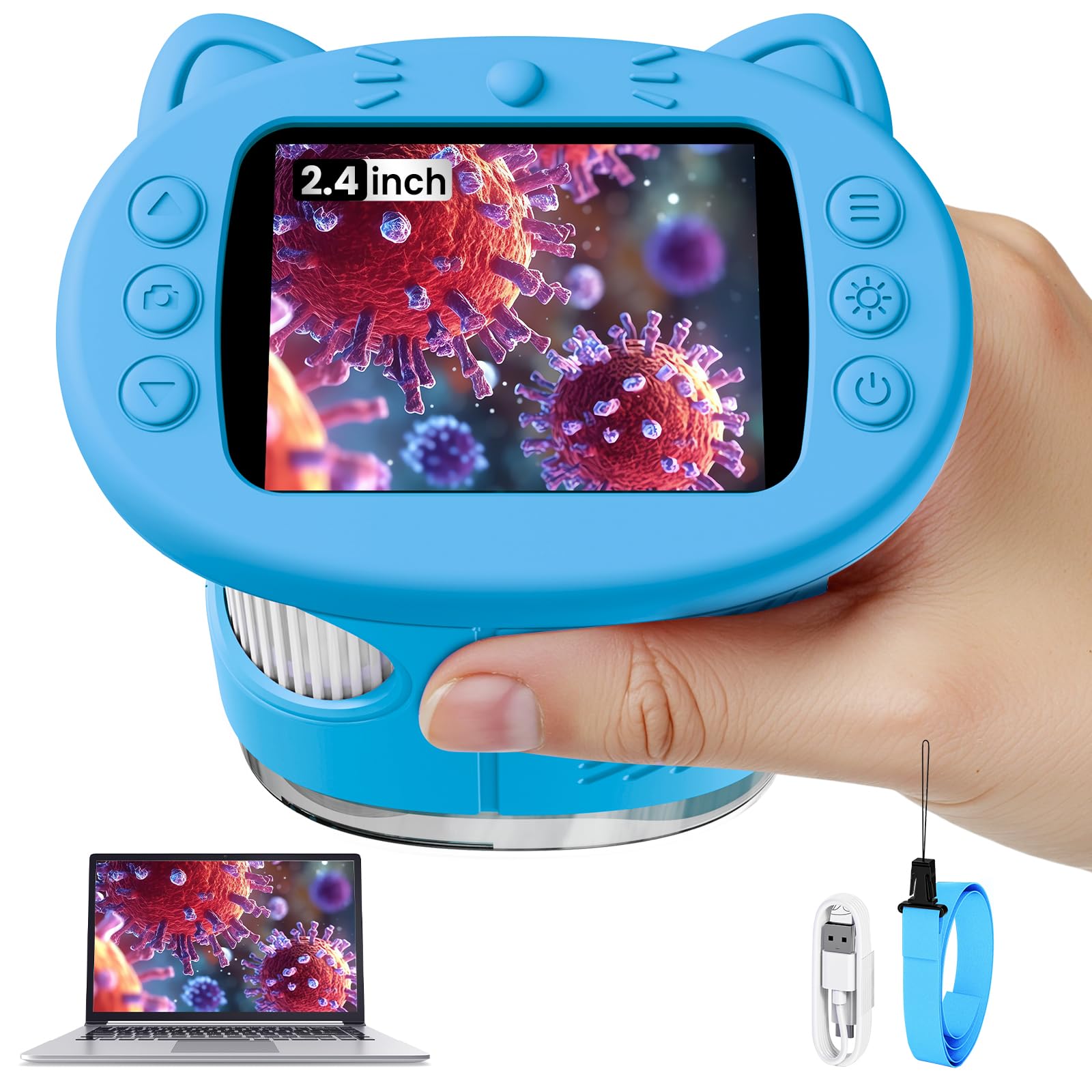
The Vorth Digital is a smart choice for indoor exploration: its 2.4-inch screen makes viewing easy, and the soft silicone body protects drops. However, the lens scratches easily (the included silicone case can sometimes block buttons), and the advertised 1000x zoom is digital only — real magnification is modest. This suits casual indoor use with household objects, not rough outdoor play or serious science.

Bottom line: Best suited for indoor use with curiosity-driven kids aged 3-8 who want a digital viewer for leaves, coins, and fabric, not for science education or outdoor adventures.

#7

Nat Geo Basic Microscope

Nat Geo Basic Microscope

Very tight budget

Doodle Score 9.0/10
Check Price

Worth Noting

  • The plastic body can feel flimsy under normal handling.
Focus Type
Manual focus
Accessories
6 prep slides, rock specimens
Body Material
Plastic
Viewing Method
Eyepiece
Read the full review

As the lowest-cost entry into the National Geographic microscope line, it includes prepared slides and rock specimens that immediately engage curious children. However, the plastic body feels flimsy, and optical quality can vary between units, making this better suited as a disposable first scope than a long-term educational tool.

Bottom line: A passable introduction to microscopy for children who may not treat equipment gently, provided expectations are set appropriately.

#8

Carson MicroBrite 40x

Carson MicroBrite 40x

Budget-first buyers

Doodle Score 9.0/10
Check Price

Worth Noting

  • Image may appear reversed or upside down, which can confuse first-time users.
Focus Type
Manual focus
Accessories
Body Material
Plastic
Viewing Method
Eyepiece (LED)
Read the full review

The Carson MicroBrite offers the lowest price for a functional 20-40x zoom pocket microscope. Its compact size and LED light make it easy to take on hikes. However, the image can appear reversed or upside down, which may confuse some users. For kids who can manage the focus wheel, this is a cost-effective first tool.

Bottom line: Ideal for budget-conscious parents who want a simple, no-fuss magnifier for outdoor exploration.

#9

Uarzt 58-Piece Kit

Uarzt 58-Piece Kit

Extreme budget

Doodle Score 9.0/10
Check Price

Worth Noting

  • Focusing difficulties and possible quality issues make clear viewing a gamble
Focus Type
Manual focus
Accessories
58 pieces kit
Body Material
Metal/plastic
Viewing Method
Eyepiece
Read the full review

This budget-friendly set provides 58 pieces that excite a child getting their first microscope. However, focusing is difficult to achieve, and occasional quality control issues mean some units may arrive non-functional. The low price keeps it accessible but optical performance is a compromise.

Bottom line: Best for families who want a low-cost introduction to microscopes for casual play and aren't expecting crystal-clear images.

#10

BEBANG Green Digital

BEBANG Green Digital

Same as BEBANG

Doodle Score 9.0/10
Check Price

Worth Noting

  • Some units may not power on or have functionality issues.
Focus Type
Manual focus
Accessories
Slides, case, strap
Body Material
Plastic
Viewing Method
2.0" screen
Read the full review

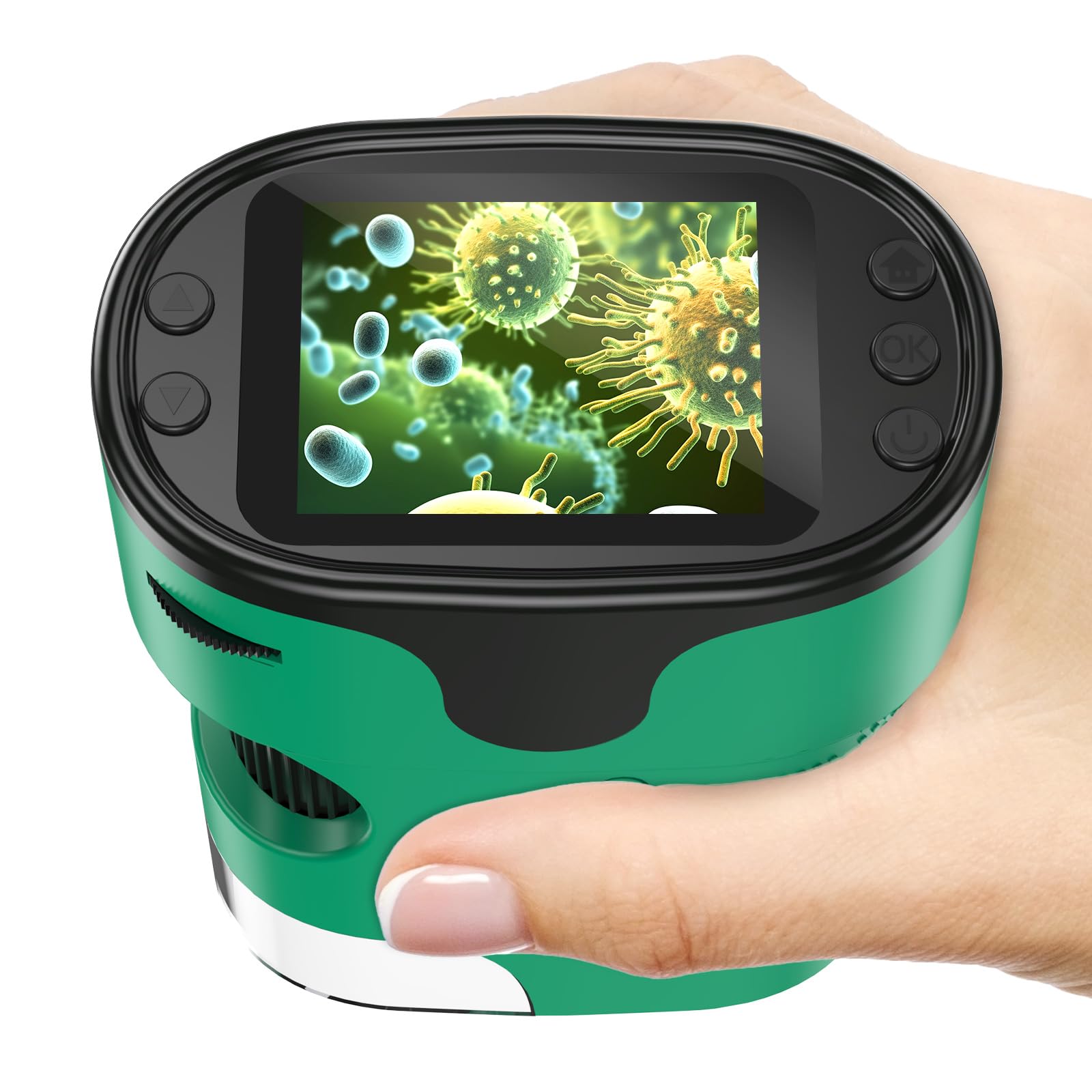
The BEBANG Green Digital offers the same pocket-friendly design, 2-inch IPS screen, and included slides as its orange counterpart - great for young explorers who want a simple digital view of everyday objects. However, the advertised 1000x magnification is a digital zoom not achievable, and some units may have power issues. Since the orange model is identical, choose this only if you prefer green.

Bottom line: For a child who wants a digital microscope to explore and doesn't need high magnification, this is a fine option - but the orange version is identical, so pick whichever color you prefer.

#11

AmScope M30 Beginner Kit

AmScope M30 Beginner Kit

Budget-minded 10+

Doodle Score 8.8/10
Check Price

Worth Noting

  • Visual clarity may be disappointing at higher magnifications
  • Build quality can feel flimsy, with some parts loosening over time
Focus Type
Manual focus (knobs)
Accessories
52 pieces kit
Body Material
Metal/plastic
Viewing Method
Eyepiece
Read the full review

The AmScope M30 Beginner Kit offers a complete introduction to compound microscopy at a budget-friendly price. The set includes 52 pieces, from prepared slides to a carrying case, making it a popular gift for sparking curiosity in science.

This kit works best for children 10 and older who have the patience to tinker with focusing. The optics can be inconsistent — some units arrive with blurry views or focusing issues, particularly at higher magnification settings.

Tip: Start at low magnification and work up; focusing requires steady hands and bright lighting.

Bottom line: A gamble on optics and build, but if you get a good unit it's a solid starter kit for patient young scientists on a tight budget.

#12

Carson Pocket Micro 60x

Carson Pocket Micro 60x

Casual field use

Doodle Score 8.8/10
Check Price

Worth Noting

  • Image may appear blurry or reversed when zoomed in
Focus Type
Manual focus
Accessories
Body Material
Plastic
Viewing Method
Eyepiece (LED)
Read the full review

Its tiny size fits any pocket, making it handy for inspecting bugs, leaves, and coins while outdoors. The 20x-60x zoom range is useful for casual gawking, but image clarity can get blurry at higher magnifications and the built-in LED is dim for detailed work. This trade-off keeps it from competing with the more optically consistent MicroBrite Plus, so it's best for quick looks rather than serious observation.

Bottom line: Best suited for quick outdoor inspections where pocketability matters more than image clarity.

#13

Carson MicroBrite Plus 120x

Carson MicroBrite Plus 120x

Older kids 10+

Doodle Score 8.4/10
Check Price

Worth Noting

  • Small viewfinder and narrow field of view require getting very close to the subject.
  • Focus wheel demands a steady hand and can be fiddly for younger users or in the field.
Focus Type
Manual focus (wheel)
Accessories
Body Material
Plastic
Viewing Method
Eyepiece (LED)
Read the full review

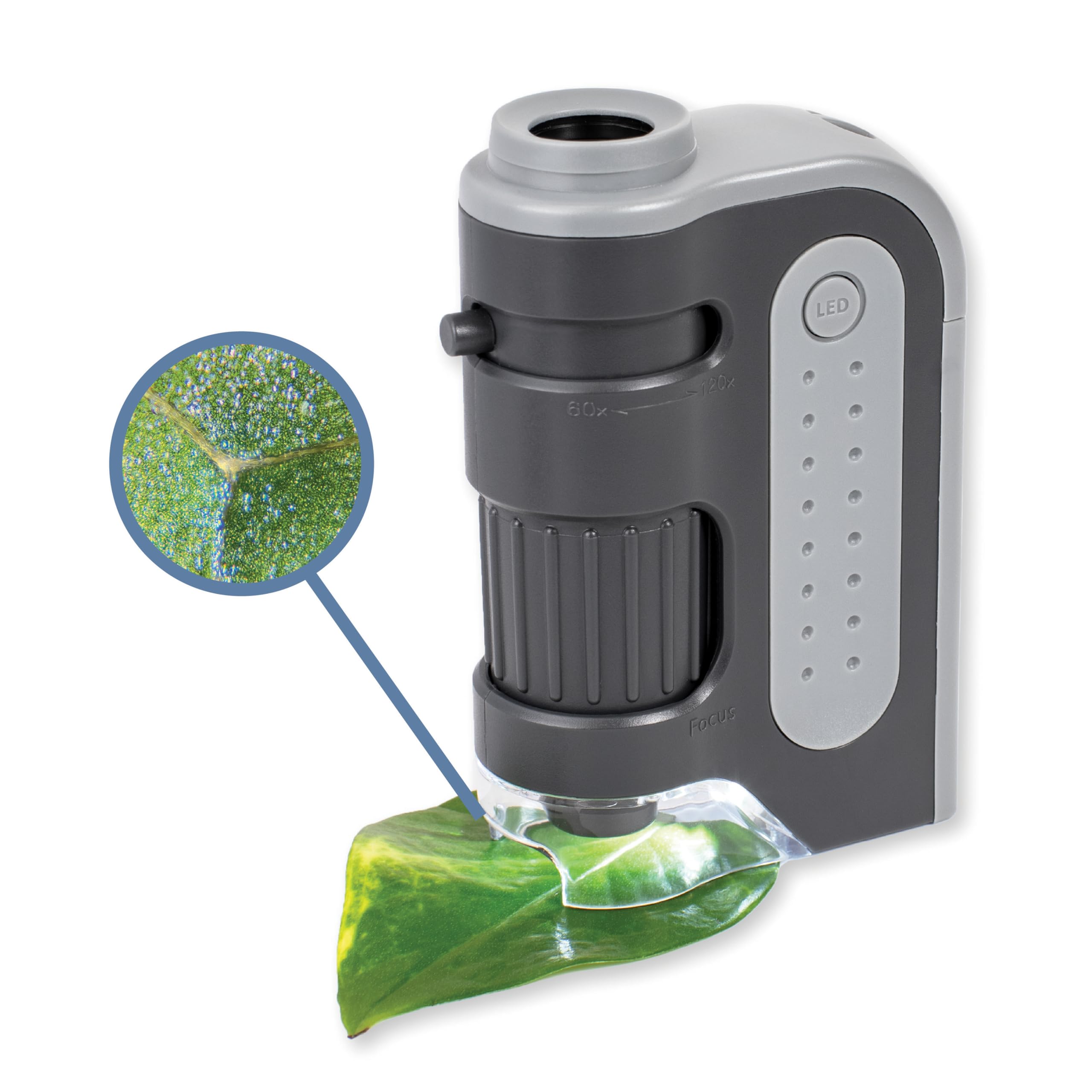
The Carson MicroBrite Plus delivers genuine 60-120x optical zoom in a pocket-sized body — a rare honest magnification claim among budget scopes. Its built-in LED and continuous zoom make it effective for examining plants, bugs, or coins outdoors. Unlike many ultra-compact pocket scopes that struggle with image quality at higher zoom, the MicroBrite Plus maintains clarity and consistent lighting. However, the focus wheel requires a steady hand and patience; it is not suited for children under 8 or shaky hands. This scope works best for older kids (10+) and adults who need a portable field tool, not a simple point-and-view toy.

Outdoor enthusiasts, gardeners, and hobbyists will appreciate a microscope that fits in a pocket and offers real optical zoom. The trade-off is a narrow viewfinder and a focus mechanism that rewards deliberate use — ideal for those who treat it as a precision instrument rather than a toy.

Tip: Rest the scope on a stable surface or use two hands to steady it while turning the focus wheel.

Bottom line: An affordable pocket scope with honest magnification — suits older kids and adults who value portability and are willing to work with a finicky focus.

How to Choose

Real vs Advertised Magnification

Many budget digital microscopes boast 1000x, but that number is achieved through digital zoom, which merely enlarges a blurry image. True optical magnification comes from glass lenses and mechanical zoom — 100x optical can show more detail than 1000x digital.

For a first real microscope, look for models that specify optical magnification (e.g., 20x-50x) and avoid those that only list a single high number without a lens specification. The National Geographic Dual LED's 50x optical is more valuable than a fuzzy 1000x digital.

Build Quality and Durability

A microscope that wobbles or has plastic gears will frustrate a child every time they try to focus. Metal body construction and glass lenses resist wear and provide a stable platform, while all-plastic models often develop loose joints after a few months.

Metal compound microscopes like the AmScope or Nat Geo Dual LED handle daily use and accidental drops better than lightweight plastic alternatives, especially if you have multiple children sharing the tool.

Ease of Focusing

Focusing requires fine motor control. Large, smooth knobs (like on the Nat Geo Dual LED) let a child adjust easily, while tiny wheels or stiff mechanisms (common on pocket scopes) demand a steady hand and patience.

For kids under 8, a microscope with a fixed focus or automatic mode (like the Educational Insights Talking Microscope) is far more engaging. Compound scopes with coaxial focus (two knobs on the same axis) are easier for small fingers than separated knobs.

Included Accessories

A good kit includes prepared slides so the child can start exploring immediately, plus blank slides and tools to create their own. Kits with 20+ pieces often provide more variety and save you from buying extras.

However, many budget kits pack in cheap plastic slides that break or duplicates. Look for kits that include a case or storage box to keep slides organized, and check that the slides are actual biological specimens, not just colored paper.

Screen vs Eyepiece Viewing

Digital microscopes with built-in screens let multiple kids see the same image at once and capture photos, which is great for sharing. However, the screen resolution and color accuracy vary widely, and the lens-to-screen path can introduce distortion.

Eyepiece microscopes offer a more authentic scientific experience and often produce clearer images at a given magnification. For a child serious about biology, an eyepiece model with a smartphone adapter might be the best of both worlds.

Frequently Asked Questions