Baby & Toddler

10 Best Baby Activity Center of 2026: Stable Through Every Stage

Which activity centers keep their stability from baby to toddler, and which ones wobble when it matters.

Baby activity centers promise a single purchase that grows with your child — from seated play to cruising to a toddler table. But many designs lose their footing the moment a baby starts bouncing or reaches for a toy on the far side. A wobbly base turns playtime into a balancing act for parents, not babies.

The real test isn't how many modes a center offers on the box. It's whether the frame stays solid under a 20-pound baby during the weeks and months of active use. Some manufacturers trade base weight for visual appeal or portability, leaving a gap between marketing and daily life.

This guide focuses on the centers that hold their ground through every stage, so you can spot the difference between a clever conversion and a stable long-term investment.

#1

Skip Hop Explore & More

Skip Hop Explore & More

3-stage grow

Doodle Score 9.6/10
Check Price

Worth Noting

  • Stationary seat
  • Premium price compared to basic activity centers, especially for families not needing all three stages.
Age Range
4 months – toddler
Max Weight
25 lbs
Play Stages
3 stages
Interactive Toys
25+ activities
Read the full review

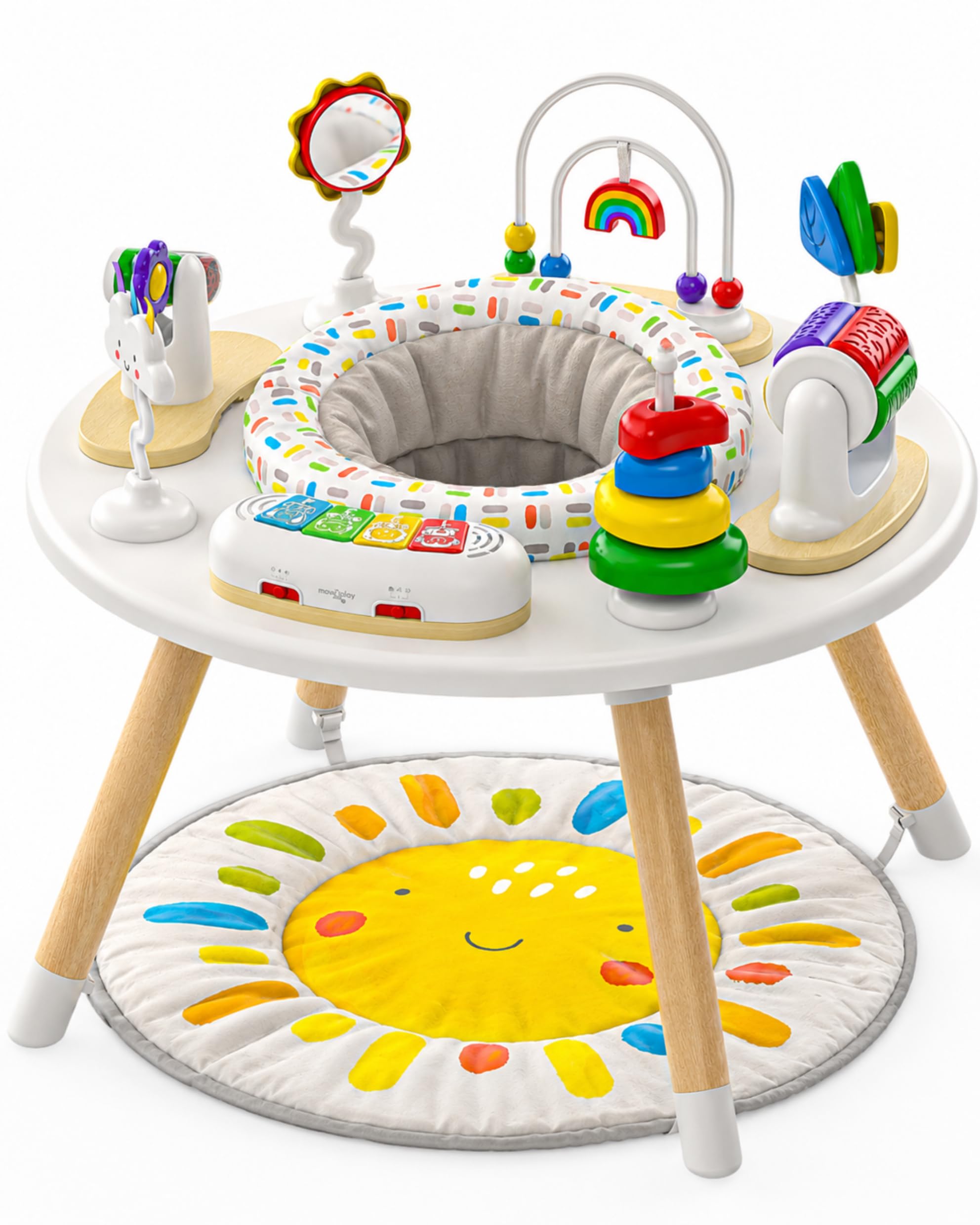
The Explore & More stands apart for its solid construction. Where some premium wood-frame centers sacrifice stability for aesthetics, this one maintains a rock-solid base through all three stages. The 360-degree seat rotation is smooth and responsive, and the toy bar stays securely attached even during active pulling. When converted to a toddler art table, there is zero wobble – a rarity among convertible designs.

Setup takes about 20 minutes with the included tool; instructions are clear and parts fit without force. The activity tray pops off for easy cleaning, and the seat pad wipes down quickly after snacks or drool. Babies engage with the variety – the light-up piano, peek-a-boo owl, spinning gears, and sorting toys hold attention across multiple sessions. The snack bowl clips on securely and is dishwasher-safe.

This center suits parents who want one piece of gear that evolves from four months through toddlerhood without requiring a separate purchase. It is not a bouncy jumper – the seat is stationary, so if bouncing is a priority, look at dedicated jumpers. The upfront cost exceeds that of basic exersaucers, but the three-stage lifespan often makes it more economical for families who would otherwise buy two or three separate products over time.

Tip: When transitioning to toddler table mode, store the seat insert for later use to maximize the center’s lifespan for a second child or resale.

Bottom line: For parents who prioritize build quality, longevity, and a clean aesthetic across multiple developmental stages, this center delivers on all fronts without the wobble or compromises found in many competitors.
#2

Bright Starts Pop 'N Jump

Bright Starts Pop 'N Jump

On-the-go use

Doodle Score 9.6/10
Check Price

Worth Noting

  • Only two attached sensory toys
Age Range
6–12 months
Max Weight
25 lbs
Play Stages
1 (jumper)
Interactive Toys
2 sensory toys
Read the full review

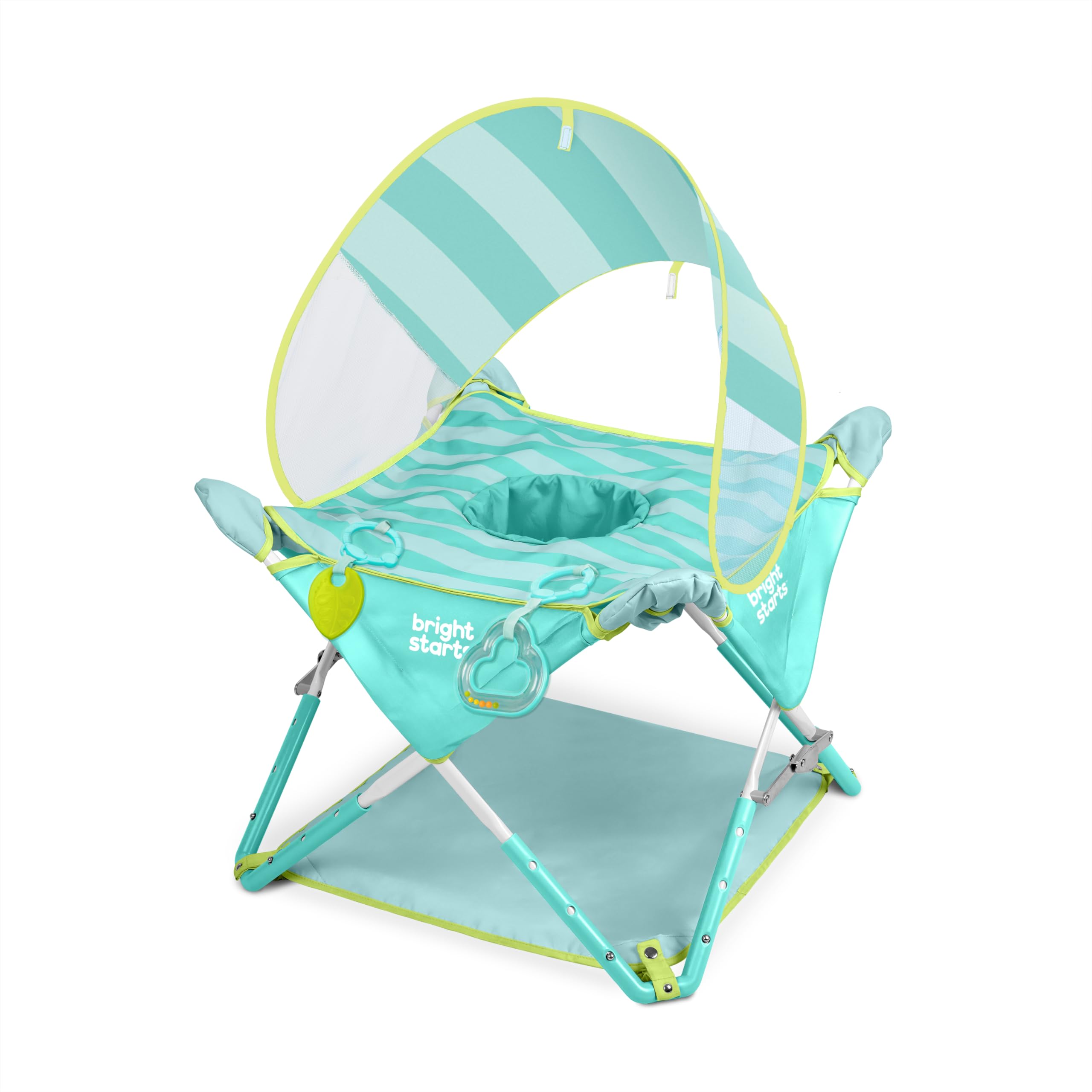
The Pop 'N Jump sets itself apart by collapsing into a carry bag roughly the size of a folded umbrella stroller. The pop-up frame clicks into place in seconds, and the removable canopy provides UV shade for outdoor use. At under 10 pounds, it's light enough to sling over one shoulder – a realistic option for beach days, park outings, or moving between rooms without dragging a bulky frame.

This jumper suits families who need a portable bounce solution rather than a stationary play center packed with electronics. The tradeoff is straightforward: only two sensory toys hang from the tray, so babies who demand constant novelty may lose interest faster. For caregivers who already have separate toys or a play mat, the limited attachments are a non-issue. The bounce action is sturdy and the frame holds up well on grass, sand, or hard floors.

Bottom line: If you need a jumper that goes wherever you do – from the living room to the campsite – this is the only option that packs down this small while delivering a solid bounce for babies 6–12 months.

#3

Bright Starts Finding Nemo Jumper

Bright Starts Finding Nemo Jumper

Disney-themed jumper

Doodle Score 9.6/10
Check Price

Worth Noting

  • Wobble or tipping possible during active bouncing on uneven surfaces
  • Wide 38-inch base requires a dedicated play area, not ideal for small rooms
Age Range
6–12 months
Max Weight
25 lbs
Play Stages
1 (jumper)
Interactive Toys
13+ activities
Read the full review

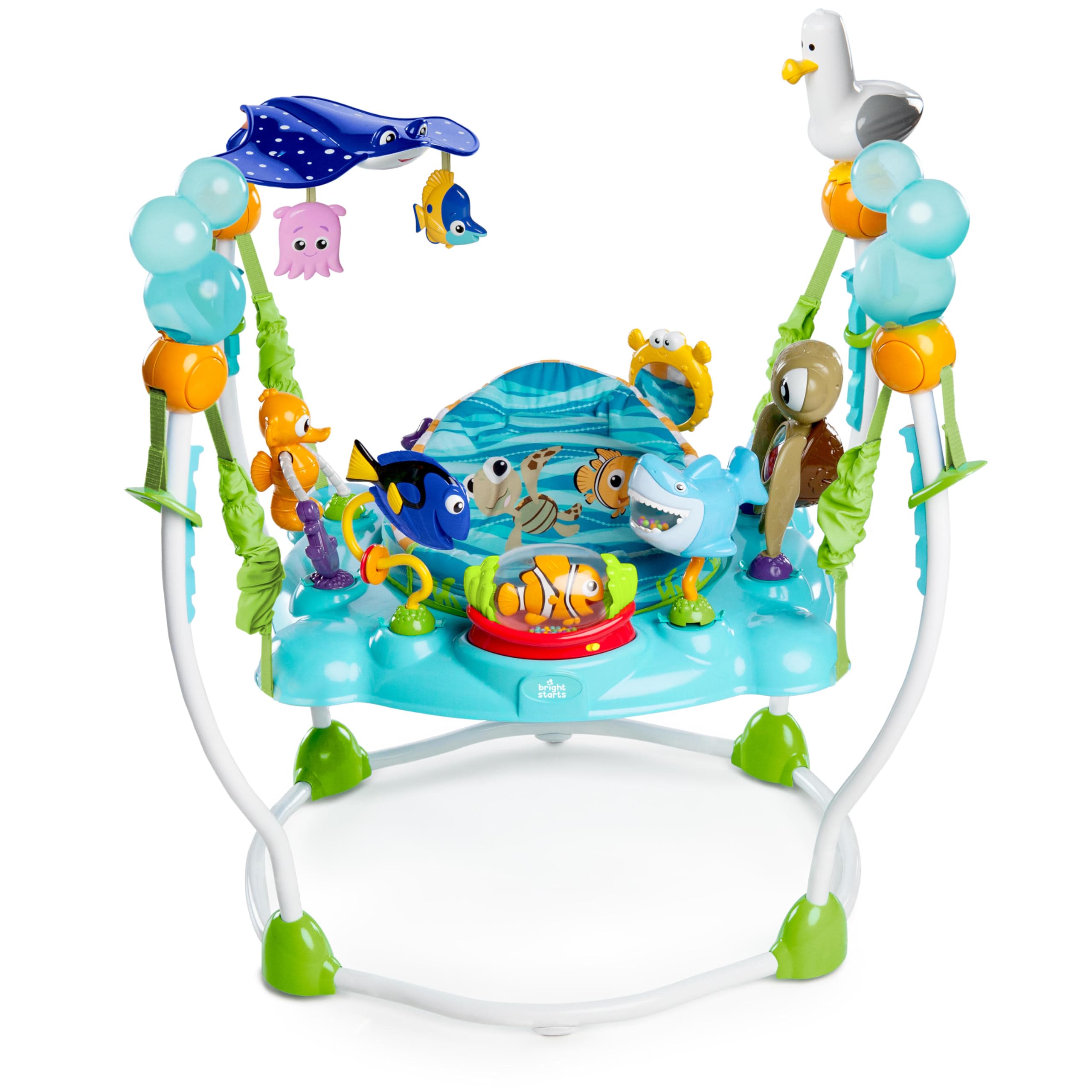
The Finding Nemo Sea of Activities Jumper brings over 13 interactive toys, lights, and songs to keep a bouncing baby entertained for long stretches. Where the top pick focuses on seamless conversion and a robust frame, this jumper leans heavily on theme and sheer volume of engagement to hold a baby’s attention.

This jumper suits families who want a high-stimulation Disney experience and have floor space to spare (the base is 38 inches wide). The frame can wobble or tip during active bouncing on uneven surfaces — a tradeoff that matters most if you have a very vigorous jumper or carpet that doesn’t provide a level foundation.

Tip: Place on a flat, hard floor to minimize wobble during energetic bouncing.

Bottom line: For families who prioritize Disney theming and nonstop sensory play over convertibility and portability, this jumper delivers high engagement at a mid-range price.

#4

Fisher-Price 3-in-1 Spin & Sort

Fisher-Price 3-in-1 Spin & Sort

No-battery play

Doodle Score 9.6/10
Check Price

Worth Noting

  • Some toy attachments can pop off when baby pulls on them
Age Range
4–9 months seat
Max Weight
25 lbs
Play Stages
3 stages
Interactive Toys
4 pods, shape sorter
Read the full review

The Fisher-Price 3-in-1 Spin & Sort stands apart from electronic activity centers by delivering a completely screen-free, battery-free experience. Four moveable activity pods, a shape sorter, and a spinning seat give babies plenty to explore through twisting, sorting, and spinning — all powered by their own hands. The seat converts to a toddler play table once your child is ready to stand, extending its useful life well past the infant stage.

This design suits parents who want to limit screen time and prefer toys that rely on manual cause-and-effect rather than flashing lights or music. Assembly is tool-free and the wipe-clean surface makes daily maintenance easy. One note: the toy attachments can pop off if a baby pulls hard enough — it’s not a safety risk, but it can interrupt play. For families who value sturdiness and simplicity over gimmicks, this is a balanced choice.

Tip: If your baby tends to pull hard on dangling toys, check attachments periodically for snugness.

Bottom line: A strong choice for families seeking a low-tech, durable activity center that grows from seated play to toddler table without batteries.

#5

VTech Magic Star Learning Table

VTech Magic Star Learning Table

Bilingual learning

Doodle Score 9.4/10
Check Price

Worth Noting

  • On hard floors, the table may slide or tip if a baby pulls to stand.
  • The table's low height means taller toddlers may lose interest sooner.
Age Range
6–36 months
Max Weight
Play Stages
1 (table)
Interactive Toys
Steering wheel, phone
Read the full review

The VTech Magic Star Learning Table packs a surprising amount of educational play for its budget-friendly price — bilingual songs, a steering wheel, light-up buttons, and a pretend phone. Unlike the top pick's robust standing support, this table is lightweight and intended for seated floor play, making it a practical choice for families who want interactive learning without the higher cost. The steering wheel and light-up buttons provide cause-and-effect play that babies enjoy.

This table works best for babies who are already sitting independently and enjoy pressing buttons, spinning wheels, and hearing music in both English and Spanish. The removable legs allow it to double as a floor activity mat. However, because the base is light, it can tip if a baby pulls up on it — the manufacturer advises using it on carpet or supervising play on hard floors. It's also on the shorter side, so taller toddlers may outgrow the standing height before 18 months.

Tip: Use on carpet to prevent sliding when baby pushes buttons or pulls to stand.

Bottom line: Unbeatable price for a bilingual learning table, but stability and size limits make it best as a floor toy rather than a stand-up support.

#6

Little Acorn 4-in-1

Little Acorn 4-in-1

Montessori-inspired

Doodle Score 9.4/10
Check Price

Worth Noting

  • Some toys can detach when pulled forcefully, limiting use for aggressive players.
  • Higher price point than typical plastic activity centers, reflecting the premium materials.
Age Range
3 months – 2 years
Max Weight
Play Stages
3 stages
Interactive Toys
8 Montessori toys
Read the full review

The Little Acorn 4-in-1 stands out with its wooden legs and minimalist design that blends into modern homes, offering a cleaner alternative to the plastic-heavy activity centers. Where the Skip Hop Explore & More packs in 25+ activities, this one focuses on 8 thoughtfully selected Montessori toys and a quieter look that appeals to design-conscious parents.

This center suits families who value natural materials and a development-focused approach over maximum gadgetry. The 4-in-1 conversion covers tummy time, exersaucer, and toddler table up to age 2. However, a few toys may detach when pulled forcefully, making it better suited for gentle play rather than the roughest handling.

Tip: Supervise play and avoid letting baby yank toys hard; they are designed for gentle interaction.

Bottom line: Best for style-conscious families who prioritize eco-friendly materials and a clean aesthetic over maximum toys.

#7

Skip Hop Discoverosity

Skip Hop Discoverosity

Montessori style

Doodle Score 9.4/10
Check Price

Worth Noting

  • Legs can detach and the unit wobbles when converted to table mode
  • Clips and foot rest may come loose over time given the premium price
Age Range
4 months – 3+ years
Max Weight
25 lbs
Play Stages
3 stages
Interactive Toys
30+ activities
Read the full review

The Discoverosity combines FSC-certified wood with 30+ developmental activities, making it visually appealing in a nursery. But converting to table mode introduces wobble, and the legs can detach under lateral pressure – an issue for active babies who pull on toys. At a premium price, the structure doesn't match the stability of the top pick or Little Acorn.

Bottom line: This works best for families who prioritize Montessori aesthetics over physical sturdiness and have a gentle baby who won't tug on attachments.

#8

Baby Einstein Neptune Jumper

Baby Einstein Neptune Jumper

Classic jumper

Doodle Score 9.4/10
Check Price

Worth Noting

  • Seat rotation can be stiff or non-functional on some units
  • Frame may wobble during active bouncing on some surfaces
Age Range
6 months+
Max Weight
25 lbs
Play Stages
1 (jumper)
Interactive Toys
Multiple toys
Read the full review

Baby Einstein's Neptune jumper delivers an engaging ocean scene with a piano that plays in multiple languages and plenty of toys to occupy little hands. The seat rotation, however, can be stiff or non-functional on some units, and the frame may shift during active bouncing. For families who value silky-smooth spinning or a stable base, the Finding Nemo jumper offers more consistent performance at a comparable price.

Bottom line: A good option if your baby's entertainment needs outweigh the need for smooth rotation and absolute stability.

#9

Smart Steps Bounce N Play

Smart Steps Bounce N Play

Budget 3-in-1

Doodle Score 9.4/10
Check Price

Worth Noting

  • Wheels only move in a straight line, limiting mobility during play.
  • Base can wobble and bottom platform may not sit level on all floors.
Age Range
6–15 months
Max Weight
Play Stages
3 stages
Interactive Toys
Musical keyboard
Read the full review

The Smart Steps Bounce N' Play offers a budget-friendly 3-in-1 design that converts from activity center to play table to flat table. Assembly is quick, and the included musical keyboard and toys keep babies occupied. However, the unit's base can feel wobbly during active play, and the wheels only move in a straight line - no swivel. These limitations make it best for families who need an occasional stationary play station and don't mind a less stable frame. More stable alternatives with smoother movement exist, but this hits a decent value point for the price.

Bottom line: Fits best as an occasional play station for families who prioritize low cost over a rock-solid base and smooth movement.

#10

Infantino 3-in-1 Discovery Seat

Infantino 3-in-1 Discovery Seat

Multi-use seat

Doodle Score 9.2/10
Check Price

Worth Noting

  • Leg openings can be snug for babies with thicker thighs.
  • Some units may develop plastic cracking or mechanism issues over time.
Age Range
4 months – 4 years
Max Weight
33 lbs
Play Stages
3 stages
Interactive Toys
Light-up piano
Read the full review

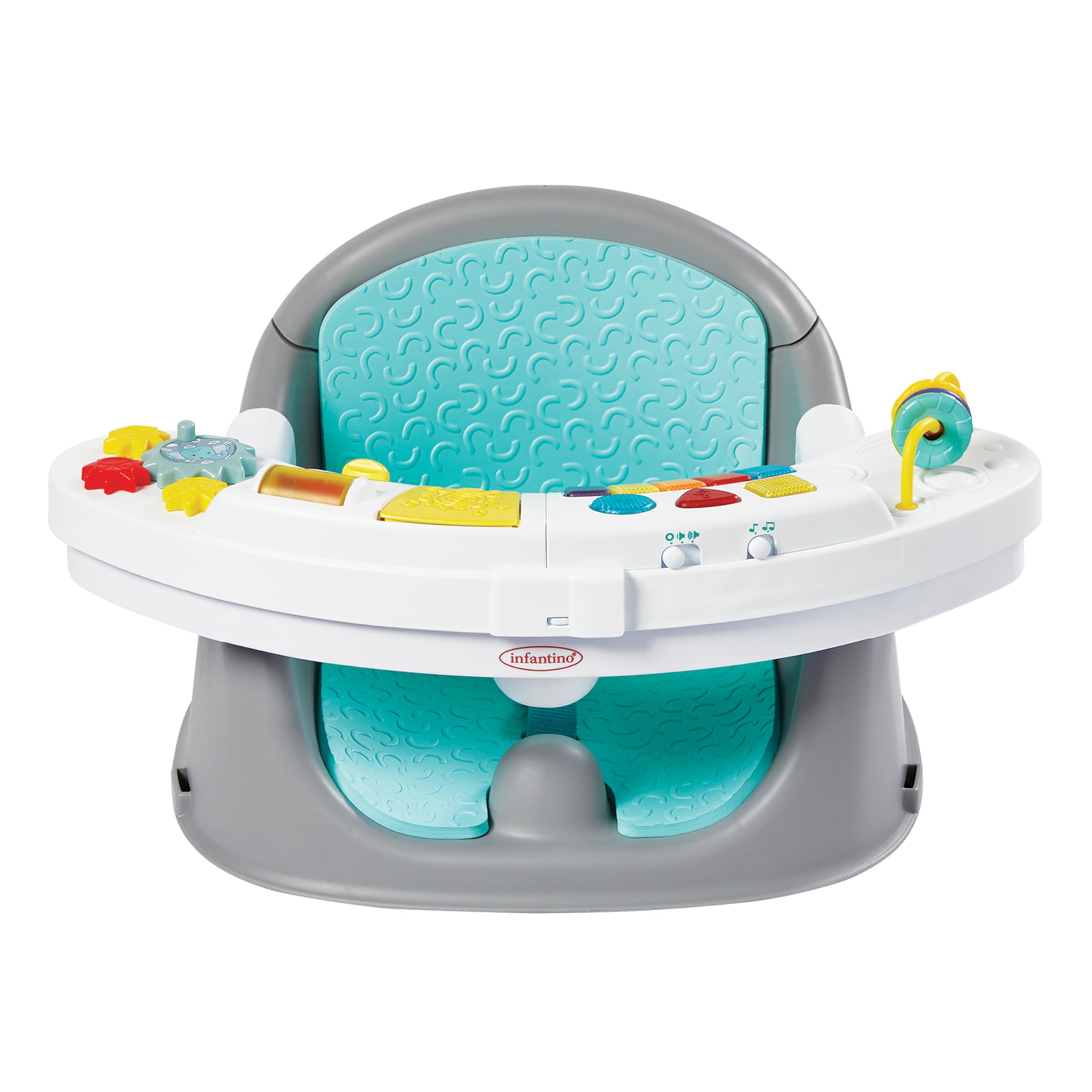
This seat offers three modes (activity, snack, booster) with a light-up piano and toy pods, all at a low price. It is easy to clean and quick to assemble. However, the plastic frame may show wear under daily use, and the leg openings can be snug for babies with thicker thighs – making it better suited as a secondary seat rather than a primary activity center.

Bottom line: Best as a compact, budget-friendly option for families who need a convertible seat for play and meals, but consider it a short-term solution if your baby has larger legs or you expect heavy daily use.

How to Choose

Age Range and Weight Limit

Most activity centers list an age range of 6–12 months and a weight limit of 25 lbs. But a center that works for a 4-month-old just learning to sit will feel different for a 10-month-old who bounces aggressively. Check the lowest seat height: if it's too tall, smaller babies won't touch the floor, rendering the bounce function useless.

Weight limits also matter for convertible centers that transition to toddler tables. A table mode that feels stable under a 20-pound toddler may wobble under a 25-pound one. Always verify the limit on the specific stage you plan to use most.

Number of Play Stages

Stage counts range from a single jumper mode to 4-in-1 designs that include tummy time, seated play, walking support, and a toddler table. Each additional stage introduces more joints and moving parts — which can become weak points. A center that converts from seat to table by snapping off legs may feel secure in the first mode but wobble in the second.

The most durable converters use a single, solid frame that doesn't require full disassembly. Look for designs where the toy tray and seat simply lift off, leaving a stable table base underneath. Avoid centers where legs detach or fold; those are the ones most likely to loosen over time.

Seat Rotation and Bounce Mechanism

A 360-degree swivel sounds ideal, but many centers ship with seats that spin stiffly or not at all. The mechanism is often a simple plastic ring that binds under weight or on carpet. Reading recent reviews specifically for 'rotation' or 'spin' will reveal if a model actually delivers.

For bouncers, the spring or elastic cord tension determines how much resistance a baby feels. Too little tension and the baby doesn't bounce back; too much and smaller babies get stuck. Mid-range centers typically offer 3–4 height positions, which let you adjust the bounce action as the baby grows.

Number and Variety of Interactive Toys

More toys don't automatically mean better engagement. A center with 15 cheap plastic toys that all sound the same will lose a baby's interest faster than a center with 5 thoughtful activities that respond to different actions (spin, slide, press, rattle). Look for variety in texture, sound type, and cause-and-effect feedback.

Battery-operated lights and sounds can add learning value, but they also drain quickly. Check whether the batteries are included and whether the volume can be adjusted. Some parents prefer centers with a 'off' switch to avoid overstimulation at the end of the day.

Portability and Storage

Portable activity centers sacrifice toy variety and stability for a lighter frame and folding mechanism. They're ideal for travel, outdoor use, or small apartments where the center needs to be packed away daily. The best portable models collapse to a compact size without tools and include a carrying bag.

Stationary centers with a wide plastic base (often 35+ inches across) are sturdier but take up significant floor space. If you plan to keep the center in one spot, prioritize stability over foldability. If you move it between rooms, test how easy it is to drag or carry — some heavy bases scrape floors.

Frequently Asked Questions