Games & Puzzles

10 Best Board Games for Toddlers of 2026: Safe, Cooperative Picks That Last

Find toddler board games that are actually age-appropriate, safe from choking hazards, and fun for ages 2-4 without the marketing overreach.

A board game for a 2-year-old should be about shared fun, not frustration. Yet many popular games labeled 'ages 3+' contain tiny pieces that pose choking hazards or require skills far beyond a toddler's grasp.

The most successful designs for this age group share a few traits: large, durable components, rules that can be learned in seconds, and either cooperative play or simple luck-based mechanics. These factors keep meltdowns low and replay value high.

We focused on games that genuinely fit the developmental stage of toddlers - from wood pieces that survive teething to cooperative formats that teach teamwork. The result is a set of picks that work for 2- and 3-year-olds, not just their older siblings.

#1

HABA First Orchard

HABA First Orchard

First game 2-3 yr

Doodle Score 9.8/10
Check Price

Worth Noting

  • Premium price higher than most toddler board games
  • Gameplay becomes too simple for children above age 4
Players
1-4
Game Type
Cooperative
Minimum Age
2+
Skill Focus
Colors, counting, teamwork
Read the full review

First Orchard is the only game in this category designed specifically for ages 2+, using solid wood that survives rough play. The cooperative rules have players working together to harvest fruit before the raven reaches the tree — no competition, just teamwork. Chunky wooden pieces fit small hands safely, and the color-coded dice guide even the youngest players through color recognition and counting.

This game fits best as a first board game for a 2-3 year old, where cooperative play removes the pressure of losing. The premium price reflects the durable wood construction, but budget-constrained households may find cheaper plastic alternatives. By age 4 most children outgrow the simple gameplay, making this a short-lived but highly valued starter experience for the right age group.

Tip: To keep older siblings engaged, let them play as the crow while the younger players harvest the fruit.

Bottom line: For families introducing board games to a 2-3 year old, the HABA First Orchard offers durable quality and age-appropriate cooperative design. Older toddlers will outgrow it, but as a starter game it has no equal in this list.

#2

Hasbro Candy Land

Hasbro Candy Land

Budget first game

Doodle Score 9.6/10
Check Price

Worth Noting

  • Luck-based movement may feel unsatisfying for children expecting strategic choice.
Players
2-4
Game Type
Competitive
Minimum Age
3+
Skill Focus
Color recognition, turn-taking
Read the full review

Candy Land's color-coded cards let pre-readers play independently by matching colors. This simple gameplay works best for children ages 3 and up who can handle small pawns and don't mind a luck-driven race. For families with toddlers under 3, the pawns pose a choking hazard, and the competitive format may frustrate those seeking cooperative play.

Bottom line: Candy Land is a fine entry-level game for preschoolers ages 3 and up on a budget, but younger toddlers or families wanting cooperative play should look at the top pick.

#3

Hasbro Chutes & Ladders

Hasbro Chutes & Ladders

Learn counting

Doodle Score 9.6/10
Check Price

Worth Noting

  • Spinner can be stiff and difficult for small hands to spin reliably
  • Cardboard board and components may show wear with frequent use
Players
2-4
Game Type
Competitive
Minimum Age
3+
Skill Focus
Counting, number recognition
Read the full review

Chutes & Ladders reinforces number recognition and counting in a luck-based format that keeps the focus on moving forward and backward. The board follows a 1-100 path with no text, so a 3-year-old can join by spinning and counting spaces. Compared to Candy Land’s color matching, this version builds early math skills while keeping the same pick-up-and-play pace.

This works best for families on a budget who want a first counting game for ages 3-4. The cardboard board and flimsy spinner are real limitations — the spinner can be hard for small fingers to turn, and the board may show creases over time. Those tradeoffs are acceptable given the low price, but a child with fine-motor delays might find the spinner frustrating rather than fun.

Tip: If the spinner feels too tight, gently loosen the plastic arrow; a quick spin test before play can prevent frustration.

Bottom line: A budget-friendly counting game that does its job for ages 3 and up — just be prepared for a spinner that may need help from an adult.

#4

Ed. Insights Sneaky Squirrel

Ed. Insights Sneaky Squirrel

Fine motor skills

Doodle Score 9.6/10
Check Price

Worth Noting

  • Squirrel squeezer can be too stiff for small hands to press
Players
2-4
Game Type
Competitive
Minimum Age
3+
Skill Focus
Fine motor, color matching
Read the full review

Sneaky Snacky Squirrel uses a squeezer to pick up acorns, building hand strength and coordination that sets it apart from purely color-matching or cooperative toddler games. The cute squirrel theme and simple turn-based play make it easy for 3-year-olds to grasp. However, the squirrel squeezer can be stiff for very small hands – some children under three may need help pressing it. This game is ideal for families seeking fine motor skill development over cooperative play, but less suited for toddlers with very low hand strength.

Tip: If your child struggles with the squeezer at first, try pressing it together with them to build confidence – hand strength improves with practice.

Bottom line: For toddlers who need fine motor practice and enjoy a playful challenge, Sneaky Snacky Squirrel delivers where color-matching games don't – just be prepared to assist with the squeezer for the youngest players.

#5

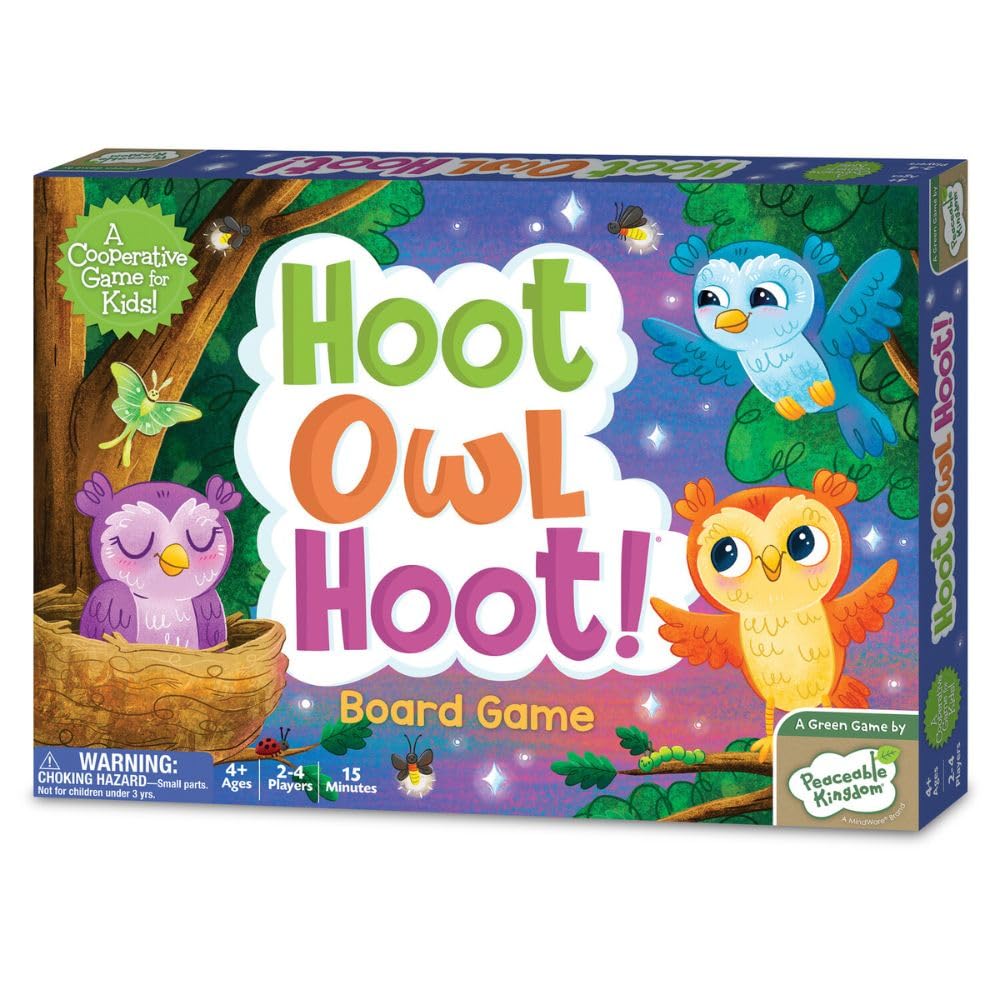
PK Hoot Owl Hoot

PK Hoot Owl Hoot

Teamwork practice

Doodle Score 9.6/10
Check Price

Worth Noting

  • The strategic deduction required means many 3-year-olds will struggle without constant guidance.
  • The sun token is small and may be a choking risk for toddlers under 3.
Players
2-4
Game Type
Cooperative
Minimum Age
4+
Skill Focus
Color matching, strategy
Read the full review

This cooperative owl-matching game teaches color recognition and teamwork as players move owls toward the nest before the sun piece advances. The twist is that each turn demands choosing which owl to advance, introducing light strategic planning. That makes it a step up from pure matching games like Candy Land. However, the official age rating of 4+ is accurate: many 3-year-olds lack the deduction skills to play independently, and the small sun token can be a concern in homes with children under 3. Best for families with preschoolers who are ready to think ahead and work as a team.

Tip: For a 3-year-old, simplify by letting them move any owl; the full strategy clicks closer to age 4.

Bottom line: A smart cooperative game for age 4 and up that builds teamwork and planning, but not the right fit for younger toddlers who haven't mastered basic strategy.

#6

Jax Sequence for Kids

Jax Sequence for Kids

Strategy beginners

Doodle Score 9.6/10
Check Price

Worth Noting

  • Cards can be flimsy and may tear with repeated use.
  • Board may separate at the fold if not handled carefully.
Players
2-4
Game Type
Competitive
Minimum Age
3+
Skill Focus
Pattern matching, strategy
Read the full review

Sequence for Kids teaches pattern matching and turn-taking without requiring reading, making it accessible for preschoolers learning strategy. The animal cards and chip-placement mechanic are easy to grasp, and the game works well for mixed-age play with siblings and parents. However, the cards can tear with frequent use, and the board may separate at the fold if not handled gently. This is a solid option for children ages 3–6 who already understand matching, but families with toddlers under 3 should choose a sturdier, age-specific game like HABA First Orchard.

Tip: Store cards in the box sleeve and reinforce the board fold with tape to extend the game’s lifespan.

Bottom line: A good introduction to strategy for preschoolers who can already match cards, but families with younger toddlers should look to purpose-built options like First Orchard.

#7

ThinkFun Zingo

ThinkFun Zingo

Word learning

Doodle Score 9.6/10
Check Price

Worth Noting

  • Zinger dispenser can jam, blocking tile release.
Players
2-6
Game Type
Competitive
Minimum Age
4+
Skill Focus
Matching, vocabulary
Read the full review

Zingo builds vocabulary and matching skills through bingo-style play with durable components that hold up to frequent use. The 4+ minimum age and competitive format put it out of reach for most toddlers, so it works best as an early-literacy game for children already past the preschool stage.

Bottom line: Choose Zingo if your child is already 4 and learning to read; for toddlers under 4, look to cooperative games with larger pieces.

#8

Gamewright Outfoxed

Gamewright Outfoxed

Deductive reasoning

Doodle Score 9.6/10
Check Price

Worth Noting

  • Deductive reasoning demands may exclude children under 4 who cannot yet process clue elimination.
Players
2-4
Game Type
Cooperative
Minimum Age
5+
Skill Focus
Deduction, memory
Read the full review

Outfoxed engages 4-6 year olds in cooperative clue-gathering to catch the fox, teaching deductive reasoning without competition. However, its official age minimum of 5 reflects that toddlers under 4 lack the logic skills needed — better suited for older preschoolers seeking a mystery challenge.

Bottom line: A solid pick for families with an older preschooler who enjoys mysteries, but not suitable for toddlers under 4.

#9

PK Alphabet Bingo

PK Alphabet Bingo

Alphabet learning

Doodle Score 9.6/10
Check Price

Worth Noting

  • Some copies arrive with missing letter tokens; inspecting contents on arrival is advisable.
Players
2-6
Game Type
Competitive
Minimum Age
4+
Skill Focus
Letter recognition
Read the full review

This bingo game effectively reinforces uppercase letter recognition through gameplay that works with 2-6 players. However, it demands existing familiarity with letters — children under 4 will struggle. Additionally, occasional missing tokens from the box means checking contents on arrival.

Bottom line: For families with children already comfortable with letters who want a classroom-style bingo game, Alphabet Bingo delivers — but not for toddlers just starting out.

#10

Winning Moves Classic Chutes

Winning Moves Classic Chutes

Nostalgic artwork

Doodle Score 9.6/10
Check Price

Worth Noting

  • Spinner may not spin freely out of the box; some units need a replacement.
Players
2-4
Game Type
Competitive
Minimum Age
4+
Skill Focus
Counting, turn-taking
Read the full review

This edition of Chutes and Ladders features the retro 1970s artwork on a thick board and an oversized spinner that holds up better than typical modern versions. However, the spinner mechanism can arrive stuck or not spin freely, which may require a replacement. The higher price compared to the standard Hasbro version limits its appeal for budget-conscious families, but for collectors or parents who want a sturdier, nostalgic experience, it delivers.

Bottom line: Best for nostalgic parents who value the retro design and are willing to check spinner functionality upon arrival.

How to Choose

Minimum Age

Age labels are guidelines, not guarantees. A 3+ game can still contain pieces small enough to choke a 2-year-old, and a 4+ game may be too complex for a 3-year-old's attention span.

Always inspect the physical components - especially piece size - before buying. Games labeled 2+ (like HABA First Orchard) are built for the youngest players with large, safe parts.

Number of Players

Most toddler games support 2-4 players, which works well for a parent and one or two kids. Games that allow 6 players (like Zingo) are better for classrooms but can mean long waits between turns for a toddler.

Stick to 2-4 players for home use. A shorter wait time keeps frustration low and engagement high.

Game Type (Cooperative vs Competitive)

Cooperative games have everyone working toward a common goal - no winners or losers. This eliminates tantrums and teaches teamwork, making them ideal for first-time players.

Competitive games teach turn-taking and sportsmanship but can lead to disappointment for young children. Choose cooperative for ages 2-3 and competitive for 4+ if the child is ready.

Skill Focus

Every game emphasizes different skills: color matching, counting, fine motor, vocabulary, or strategy. Pick one that aligns with what your child is currently learning or needs practice with.

Avoid games that try to teach too many skills at once. A child who masters one concept through play will gain confidence more quickly than one overwhelmed by multiple demands.

Piece Size and Safety

Choking hazards are the biggest hidden risk in toddler board games. Hi Ho Cherry-O's small fruit pieces, for example, are a well-known danger despite the 3+ label.

Look for games with thick wooden pieces or large plastic tokens that can't fit through a toilet paper tube. Games like HABA First Orchard use wood pieces that are both safe and durable.

Frequently Asked Questions