Games & Puzzles

9 Best Sudoku Puzzle for Kids 2026: Real Progress, Real Engagement

Which sudoku puzzles for kids actually challenge without frustrating? This guide picks books and games with proven age-appropriate difficulty and progression.

Many sudoku books for kids claim 'progressive difficulty' and 'large print' on the cover, but parents quickly find puzzles that are either too easy or jump too fast. The gap between marketing and what actually works is bigger than you'd expect.

The best puzzles don't just rely on age labels. They start with small grids like 4x4, build in careful steps, and give kids a real feeling of mastery before moving to 9x9. The trade-off? Some books offer variety across a wide age range, while others focus on a gentle start for the youngest solvers.

This guide focuses on puzzles with verified feedback from other parents — books and games that actually keep kids engaged without causing frustration. You'll find clear recommendations based on your child's age and experience level.

#1

Super Sudoku Smart Kids
Super Sudoku Smart Kids

Ages 6-10

Doodle Score 9.6/10
Check Price

Worth Noting

  • Older children (9-10) with prior sudoku experience may find early puzzles too easy.
Format
Book
Age Range
6-10 years
Puzzles & Grids
200+ 4x4-9x9
Difficulty Progression
Easy to hard
Read the full review

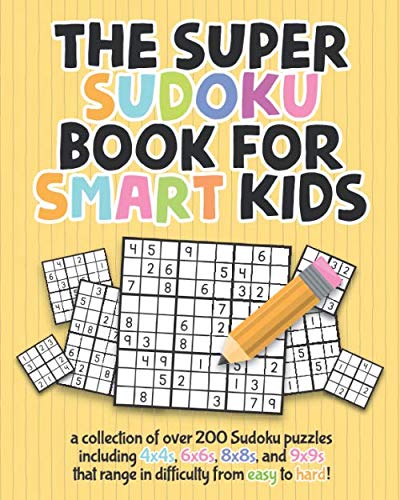
The Super Sudoku Book for Smart Kids offers more than 200 puzzles spanning 4x4, 6x6, 8x8, and 9x9 grids, with a difficulty curve that starts gently and builds steadily. Customer reports consistently note that kindergarteners and first-graders can begin with the smallest grids, while older children work up to the standard 9x9 format without frustration. The variety keeps the book relevant as a child's skills improve over time.

Parents describe this as a reliable screen-free activity that holds attention for extended periods. Children who enjoy numbers often pick it up repeatedly, and the gradual challenge prevents the boredom that can come from overly simple puzzles. The 135-page book is compact enough for car rides or quiet time at home.

This book suits families with children aged 6 to 10 who are new to sudoku or have some experience. The early puzzles are intentionally easy to build confidence, so kids who already solve expert-level sudoku will find those sections too simple. As the grids get larger and harder, even experienced young solvers encounter enough challenge to stay engaged through the later puzzles.

The budget-friendly price puts a substantial number of puzzles within reach for most households. The four grid sizes also make it a useful resource for siblings at different skill levels, as each can work on a size that matches their comfort zone.

Tip: Use a pencil with an eraser so kids can correct mistakes without marking up the pages permanently.

Bottom line: For families with children ages 6-10 who want a single book that grows with their skills, this is the most customer-validated sudoku option available.

#2

LogicKids Sudoku 6-8

LogicKids Sudoku 6-8

Ages 6-8

Doodle Score 9.6/10
Check Price

Worth Noting

  • Limited to ages 6-8; older siblings or advanced younger kids will outgrow it quickly.
Format
Book
Age Range
6-8 years
Puzzles & Grids
300+ 4x4-9x9
Difficulty Progression
Progressive
Read the full review

This book delivers a structured introduction to sudoku for young children, starting with small 4x4 grids and gradually building up to standard 9x9 puzzles. The progression from easy to hard is clear and consistent, helping kids develop logic skills without feeling overwhelmed. Parents note that the layout and large print are well-suited for beginner solvers.

Compared to the top pick's wider age range, this volume is tightly focused on ages 6-8. The puzzles are sized for small hands and the steps between difficulty levels are small enough that most children can move through them independently. The 300+ puzzles provide ample practice, though the majority of early puzzles are on 4x4 and 6x6 grids.

This book is ideal for parents who want a gradual, age-specific curriculum for teaching sudoku to children ages 6-8. It is not designed for older siblings or kids who already have experience with 9x9 puzzles; those learners will find the early sections too easy and may outgrow the book quickly. The customer feedback consistently confirms this age-appropriate fit.

Tip: Start with 4x4 puzzles to build confidence before moving to larger grids.

Bottom line: For parents introducing sudoku to a 6-8 year old, this book offers a structured, well-paced collection that builds skills without rushing.

#3

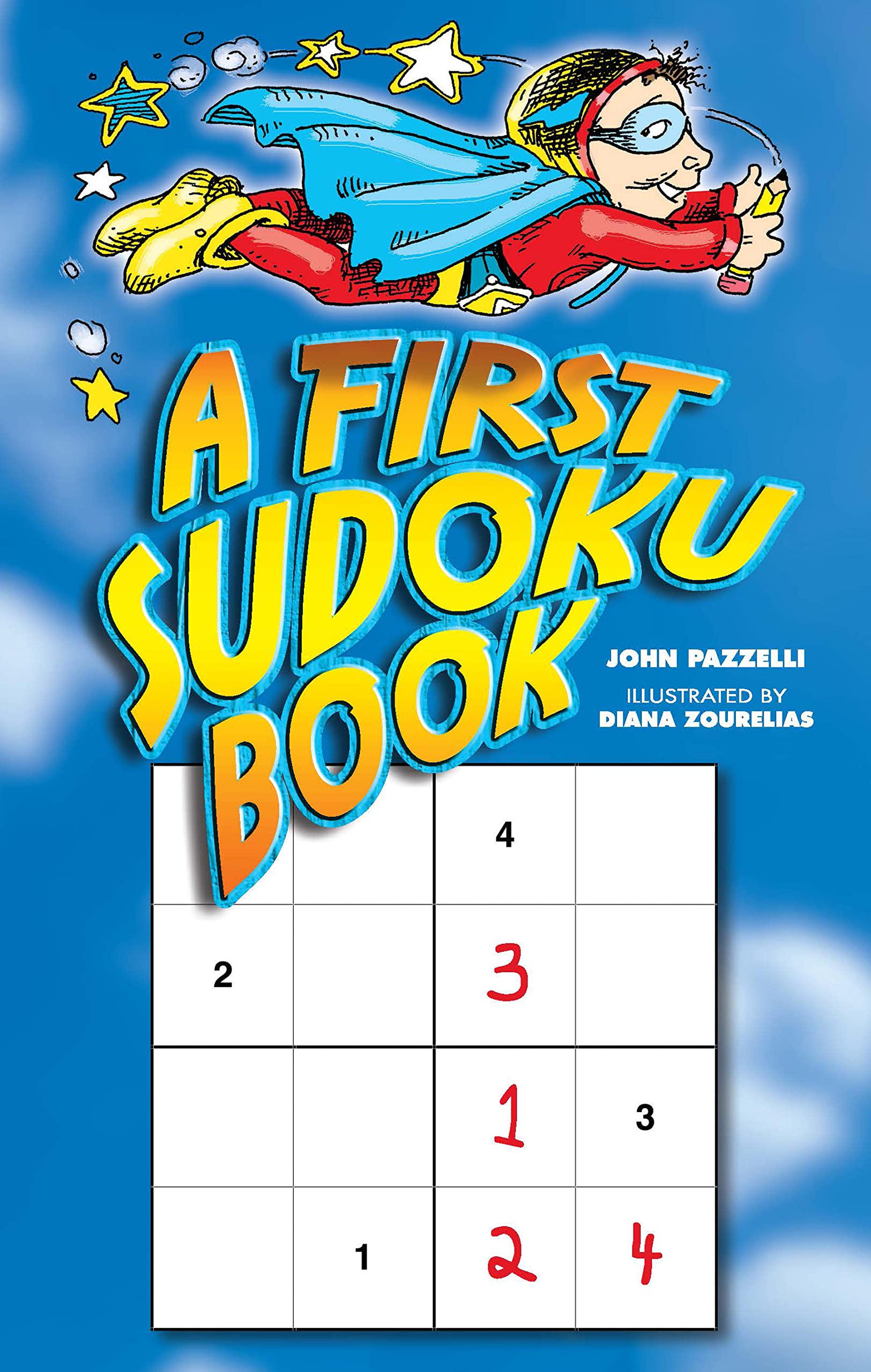
First Sudoku Book

First Sudoku Book

Ages 5-7

Doodle Score 9.4/10
Check Price

Worth Noting

  • Only 64 puzzles, so avid young solvers may finish quickly and need a follow-up book.
Format
Book
Age Range
5-7 years
Puzzles & Grids
64 4x4-9x9
Difficulty Progression
Progressive
Read the full review

The gradual grid progression makes this the gentlest sudoku introduction for young children. Unlike the top pick with over 200 puzzles for a wider age range, this book deliberately limits its scope to a narrow window. Parents note that even kindergartners can complete the first puzzles independently, building confidence before tackling larger grids.

This book is best for kindergarteners and first graders (ages 5-7) who are completely new to sudoku. The 64 puzzles will be enough for light play, but children who quickly take to the game will finish the book in a few sessions and need a follow-up.

The budget-friendly price makes it easy to try without commitment. For families with multiple young children, the straightforward format means it can be used and reused across siblings.

Bottom line: For a gentle, low-commitment introduction to sudoku for ages 5-7, this is the book to start with — just plan to have the next level ready.

#4

GiiKER Smart Sudoku

GiiKER Smart Sudoku

Ages 7+

Doodle Score 9.4/10
Check Price

Worth Noting

  • Manual puzzle setup interrupts momentum for kids who want instant play.
  • Under rough handling, a plastic tile has been known to snap
Format
Digital console
Age Range
7+ years
Puzzles & Grids
2500 4x4-6x6
Difficulty Progression
Multiple levels
Read the full review

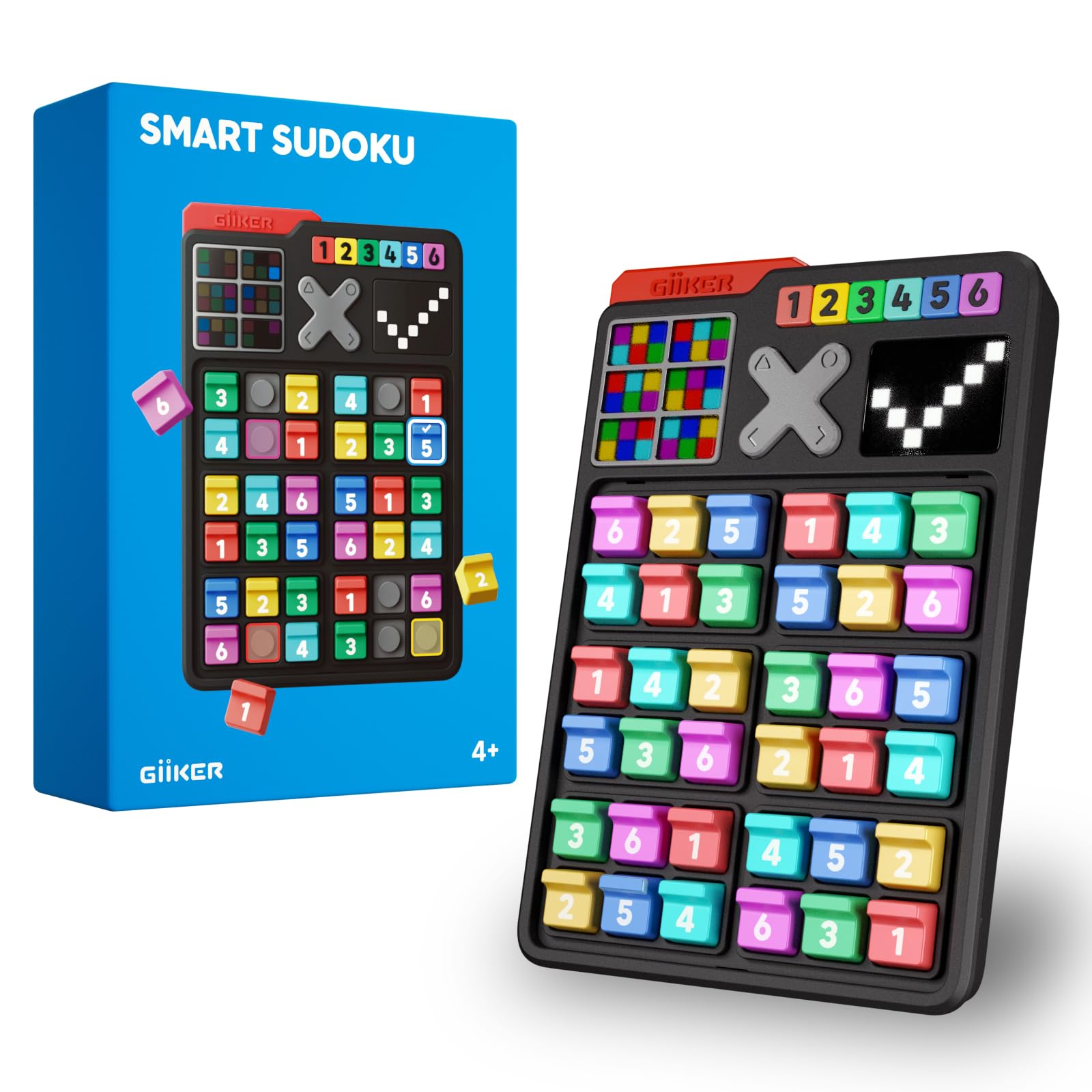
The GiiKER Smart Sudoku delivers a digital puzzle experience with 2500 built-in challenges, adjustable difficulty, and hint systems that keep kids engaged without needing a screen subscription. Build quality is solid for a handheld toy, with a robust console that can handle travel. Unlike the top-pick book, which relies on silent progression, this console adds timers and scoring for friendly competition.

Puzzle setup requires placing numbered tiles on the console for each new challenge – a process that takes a minute or two before play begins. This breaks the flow for kids who want instant action, but the interactive hints and immediate feedback make it rewarding for patient solvers. The two-player mode allows siblings to take turns or race against the clock, adding replay value.

Best for tech-savvy families who value guided learning and are willing to mentor the setup process. The plastic tiles can snap under rough handling, so children under 7 should play with supervision. Older kids who already enjoy sudoku will appreciate the variety and competition features, while the 4x4 and 6x6 grids offer approachable challenges for beginners.

Tip: Pre-fill the tiles for the next puzzle during downtime to keep play sessions flowing.

Bottom line: A feature-rich digital sudoku console best suited for tech-savvy kids who enjoy guided, timed play – the setup friction and minor fragility mean families should supervise younger users.

#5

Sudoku for Kids 8-12

Sudoku for Kids 8-12

Ages 8-12

Doodle Score 9.4/10
Check Price

Worth Noting

  • Grid sizes are not listed, so parents expecting a mix of 4x4, 6x6, and 9x9 may be disappointed.
  • Without detailed customer reviews, puzzle difficulty progression is unverified
Format
Book
Age Range
8-12 years
Puzzles & Grids
200 large print
Difficulty Progression
Read the full review

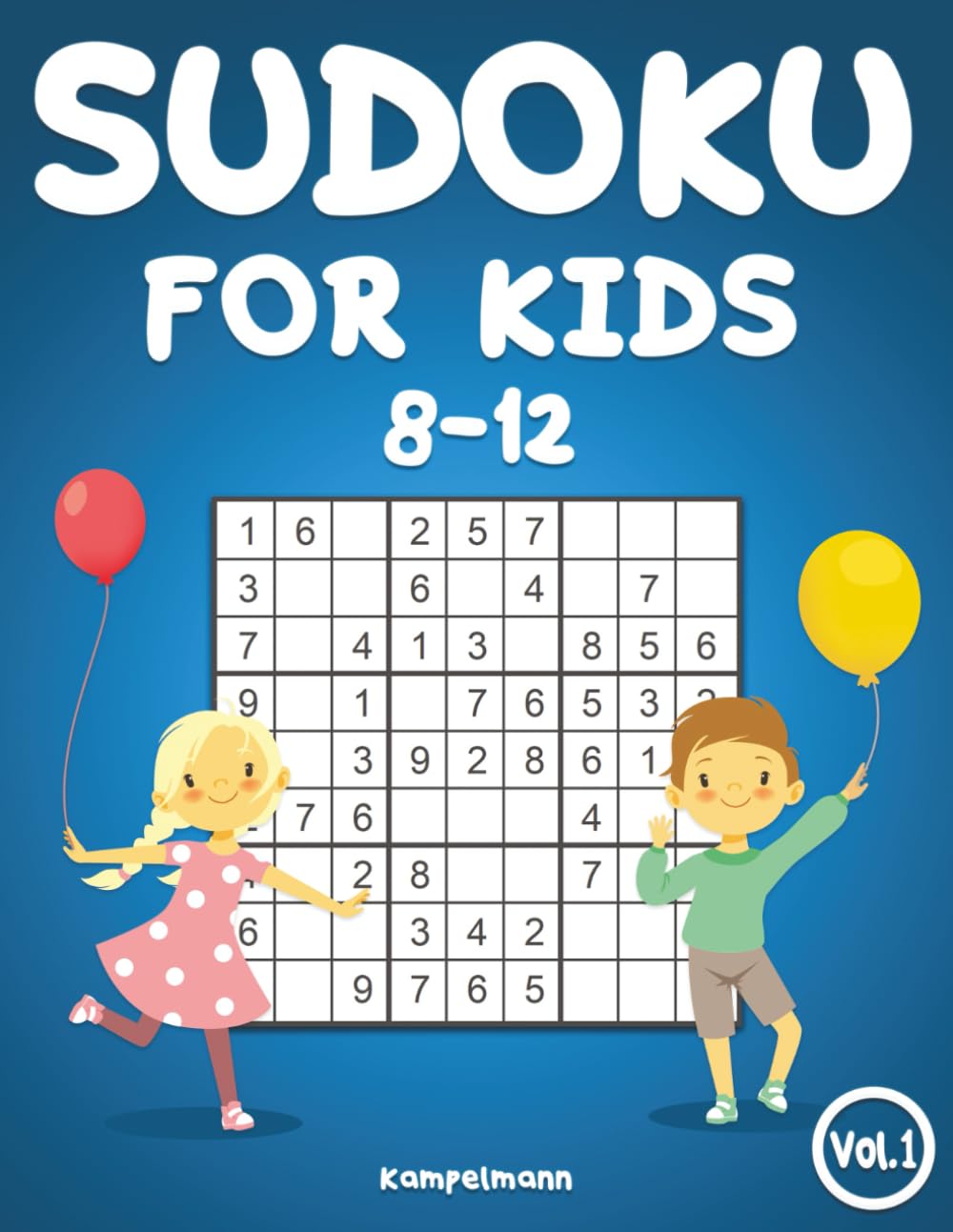
The Kampelmann Sudoku for Kids 8-12 keeps things simple: 200 large-print puzzles in a single volume. Unlike the top pick that offers multiple grid sizes and a documented progression, this book does not specify which grid sizes are used — buyers should assume a consistent format, likely standard 9x9.

Large print reduces eye strain for young readers, and the included solutions allow independent checking. The lightweight 122-page book is easy to toss into a backpack for car rides or quiet time.

This is best for parents who need a no-fuss large-print sudoku book for a child already comfortable with the game, without requiring a verified difficulty ramp. The tradeoff: no detailed customer feedback exists to confirm how puzzles progress from easy to challenging. For kids who need a gentle, graduated introduction, a book with transparent progression and multiple grid sizes is a safer choice.

Bottom line: A solid large-print option if your child is already comfortable with sudoku, but choose a book with verified progression and grid variety for a gentler learning curve.

#6

LogicKids Sudoku 10-12

LogicKids Sudoku 10-12

Ages 10-12

Doodle Score 9.4/10
Check Price

Worth Noting

  • Limited customer feedback means puzzle quality and difficulty progression are unconfirmed.
  • Only 9x9 grids are included, which may not suit younger or less experienced solvers who need smaller grids.
Format
Book
Age Range
10-12 years
Puzzles & Grids
200+ 9x9 only
Difficulty Progression
Easy, Medium, Hard
Read the full review

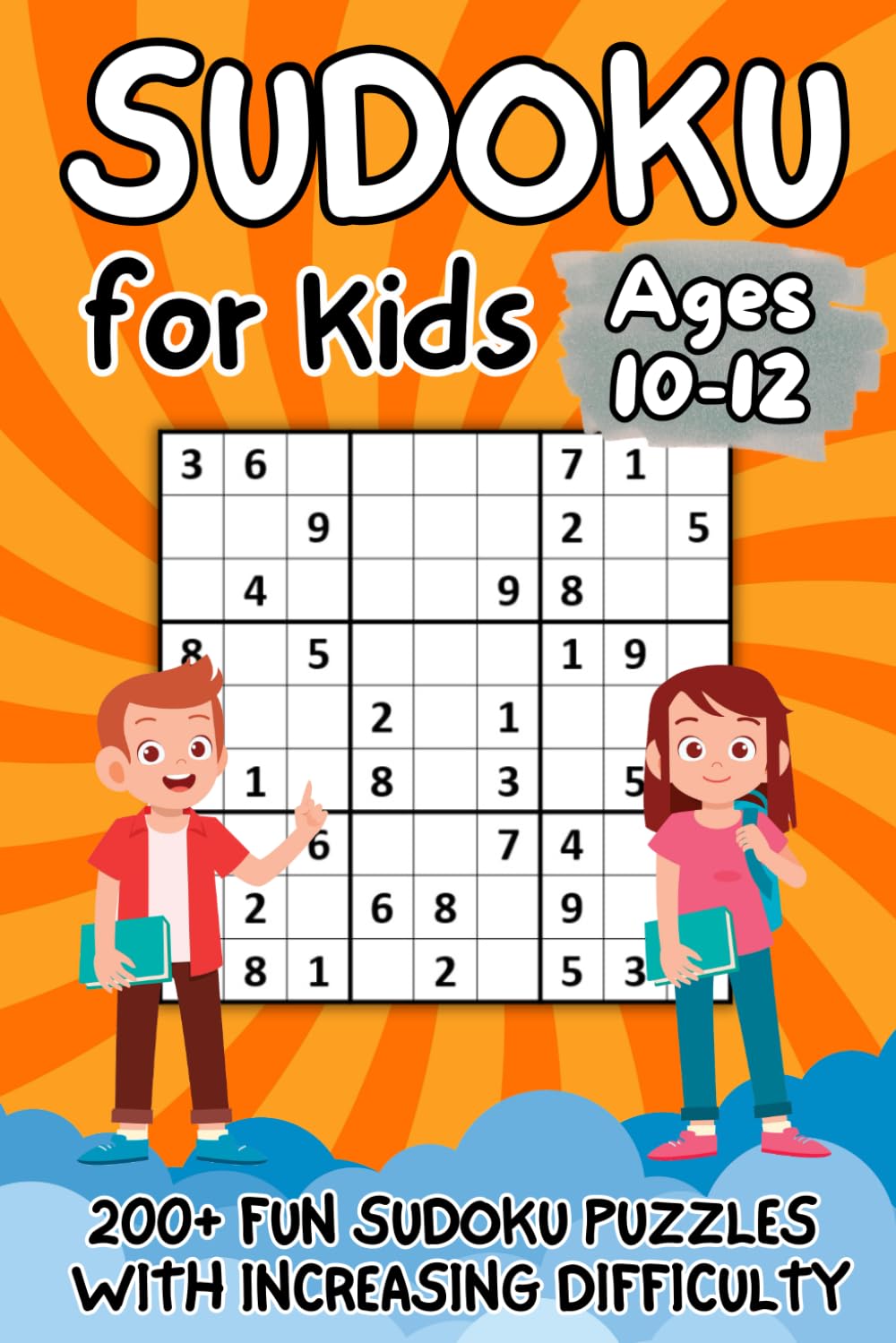
This LogicKids sudoku book offers over 200 puzzles in a 9x9 grid format with easy, medium, and hard levels, ideal for older kids who have outgrown smaller grids. The large print and age-targeted difficulty are appealing on paper. However, with only a handful of reviews and no detailed customer feedback, the actual puzzle quality and progression remain unverified. This makes it a reasonable option for parents who want a straightforward 9x9 book and are comfortable with some uncertainty, but not for those who need confirmed ease of use or prefer a mix of grid sizes.

Bottom line: This book works for parents who specifically want a large-print, 9x9-only sudoku book for a 10-12 year old and are willing to accept limited customer verification.

#7

Sudoku for Kids 6-12

Sudoku for Kids 6-12

Ages 6-12

Doodle Score 9.2/10
Check Price

Worth Noting

  • Puzzles may feel too easy for kids at the upper end of the age range.
Format
Book
Age Range
6-12 years
Puzzles & Grids
340 4x4-9x9
Difficulty Progression
Read the full review

This sudoku book packs 340 puzzles across 4x4, 6x6, and 9x9 grids, making it a convenient single volume for families with children at different skill levels. However, the puzzles lean easy - even some 6-year-olds found the 9x9 puzzles too simple, and children on the older end of the 6-12 range will likely outgrow it quickly. Without detailed customer feedback to validate the difficulty progression, the book is a gamble for those needing a true challenge for older kids.

Bottom line: Best suited for families with kids ages 6-8 or as a starter book for beginners, but not for older or experienced solvers who need tougher puzzles.

#8

500+ Sudoku 6-8

500+ Sudoku 6-8

Ages 6-8

Doodle Score 9.2/10
Check Price

Worth Noting

  • Puzzle difficulty progression is unverified, so it may not match a 6-year-old's learning curve.
  • Lack of customer feedback means age-appropriateness cannot be confirmed for the younger end of the range.
Format
Book
Age Range
6-8 years
Puzzles & Grids
500+ large print
Difficulty Progression
Read the full review

This book delivers the highest puzzle count in the budget category: over 500 large-print grids for ages 6-8. The price per puzzle is hard to beat. However, without detailed customer feedback, there's no way to verify whether the difficulty increases gradually or if the puzzles truly suit a six-year-old's skills. Parents who prioritize quantity over verified progression may find it acceptable, but those seeking a structured learning path would be better served by the LogicKids Sudoku for ages 6-8, which has customer-confirmed age-appropriate puzzles and clear difficulty stages.

Bottom line: This book works best if you're willing to take a chance on unverified content for the sake of maximizing puzzle count at the lowest cost — a pure quantity play.

#9

Kanoodle SudoQube

Kanoodle SudoQube

Ages 5-8

Doodle Score 9.0/10
Check Price

Worth Noting

  • Puzzles can be too easy for kids ages 8 and up with prior sudoku experience
  • Plastic cubes may snap after limited use if handled roughly
Format
Physical puzzle
Age Range
5-8 years
Puzzles & Grids
100 color challenges
Difficulty Progression
Read the full review

The Kanoodle SudoQube trades numbers for five colors of plastic cubes, letting young players build sudoku-like patterns without needing to read or count. Each of the 100 challenges asks you to arrange the cubes so that every row and column contains one of each color — the same logic as sudoku, but in a tactile, screen-free format.

The compact case (about the size of a deck of cards) fits in a backpack or glove compartment, with a magnetic closure that keeps cubes secure during travel. It's designed for quick rounds in the car or a waiting room, offering about 10–15 minutes of focused play per session.

This puzzle works best for children ages 5–7 who are still learning pattern recognition and enjoy hands-on activities. Older kids (ages 8 and up) with any sudoku experience will solve the challenges quickly, and the plastic cubes may snap if handled roughly — so it's not built for heavy-duty play or rough handling.

Bottom line: Best for introducing sudoku logic to young children (ages 5–7) who want a hands-on, travel-friendly activity; older kids or those seeking a challenge should consider a more demanding puzzle.

How to Choose

Age Range Suitability

Age labels are a starting point, but they don't guarantee the right challenge. A '6-8' book may start with 9x9 puzzles that overwhelm a 6-year-old, while a '8-12' book might be too easy for a 9-year-old who has done sudoku before.

Look for books that specify grid sizes and progression levels. Many parents find that 4x4 and 6x6 grids are essential for ages 5-7, while 9x9 grids work better for ages 8 and up.

Number of Puzzles and Grid Sizes

More puzzles isn't always better. A book with 500 puzzles but no variety in grid sizes may become repetitive. The sweet spot is 200-300 puzzles across multiple grid sizes (4x4, 6x6, 9x9), which allows a child to build skills step by step.

Books with only 9x9 grids are fine for older kids, but younger ones need the smaller grids first to understand the logic without getting lost.

Difficulty Progression

Effective progression means puzzles that start very easy and slowly increase in complexity. Some books claim 'easy to hard' but jump too quickly. Verified customer feedback is the best way to know if a book's progression actually works.

A well-structured book will have 3-4 levels, with each level introducing one new concept (like row logic, then column logic, then box logic). Without this, kids can get stuck and lose interest.

Format: Book vs. Physical Toy vs. Digital

Books are the most common and affordable format, but they require a pencil and eraser. Physical puzzle toys like Kanoodle offer a tactile, screen-free experience but have limited puzzle depth. Digital consoles provide endless puzzles and hints, but setup time and battery life can be a concern.

Consider your child's patience and preference. A book works well for focused puzzle time, while a digital console is better for independent play with instant feedback.

Portability and Durability

Books are easy to toss in a bag but can get bent or pages torn. Physical puzzles are more durable but may have small pieces that can get lost. Digital consoles are sturdy but require batteries and can be a distraction if not used properly.

For travel, a compact book or a puzzle toy like Kanoodle is ideal. For home use, a digital console or a larger book works fine.

Frequently Asked Questions