Games & Puzzles

10 Best Trivia Game for Kids of 2026: Games That Match Your Child's Age

Find the best trivia game for kids that matches your child's age and attention span, from travel-friendly cards to family board games.

Every parent has been there: you buy a trivia game marked 'ages 8+', bring it to game night, and the kids either stare blankly at questions about '70s pop culture or the adults yawn through a deck of oversimplified facts. The problem isn't the category — it's that most trivia games are marketed with broad age ranges that don't match real-world difficulty.

This guide cuts through that confusion. We sorted through the most-praised family trivia games and identified which ones actually hit the sweet spot for kids ages 6 to 12. The ones that work share a common trait: they either separate question decks by age, rely on familiar topics (animals, geography, family inside jokes), or keep rounds short enough to hold attention.

Whether you need a portable card game for a road trip or a board game for a structured family night, the right choice comes down to your child's reading level, patience, and whether they prefer cooperation or competition.

#1

Guess in 10 Animal Planet

Guess in 10 Animal Planet

Kids 6-10

Doodle Score 9.4/10
Check Price

Worth Noting

  • After repeated plays with the same cards, some clues may feel too easy or vague for kids who memorize the answers.
Players
2-6
Age Range
6+
Play Time
20 min
Question Type
Animal facts, clues
Read the full review

Skillmatics Guess in 10 Animal Planet turns animal facts into a quick guessing game where kids ask yes/no questions to identify the creature on the card. The compact box and simple rules mean it works anywhere — from restaurant tables to car rides — without requiring adults to read a manual.

This game is best for families with kids ages 6 to 10 who love animals and want a trivia option that doesn't outstay its welcome. But if your household plays the same deck every day, a small number of clues may start to feel too easy or vague — occasional rotation or expansion decks can help maintain freshness.

Tip: To keep the game fresh, alternate between this and the States version or set aside memorized cards after a few rounds.

Bottom line: For families who want a low-commitment trivia card game that kids actually want to replay, this animal-themed deck delivers consistent fun without needing batteries or board space.

#2

Trivial Pursuit Family

Trivial Pursuit Family

Kids 8-12

Doodle Score 9.4/10
Check Price

Worth Noting

  • In mixed-age games, adult cards can be too challenging for kids and kid cards too easy for adults.
  • After a few plays, the limited card pool may reduce replayability.
Players
2-4 teams
Age Range
8+
Play Time
30-45 min
Question Type
General, themed decks
Read the full review

Unlike portable card trivia games, this board game creates a dedicated family game night experience. The separate kid and adult question decks allow mixed-age groups to compete on fair footing. However, the card count is limited — after a few games, familiar questions reappear. Some adult cards may still be too hard for younger players, while kid cards may feel too simple for teens. Best for families with kids 8-12 who value a structured format over endless variety, and where the board game footprint is not a concern.

Tip: Assign adult cards to adults and kid cards to kids, but expect some young players to find adult questions too difficult — consider playing in teams to balance.

Bottom line: Grab this for structured family game nights where separate difficulty tiers matter more than portability or infinite variety.

#3

Beat The Parents

Beat The Parents

Kids 6-10

Doodle Score 9.4/10
Check Price

Worth Noting

  • Some questions are too difficult for children under 8
Players
2-6
Age Range
6+
Play Time
20-30 min
Question Type
Kids vs parents + challenges
Read the full review

Beat The Parents stands out by pairing trivia questions with physical challenge cards, creating an energetic kids-vs-parents competition under $10. However, some questions are too difficult for children under 8, and the physical challenge element may not appeal to every family. This game suits households with kids ages 6-10 who enjoy a competitive twist and don't mind a less fact-focused approach.

Tip: Let kids team up or allow hints for harder questions to keep the game fun for everyone.

Bottom line: For families on a budget who want a lively game night where kids can compete against parents, Beat The Parents delivers solid replay value — just be prepared to adapt questions for younger players.

#4

Guess in 10 States

Guess in 10 States

US geography learning

Doodle Score 9.4/10
Check Price

Worth Noting

  • Difficulty can swing between too easy for teens and too obscure for younger kids.
  • Limited coverage of cities and major landmarks leaves geography enthusiasts wanting more depth.
Players
2-6
Age Range
8+
Play Time
20 min
Question Type
US geography, clues
Read the full review

This card game turns US state trivia into a fast-paced guessing challenge where kids ask yes/no questions to identify a state. Compared to the animal-themed version that appeals to a broader younger set, this edition is laser-focused on states — ideal for family game nights with a travel theme or as a homeschool supplement. The difficulty can vary between rounds, so parents may need to guide younger players. Once all state facts are memorized, replay value dips. Best suited for older kids (8+) specifically learning US geography, not for casual trivia or non-US audiences.

Tip: Adjust the rules for mixed-age groups — allow younger players extra questions or a free hint to balance difficulty.

Bottom line: For families focused on US state geography for kids 8-12, this is a budget-friendly game that delivers learning through play — but once states are memorized, consider rotating in other trivia sets.

#5

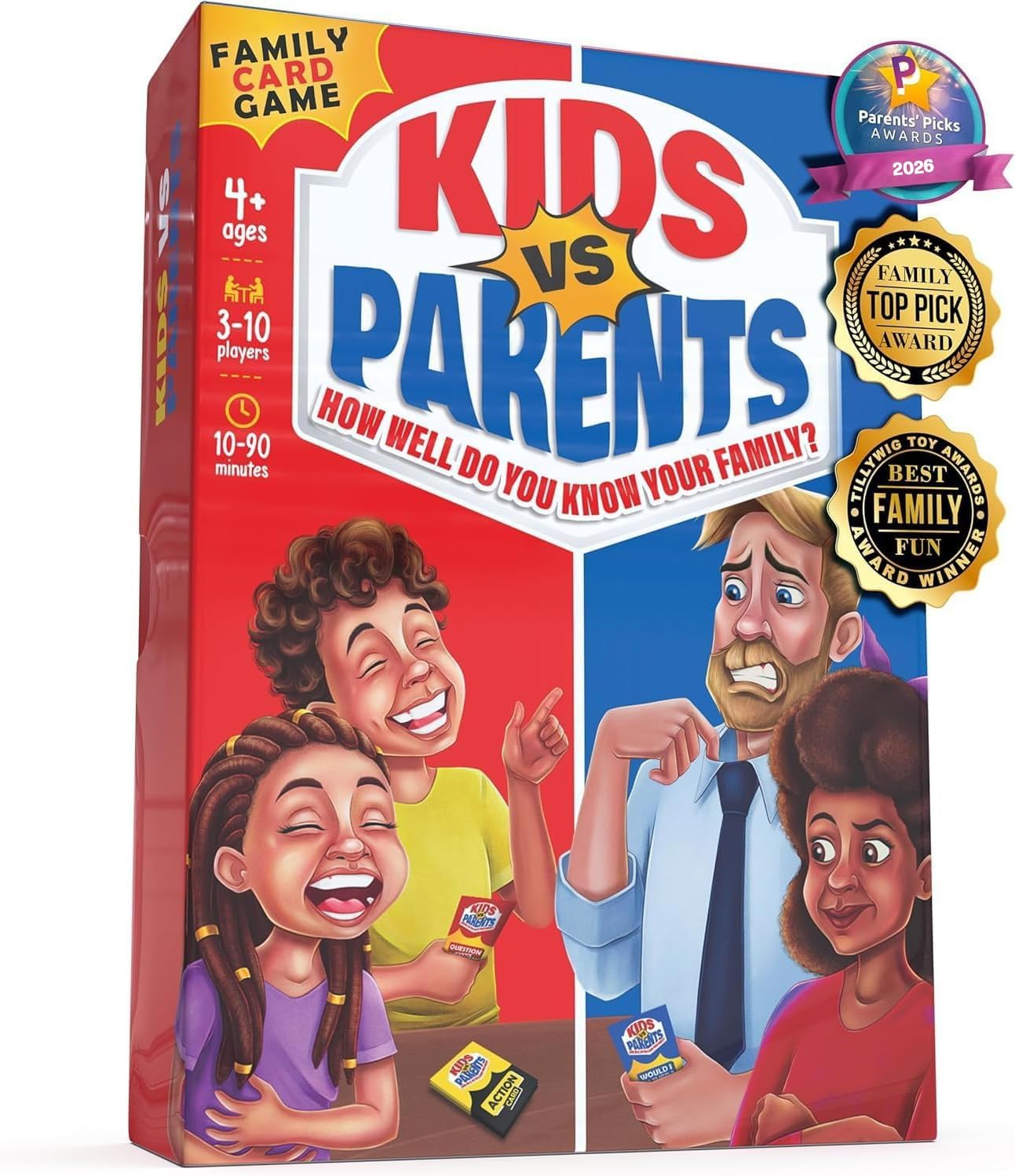
Kids VS Parents

Kids VS Parents

Ages 4-10

Doodle Score 9.2/10
Check Price

Worth Noting

  • Not a trivia game; families seeking factual challenges will find the conversational focus unsatisfying
Players
4-12
Age Range
4+
Play Time
20-30 min
Question Type
Conversation prompts, challenges
Read the full review

Kids VS Parents uses simple conversation starters and challenges to get families talking and laughing, even with the youngest children. This is not a knowledge-based trivia game — there are no geography or science questions. The experience is about sharing stories and silly answers. For families with kids ages 4-10 who want to strengthen connection during road trips or quiet evenings, it works well. Those expecting a competitive trivia format with factual questions will be disappointed, as the game prioritizes fun over facts.

Tip: Use the prompts as conversation starters during dinner or car rides for best effect.

Bottom line: Best for families with young children who value bonding and shared laughter over competitive trivia — not a replacement for a factual quiz game.

#6

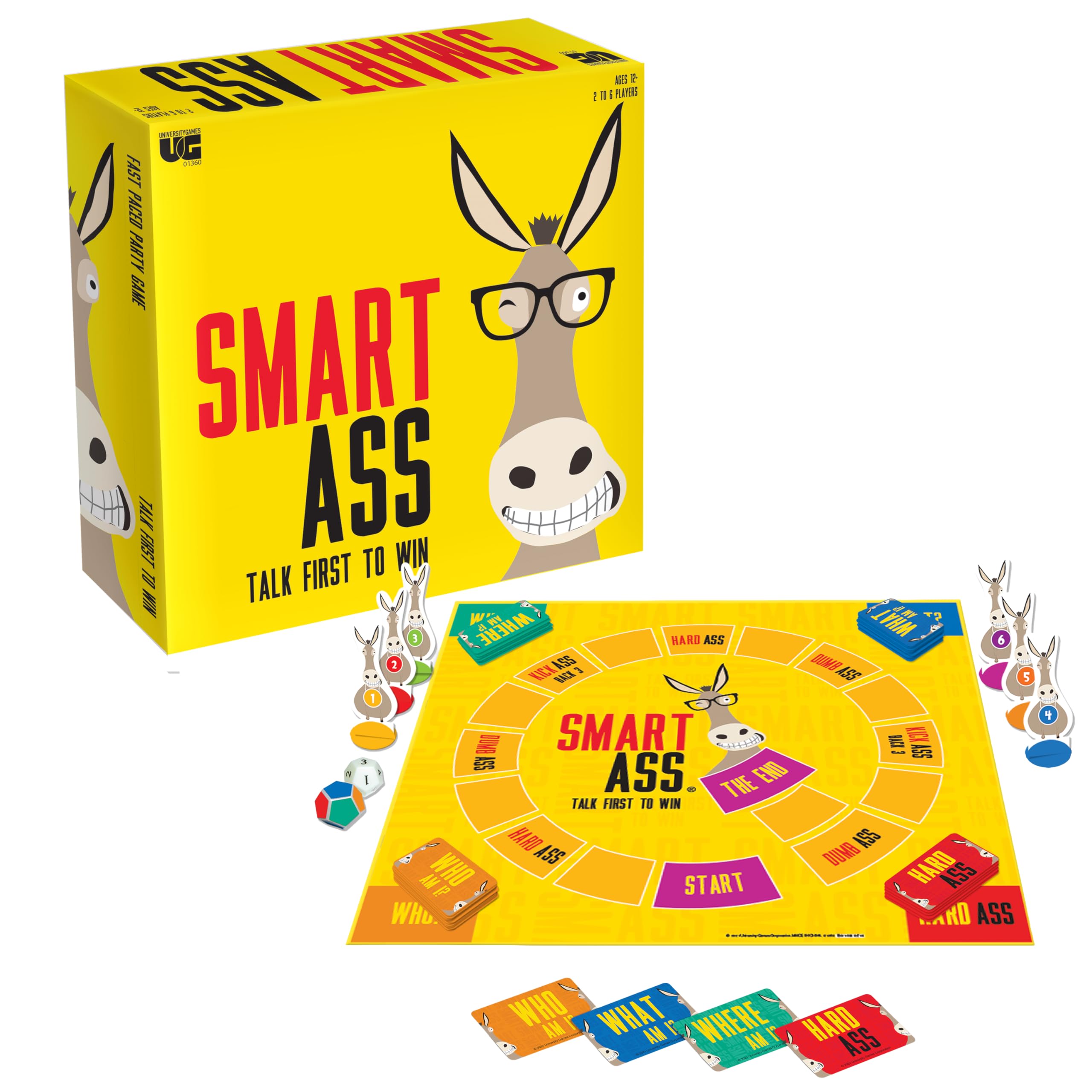
Smart Ass Trivia

Smart Ass Trivia

Teens 12+

Doodle Score 9.2/10
Check Price

Worth Noting

  • Questions may be too challenging for players under 12, limiting its age range.
Players
2-6
Age Range
12+
Play Time
30 min
Question Type
General, shout-out
Read the full review

Smart Ass Trivia rewards quick shouts over quiet turns, making it a lively choice for teens and adults who enjoy competitive noise. The questions span general knowledge with a family-friendly edge, but the difficulty leans older — expect content that challenges most under-12 players. This game fits households ready for loud, rowdy trivia nights, not quiet study sessions or young children.

Bottom line: Best reserved for teen-and-up parties where shouting is part of the fun, not for families seeking a calm kids' trivia game.

#7

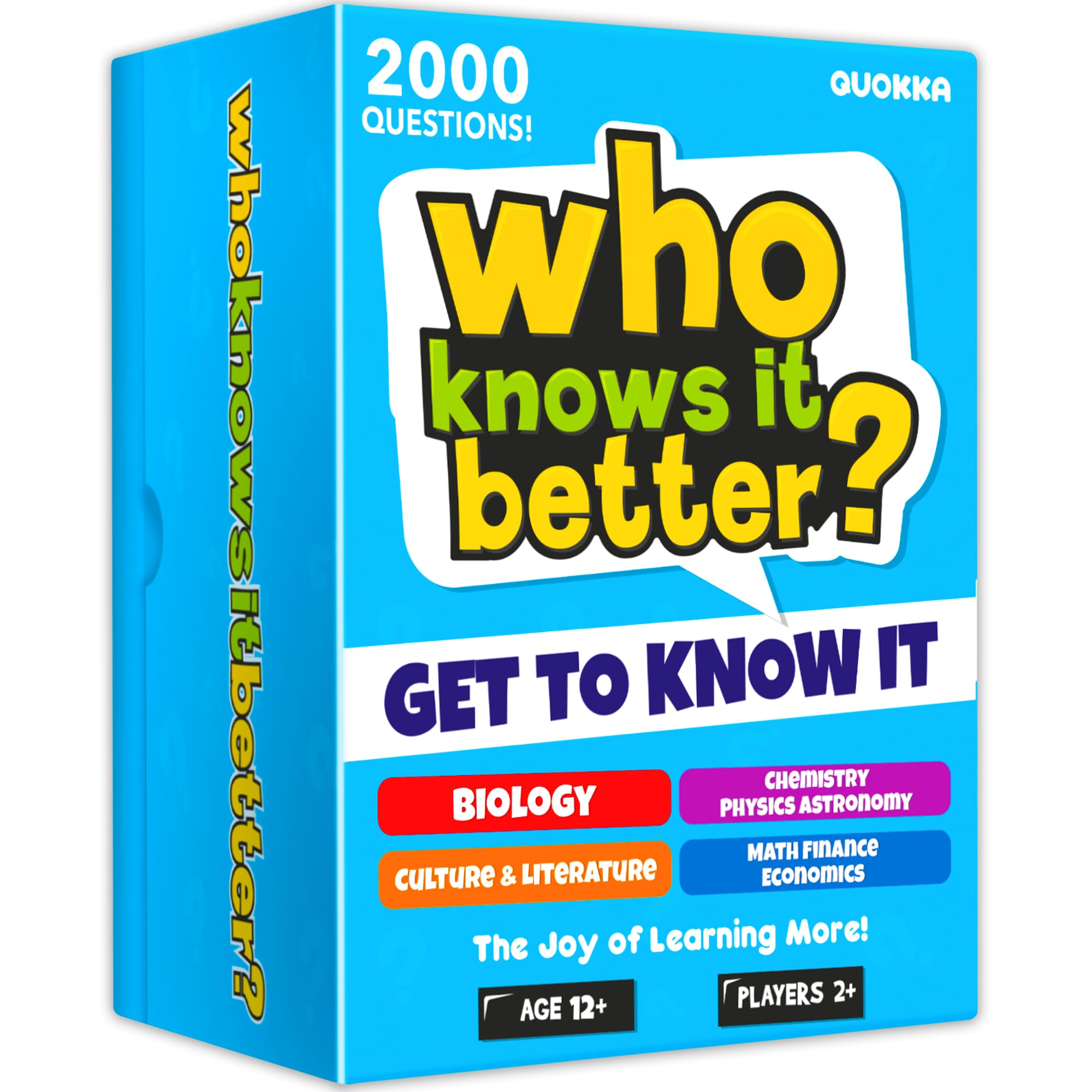
QUOKKA Who Knows Better

QUOKKA Who Knows Better

Ages 12+

Doodle Score 9.2/10
Check Price

Worth Noting

  • Some cards contain factual errors, making it less trustworthy for learning.
Players
2+
Age Range
12+
Play Time
15 min per set
Question Type
STEM, culture, math, biology
Read the full review

The four themed decks in one box cover solid school subjects and the simple rules make it easy to play at home or on trips. However, some cards contain incorrect answers, which is a real problem for any trivia game aimed at teaching kids. The questions also skew easy — fine for quick rounds with tweens, but not a challenge for teens or adults who already know the material.

Bottom line: A passable option for older kids (12+) who want a light trivia game and can ignore the occasional wrong answer, but not a solid educational tool for younger children.

#8

The World Game

The World Game

World geography

Doodle Score 9.2/10
Check Price

Worth Noting

  • Sparse customer feedback makes long-term enjoyment difficult to gauge.
Players
2-5
Age Range
8+
Play Time
15-30 min
Question Type
World geography, flags
Read the full review

The World Game covers all 194 countries with a map and trivia cards that double as flashcards, giving geography-focused families a solid foundation. The sparse customer feedback, however, means there’s less assurance of long-term replay value compared to more established trivia games.

Bottom line: Worth considering if your priority is complete world geography content and you don’t mind buying without extensive social proof.

#9

Outsmarted Ultimate

Outsmarted Ultimate

Tech families 10+

Doodle Score 9.0/10
Check Price

Worth Noting

  • App glitches can interrupt gameplay during critical moments.
Players
2-24
Age Range
8+
Play Time
60 min
Question Type
Variety, app-driven
Read the full review

Outsmarted Ultimate Edition offers thousands of fresh trivia questions across 10 categories with adaptive difficulty for different ages. But the app can glitch during play, and setup requires stable internet and a device — a poor match for families wanting simple, screen-free trivia. Best for tech-savvy households with older kids (10+) who prioritize content variety over reliability.

Bottom line: Fits families with older kids who embrace app-driven play and want constantly updated trivia — less ideal if you prefer reliable, no-device games.

#10

All of Us Trivia

All of Us Trivia

Multigenerational

Doodle Score 9.0/10
Check Price

Worth Noting

  • Some questions can be vague or difficult depending on generational knowledge
Players
4+
Age Range
12+
Play Time
30 min
Question Type
Multigenerational pop culture
Read the full review

All of Us uses 480 cards with questions spanning Boomer to Gen Z references, creating a trivia experience that connects different age groups. However, the minimum age of 12 and need for 4+ players exclude younger children, and some questions feel obscure depending on generational background while the rules may not be intuitive for all groups.

Bottom line: Best for large multi-generational gatherings where teens and adults want to bridge age gaps, not for families with children under 12 or small groups.

How to Choose

Age Range Compatibility

Age labels on the box are a starting point, but the real test is whether a 6-year-old can read and understand the questions independently. Games with separate decks for kids and adults (like Trivial Pursuit Family) solve this by letting younger players answer from a curated set. Card-only games that use picture clues (like Guess in 10) work for pre-readers when an adult reads the prompts aloud.

The catch: many games marked 8+ actually contain questions that expect real-world knowledge a typical 8-year-old hasn't accumulated. Check sample cards online or look for themes your child already loves — animals, space, or their own family — to bridge the gap.

Number of Players

Most trivia games claim 2-6 players, but the actual fun scales differently. Games that rely on shouting answers (like Smart Ass) work best with 4+ because the chaos increases energy. Turn-based games with a board (Trivial Pursuit) can feel slow with more than 4 players, while card games like Guess in 10 handle 6 players easily because rounds are fast.

If your group often exceeds 6, look for games that support teams or have a party mode. Outsmarted handles up to 24 via an app, but that introduces device dependency and setup overhead.

Type of Questions

Question type determines replay value. General-knowledge decks run the risk of being too easy after one or two plays, while themed decks (animals, US states) stay fresh as long as the topic remains interesting. Conversation-style games (Kids VS Parents) don't test knowledge at all — they ask 'what would you do?' prompts, which change every time.

The hidden trade-off: games that claim 'thousands of questions' often have shallow variety because each card repeats similar patterns. Look for games with multiple categories or adaptive difficulty (like Outsmarted) if you plan to play weekly.

For families with a wide age spread, games with separate kid/parent decks or multigenerational themes (All of Us) prevent one side from dominating.

Game Duration

A game that runs longer than a child's attention span turns into a chore. For kids under 8, aim for 20-minute max rounds. Card games like Guess in 10 and Beat The Parents fit this window naturally. Board games like Trivial Pursuit Family Edition advertise 30-45 minutes, which works if you can pause between rounds.

The mechanism: shorter games lower the barrier to repeated play — 3 quick rounds are better than one slog. If a game takes over 45 minutes (like Outsmarted), save it for older kids or dedicated game nights. Always check the box's playtime against your family's typical evening schedule.

Frequently Asked Questions