STEM & Learning

12 Best STEM Toys of 2026: Hands-On Picks That Actually Teach

Find STEM toys that balance fun and learning — from circuits to marble runs — with honest trade-offs for every age.

Many STEM toys promise endless learning but deliver frustration when pieces don't stay together or require adult help for basic assembly. The challenge is finding kits that actually match a child's skill level and attention span.

This guide focuses on toys that respect your child's age and dexterity — from magnetic tiles that click securely to snap circuits that teach real electronics. The picks here prioritize build quality and genuine engagement over piece counts and hype.

#1

Snap Circuits Jr. SC-100

Snap Circuits Jr. SC-100

Future Engineer

Doodle Score 9.6/10
Check Price

Worth Noting

  • Requires 4 AA batteries that are not included in the box
  • The picture manual may need adult guidance for the initial builds
Age Range
8+
Portability
Tabletop
Activity Type
Electronics
Piece Quality
Snap-together plastic
Read the full review

Snap Circuits Jr. delivers over 100 working electronics projects — radios, alarms, flying saucers — using 29 color-coded components that snap onto a plastic grid. No soldering, no wiring, no programming. The picture-based manual guides builds step by step, and each project produces a visible result: a light, a sound, a spinning blade. The components click together with enough friction to stay put during play, but release easily when it's time to rebuild.

Best for kids ages 8 and up who show curiosity about how lights, speakers, and switches work. The kit requires 4 AA batteries (sold separately), and the first few projects go smoother with a parent reading the diagrams alongside the child. Once the pattern clicks, most children can work through the projects independently. This is a guided introduction to real circuit design — not a free-play building set — with projects that build on each other.

Tip: The first project (Project 1: Light & Sound) is the easiest. Start there to build confidence before tackling the more complex builds.

Bottom line: If you want a STEM toy that actually teaches electronics — not just a vague claim — Snap Circuits Jr. is the choice. Just keep a pack of AA batteries handy.
#2

MathLink Cubes 100pc

MathLink Cubes 100pc

Math Learners

Doodle Score 9.6/10
Check Price

Worth Noting

  • Cubes are very hard to snap together, especially for young children
Age Range
5-10
Portability
Container
Activity Type
Math
Piece Quality
Durable plastic cubes
Read the full review

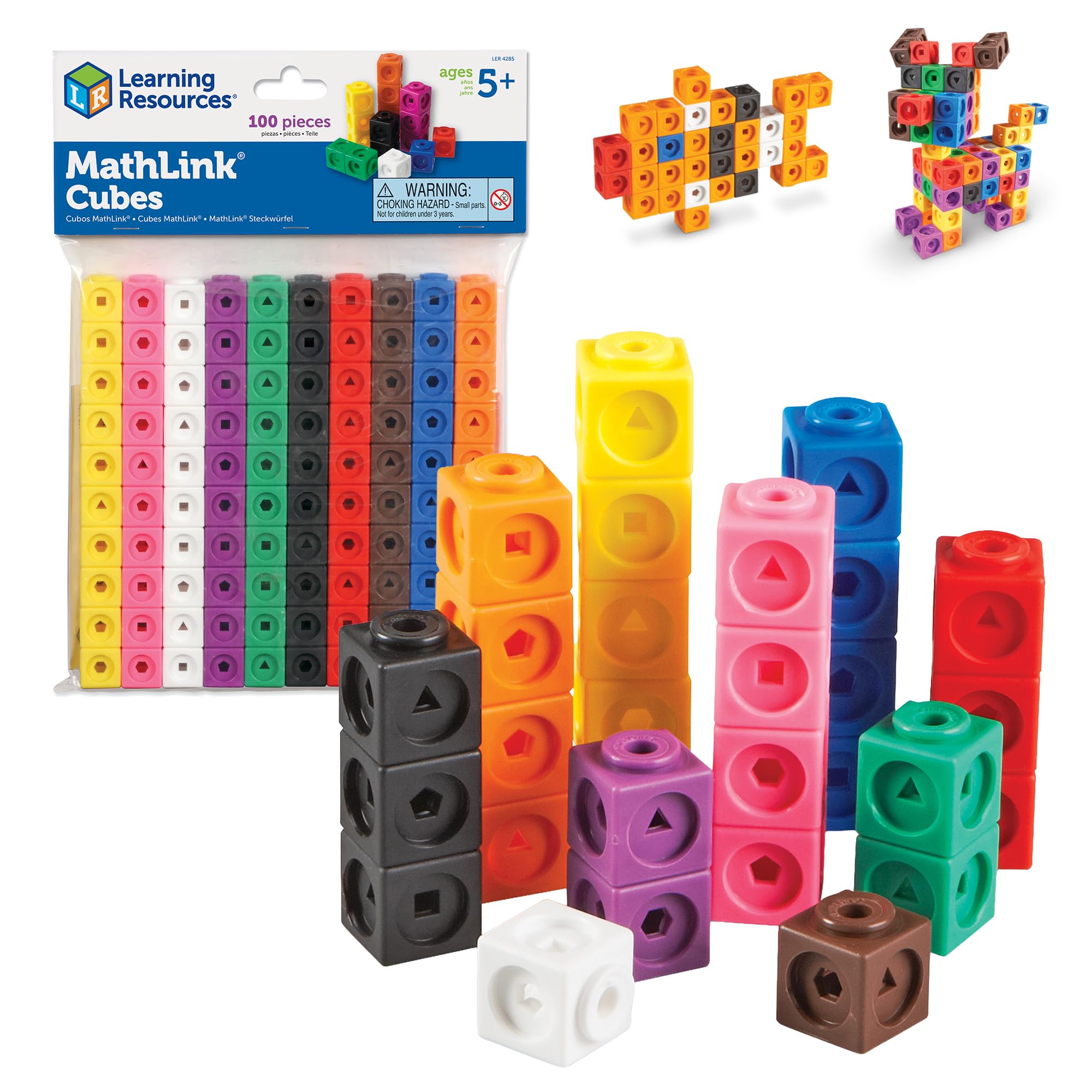
These 100 snap-together cubes give homeschool and classroom settings a tactile way to teach counting, patterning, and basic arithmetic. Bright colors support sorting and engagement, while the cubes hold together firmly once connected. However, the connection is very tight — small hands may struggle to push them together or pull them apart, and adult help is often needed to separate sets. For teachers or parents who don't mind occasional assistance, this is a durable tool that spans multiple school years.

Tip: Pre-separate sets of cubes before a lesson to reduce frustration for young children.

Bottom line: Best for homeschoolers and teachers who can assist with assembly — a budget-friendly tool that covers multiple years of math concepts.

#3

Coodoo Magnetic Tiles 40pc

Coodoo Magnetic Tiles 40pc

Tile Builders

Doodle Score 9.6/10
Check Price

Worth Noting

  • Only 40 pieces included; larger builds require buying additional sets
  • Some tiles may chip after rough play
Age Range
3-14
Portability
Storage bag
Activity Type
Magnetic building
Piece Quality
Sealed ABS plastic
Read the full review

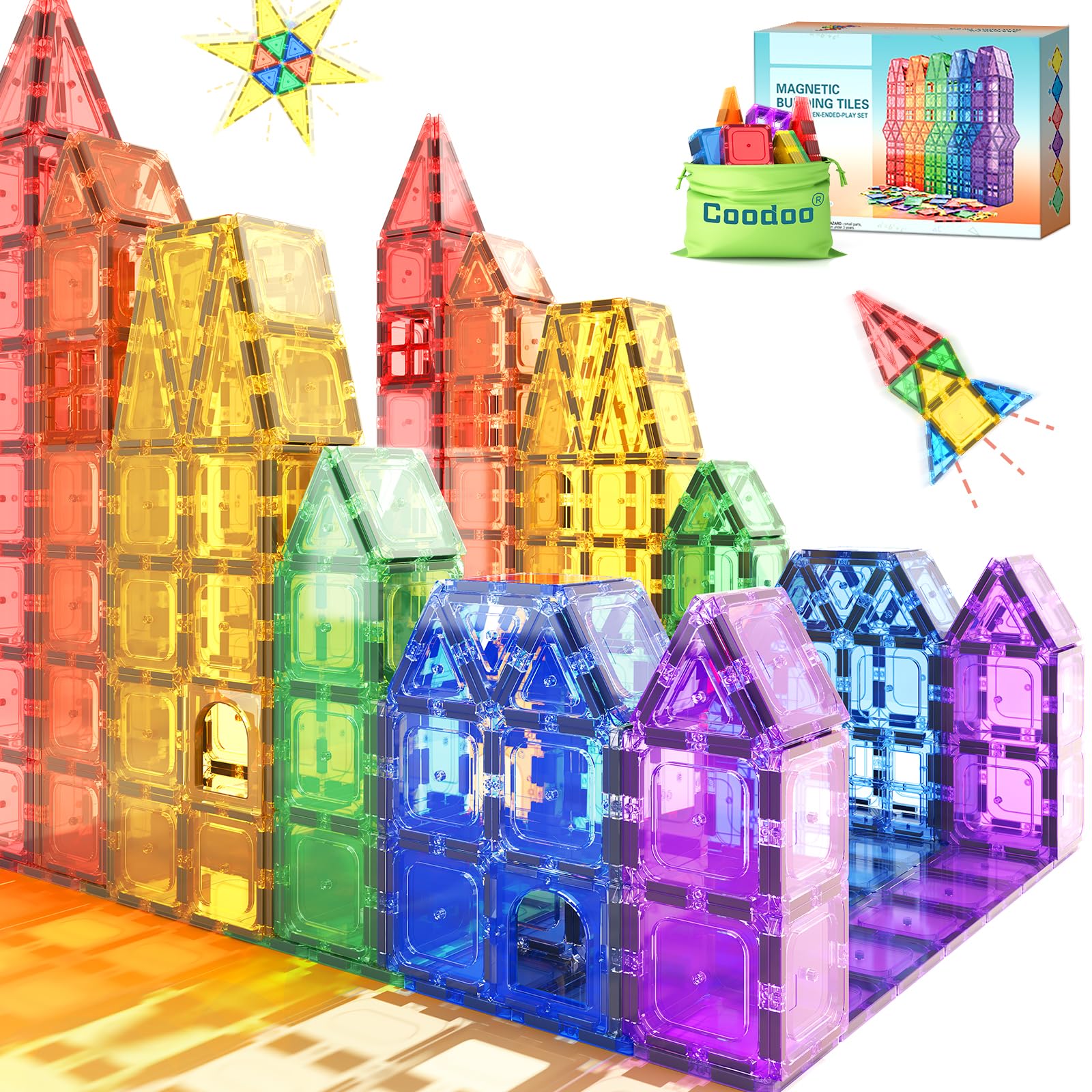
The Coodoo 40-piece set delivers strong magnets and sealed ABS construction at a fraction of the cost of name-brand tiles. Compatible with standard 3-inch tiles from other brands, it expands easily. The open-ended play engages kids from toddlers to teens. That said, the 40-piece count limits large builds — additional sets are needed. Some tiles may chip after rough play, but for families new to magnetic tiles or classrooms seeking a durable, cost-effective starter, this set hits the mark.

Bottom line: An affordable entry point into magnetic tile building — best for beginners who plan to expand with additional sets.

#4

Brain Flakes 500pc

Brain Flakes 500pc

Creative Builders

Doodle Score 9.6/10
Check Price

Worth Noting

  • Pieces can be difficult for small hands (ages 3-4) to snap together; some children may need adult help
Age Range
3+
Portability
Storage jar
Activity Type
Creative building
Piece Quality
Interlocking plastic discs
Read the full review

With 500 interlocking discs in one jar, this set offers enough pieces for ambitious structures right out of the box, unlike magnetic tile sets that require multiple expansions. The bright colors support sorting and color recognition, and the sturdy plastic holds together well during construction.

Best for preschoolers and kindergartners who enjoy free-form creation and parents wanting a screen-free, budget-friendly activity. Kids who prefer step-by-step instructions may not find the open-ended format as engaging.

Tip: Show children how to snap discs at a slight angle — it reduces the force needed.

Bottom line: A cost-effective way to fill a playroom with building pieces that reward imagination over instruction-following. Best for families who value quantity and open-ended play.

#5

Sassy Stacks of Circles

Sassy Stacks of Circles

Infants

Doodle Score 9.6/10
Check Price

Worth Noting

  • Base can trap water after washing, requiring careful air-drying to prevent mold growth.
Age Range
6-24 months
Portability
Small
Activity Type
Sensory stacking
Piece Quality
BPA-free plastic
Read the full review

This compact stacking ring set works well as a first STEM toy for babies learning to grasp and teethe. The rings are easy to hold and the vibrant colors encourage stacking. However, the base can trap water if not air-dried after washing, and the size is smaller than many expect. It best suits infants 6-12 months seeking sensory play.

Bottom line: A thoughtful first stacking toy for infants, as long as you are comfortable with its compact size and the need to air-dry the base after cleaning.

#6

CENOVE Flower Garden

CENOVE Flower Garden

Toddlers

Doodle Score 9.6/10
Check Price

Worth Noting

  • For children who want sturdy structures, some pieces fit loosely and may separate during play.
Age Range
3-6
Portability
Carry box
Activity Type
Pretend play
Piece Quality
ABS plastic
Read the full review

This 30-piece flower garden set appeals to toddlers who enjoy imaginative play with bright colors and a convenient carry box for storage. The adorable theme encourages sorting and creativity, but some pieces connect loosely and may come apart during play. The limited piece count also reduces long-term replay value, making this best for occasional pretend sessions rather than daily building.

Bottom line: A charming pick for toddlers who love flower-themed pretend play and don’t mind occasional rebuilding.

#7

Genius Square

Genius Square

Logic Fans

Doodle Score 9.6/10
Check Price

Worth Noting

  • Component quality may not match the price point for buyers expecting premium materials
Age Range
6+
Portability
Portable
Activity Type
Logic game
Piece Quality
Cardboard + wood
Read the full review

With over 60,000 puzzle combinations, The Genius Square delivers fast-paced competitive play that challenges spatial reasoning. Its compact design makes it easy to take on trips. However, the cardboard and wood components feel modest for the mid-range price; this is best for families who prioritize replayability over premium materials.

Bottom line: Best for competitive puzzle fans who value endless replayability over component heft, and who want a travel-friendly two-player game.

#8

Kanoodle

Kanoodle

Logic Enthusiast

Doodle Score 9.4/10
Check Price

Worth Noting

  • In homes with children under 3, the small pieces require constant supervision or storage out of reach.
Age Range
7+
Portability
Portable case
Activity Type
Logic
Piece Quality
Rigid plastic
Read the full review

Kanoodle packs 228 puzzles into a case that doubles as the game board, making it a truly portable activity. The graduated difficulty means children and adults can each find a satisfying challenge, but keep in mind this is a single-player game — not for group play. The small pieces rule it out for households with toddlers, but for families with kids 7+ who enjoy logic puzzles, this offers near-infinite replayability.

Bottom line: For solo travelers and logic-loving families with older kids, this is a durable, screen-free brain workout that earns its place in a carry-on.

#9

NG Science Magic Kit

NG Science Magic Kit

Science Shows

Doodle Score 9.4/10
Check Price

Worth Noting

Age Range
8+
Portability
Kit box
Activity Type
Science magic
Piece Quality
Cardboard + plastic
Read the full review

Unlike the top pick's structured electronics, this kit turns chemistry experiments into magic performances. It includes materials for 20 tricks, with an additional 85 bonus experiments requiring common household items — suitable for kids 8+ who enjoy showmanship and learning the science behind the tricks. The 20 included experiments have all materials; the rest require household supplies like vinegar and baking soda.

Tip: Check the bonus experiment list beforehand; most require common household items like vinegar or baking soda.

Bottom line: Best for kids who love performing science tricks and are okay with gathering extra household items for the bonus experiments.

#10

Klutz LEGO Gadgets

Klutz LEGO Gadgets

LEGO Fans

Doodle Score 9.4/10
Check Price

Worth Noting

  • Missing pieces can occur in some kits, requiring verification upon arrival.
Age Range
8-12
Portability
Box
Activity Type
Mechanics
Piece Quality
LEGO elements
Read the full review

This kit uses 58 LEGO elements and papercraft to build 11 machines, introducing gears and levers in an engaging way. However, the pieces only allow one build at a time, and some kits have arrived with missing elements — worth checking contents before starting.

Bottom line: Best for LEGO owners who want a mechanical supplement and are willing to check contents upon arrival.

#11

GraviTrax Starter Set

GraviTrax Starter Set

Marble Lovers

Doodle Score 9.4/10
Check Price

Worth Noting

  • Requires costly additional sets for larger builds; plastic pieces may crack under rough play
Age Range
8+
Portability
Box
Activity Type
Marble run
Piece Quality
ABS plastic (premium)
Read the full review

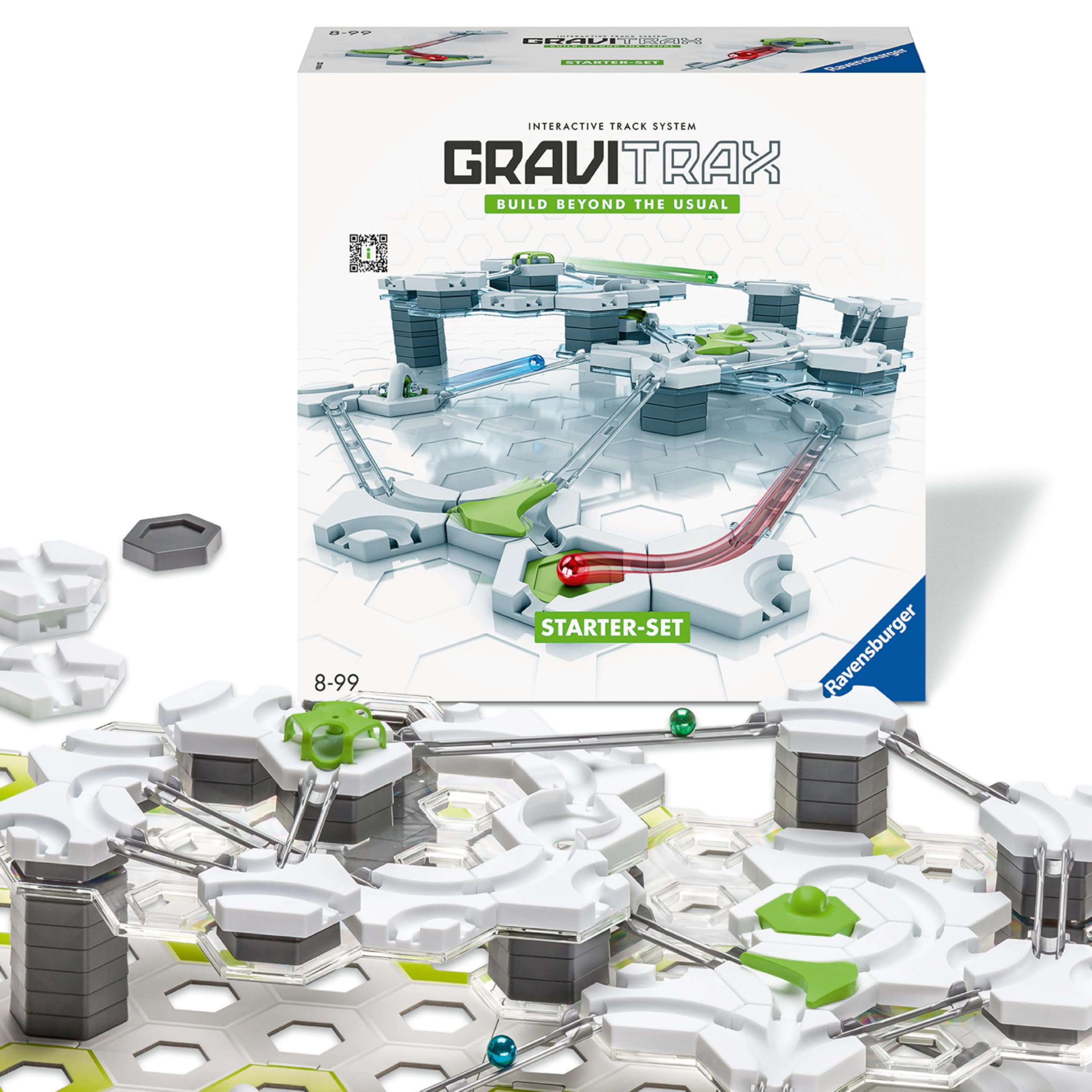
This starter set delivers precisely engineered plastic pieces that click together consistently for intricate marble runs. The high German build quality supports complex designs with magnetic and kinetic elements. However, the premium price and costly expansion packs make it a long-term investment, and occasional reports of cracking under rough handling suggest it best suits careful enthusiasts.

Bottom line: Best for families who appreciate precision engineering and plan to gradually expand their track collection over time.

#12

Gravity Maze

Gravity Maze

Engineering Puzzle

Doodle Score 9.2/10
Check Price

Worth Noting

  • Towers can wobble and collapse when bumped
Age Range
8+
Portability
Tabletop
Activity Type
Engineering
Piece Quality
Plastic towers (unstable)
Read the full review

60 challenges progress from simple to complex, combining building and marble physics in a way that rewards careful planning. Towers can be unstable — bumping the board may send marbles scattering, so patience is required. Best for kids 8+ who enjoy both building and puzzles, and families who don't mind occasional collapses.

Tip: Place the game on a stable surface and remind kids to avoid bumping the board during play.

Bottom line: A clever option for kids who enjoy both building and puzzles — just keep a steady table and a patient attitude.

How to Choose

Age Range

Age labels are often aspirational: an 8+ toy may need adult help for the first few builds. A 3+ set with small pieces can frustrate a 3-year-old who lacks dexterity. Always check the fine print on required hand strength and supervision.

For preschoolers, open-ended building sets with larger pieces (like Brain Flakes or magnetic tiles) offer more independence. For elementary ages, kits with clear step-by-step instructions (Snap Circuits) work better than purely open-ended sets.

Activity Type

The type of activity determines how the toy holds attention. Logic puzzles (Kanoodle) are great for solo quiet time, while building sets (Brain Flakes) encourage open-ended play with siblings. Electronics kits provide visible results but need a structured approach.

Project-based kits (Snap Circuits, science magic) offer a finite number of builds, which can be satisfying or limiting. Open-ended sets (magnetic tiles, interlocking discs) grow with the child but require more imagination. Match the style to your child's play habits.

Number of Pieces or Projects

More pieces don't always mean more value. A 150-piece marble run with flimsy joints may lead to fewer successful builds than a 40-piece magnetic tile set that clicks together reliably. Focus on the ratio of usable builds to piece count.

For kits, the number of projects matters: 100 projects in Snap Circuits means months of reuse. For construction sets, consider whether the pieces can be combined in many ways (magnetic tiles) or are limited to one design at a time (LEGO Gadgets).

Piece Quality and Stability

Stability is the most common frustration in marble runs and stacking toys. Pieces that don't lock tightly cause collapses, leading to tears. Look for sets with snap-fit connectors or weighted bases that reduce tipping.

Plastic quality varies: cheaper sets may crack under pressure, while premium brands use thicker ABS. Check reviews for phrases like 'pieces stay together' or 'needs adult help to fix' — these reveal true durability.

Portability

Portable sets (Kanoodle, Genius Square) fit in a backpack and keep kids occupied on trips. Large construction sets require a dedicated table and are better for home use. Consider where the toy will be used most.

Storage matters: sets with built-in cases or bags (Coodoo, Brain Flakes) prevent lost pieces. For travel, compact puzzles with no loose marbles or small parts are safer and quieter.

Frequently Asked Questions