Melissa & Doug Classic Abacus
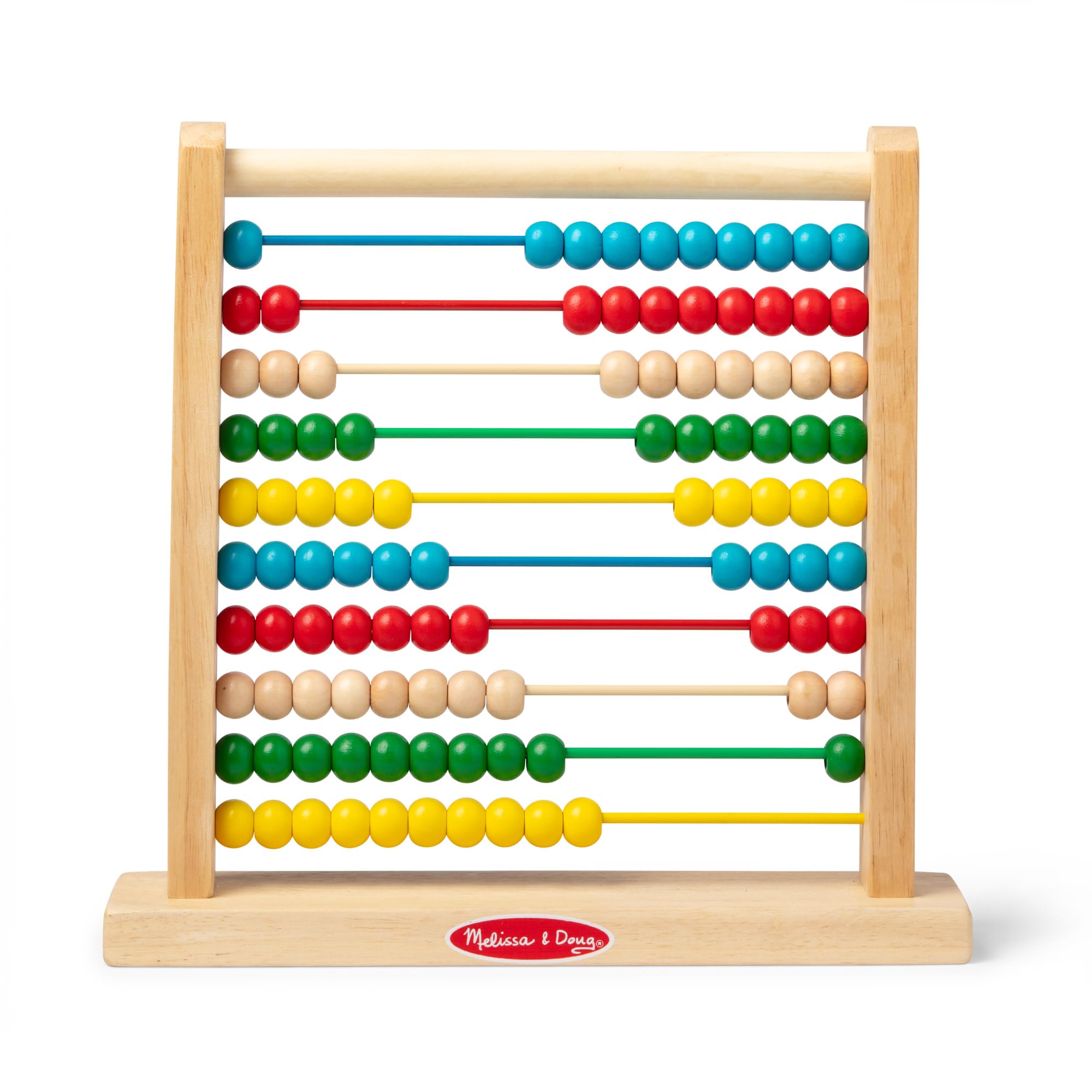
What We Like
- Solid wood construction withstands years of active play and classroom use.
- Helps children visualize math concepts through hands-on bead movement.
- Bright multicolored beads engage toddlers and preschoolers.
Worth Noting
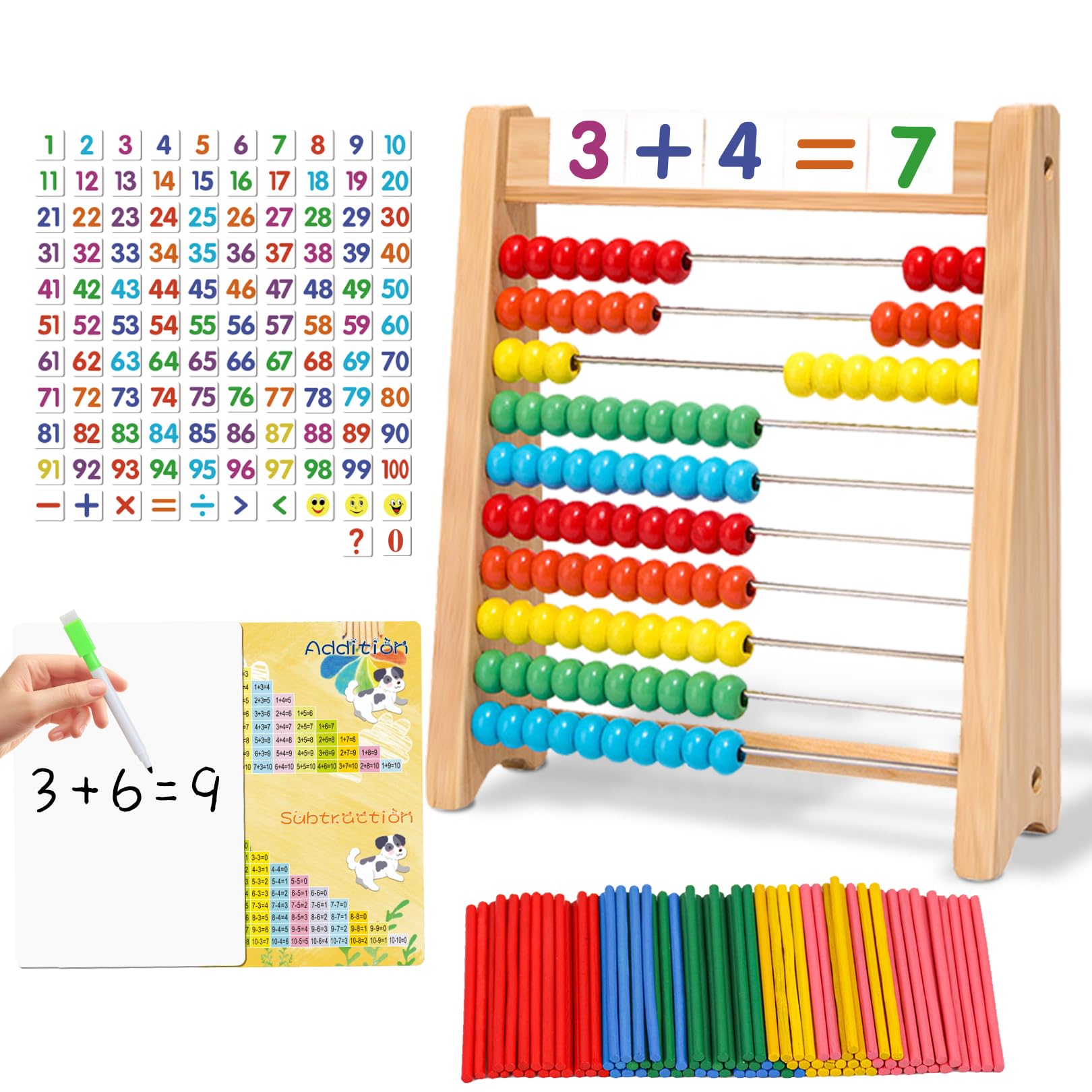
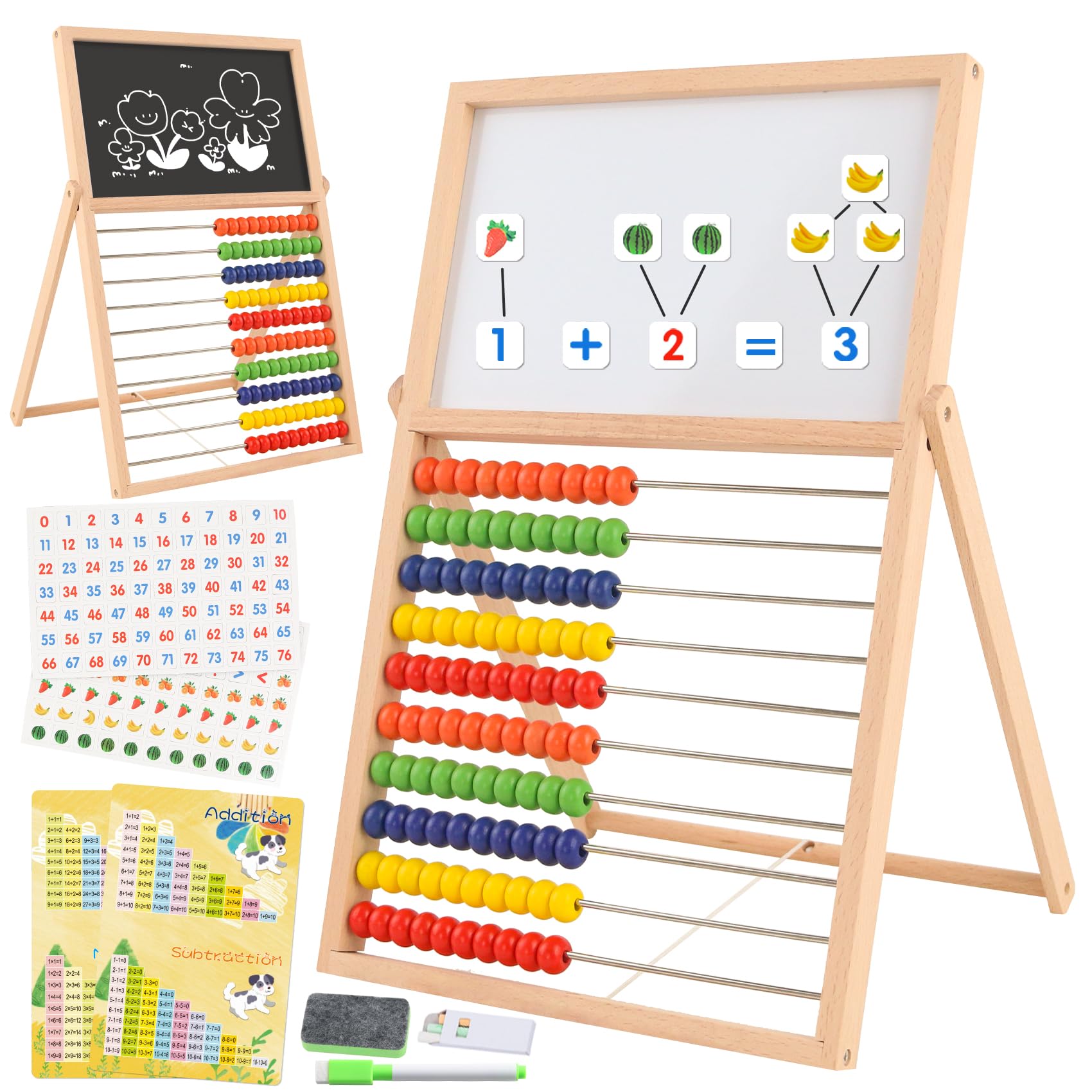
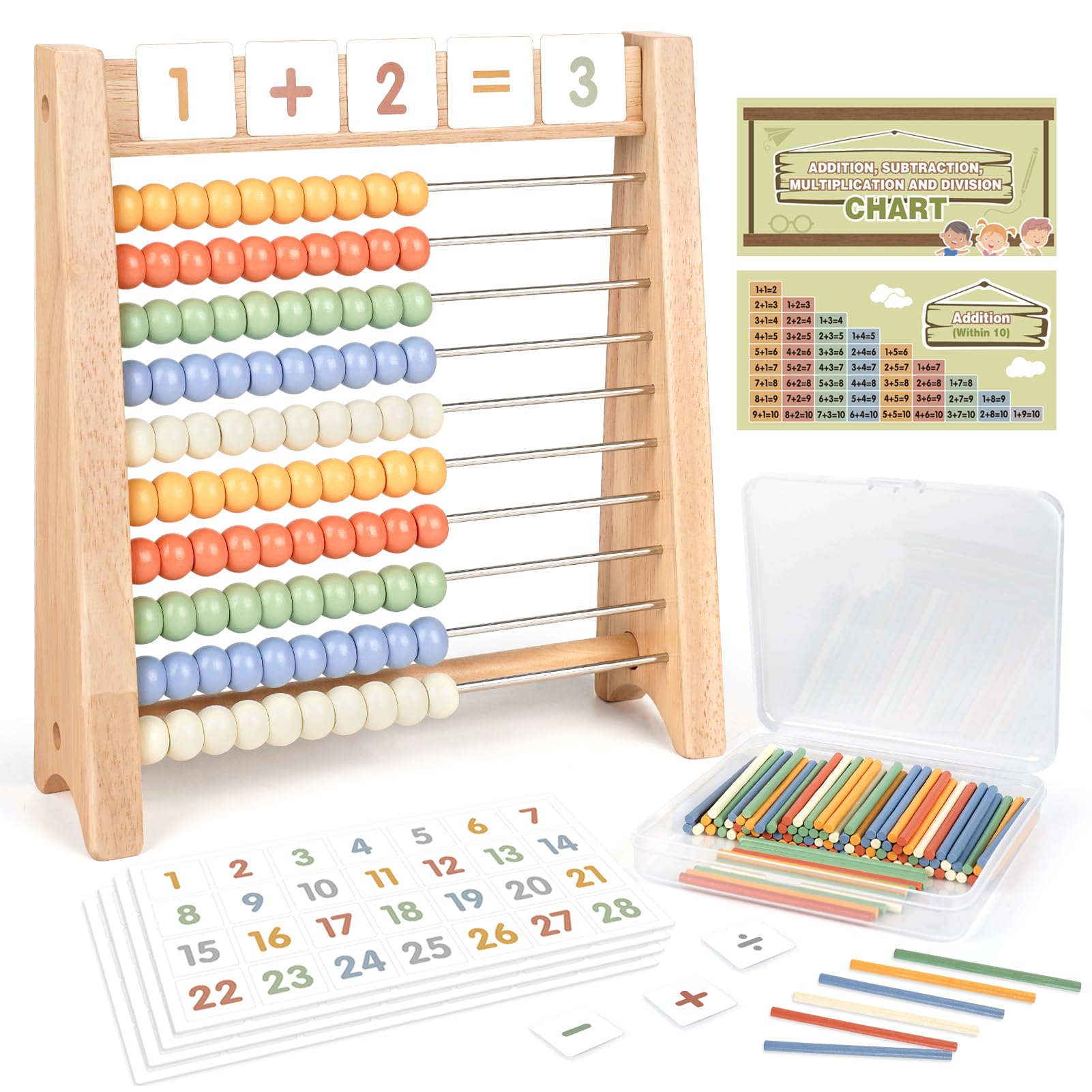
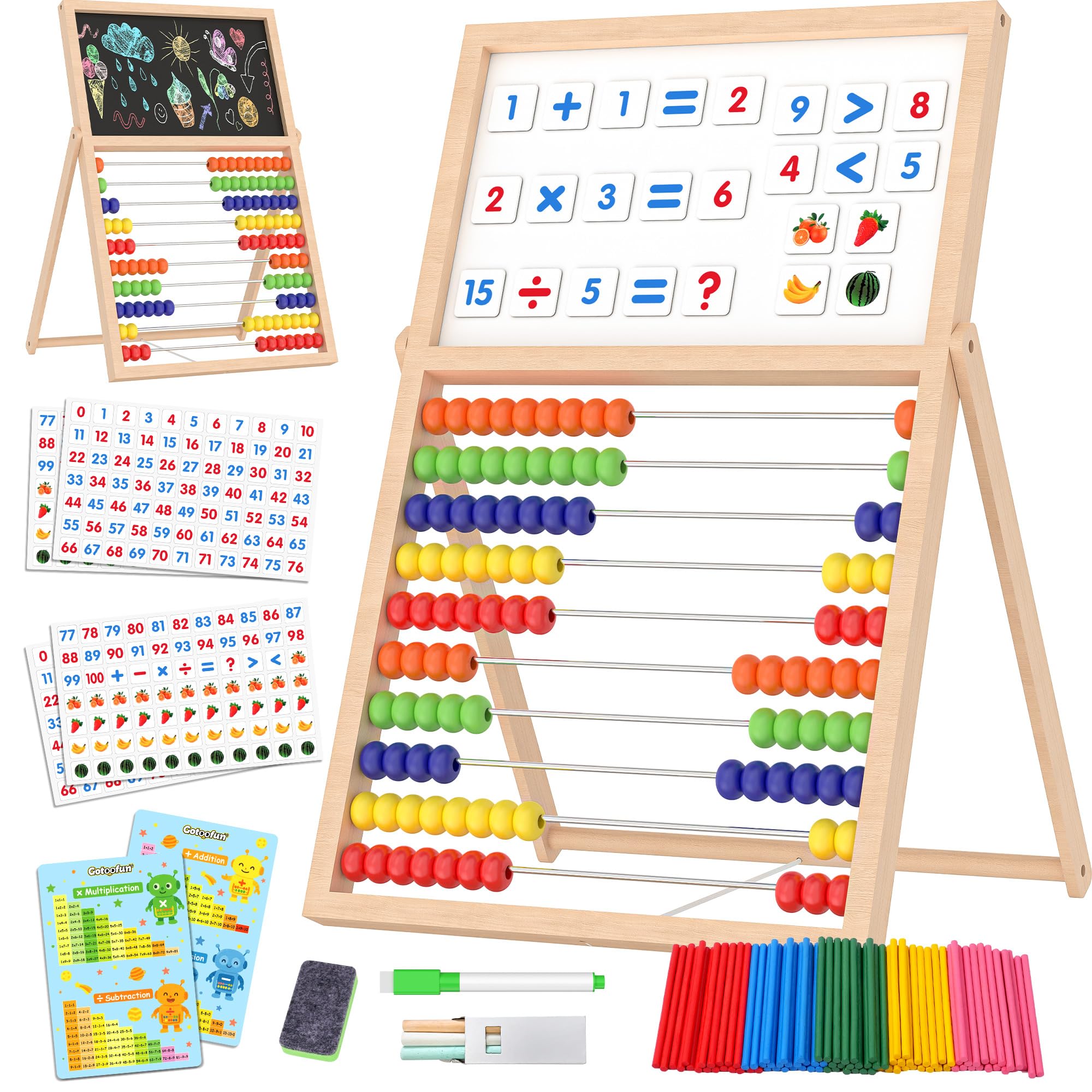
- No counting sticks, equation cards, or guided activity book are included.
- Small beads pose a choking hazard for children under three years old.
- Material
- All wood
- Stability
- Stable
- Bead Count
- 100 beads
- Extra Accessories
- None
Read the full review
The solid wood frame and 100 smoothly sliding beads deliver a level of build quality that outlasts most plastic alternatives in the same price range. Bright multicolored beads are arranged in traditional ten-row format, making counting, addition, and subtraction intuitive for young learners. The 12.2-inch width fits comfortably on a desk, and the frame stays stable during active play.
Moving beads along the rows gives children a hands-on way to visualize math concepts — a method parents and teachers rely on for ages three and up. The design is intentionally simple: no flashcards, no counting sticks, no instruction booklet. Parents supply the teaching structure, which works fine for those comfortable creating their own math activities, but may feel incomplete for families expecting a complete curriculum kit.
Teachers in preschool and kindergarten settings use this model for its straightforward design that invites open-ended exploration. The beads slide without sticking, and the paint resists chipping even after frequent cleaning. For a budget-friendly choice, the combination of durability and educational value is hard to match.
This abacus suits families who want a durable, no-frills tool they can pass down through multiple children. Homeschool parents appreciate the value for money, and gift-givers know they are buying a classic toy that will actually get used. If you prefer guided lessons with cards and sticks, look for a set that includes those extras.
Tip: Supplement with free printable counting worksheets or household objects like buttons to create math games.
Bottom line: For a simple, durable abacus that teaches basic math through hands-on play, this is a cost-effective choice that holds up over years of use.