STEM & Learning

11 Best Science Kit for Kids of 2026: Which One Matches Your Child's Curiosity

Find the right science kit for your child's interests and age, from electronics to geology, without wasting money on disappointing experiments.

A science kit can spark a lifelong love of discovery, but the shelves are packed with options that promise the moon and deliver a bag of baking soda. Many kits advertise dozens of experiments, then leave you hunting for missing parts or puzzling through vague instructions.

The real difference isn't the number of experiments on the box — it's whether the projects actually work and fit your child's attention span. A geology lover will be bored by a circuits set, and a kid who wants instant results will lose patience with a crystal growing kit that takes days.

This guide cuts through the noise by matching each kit to a specific child profile. Focus on your kid's natural curiosity first, then pick the set that feeds it without frustration.

#1

Snap Circuits SC-100

Snap Circuits SC-100

Electronics

Doodle Score 9.6/10
Check Price

Worth Noting

  • Only covers electronics no chemistry, biology, or geology experiments
Age Range
8+
Disciplines
Electronics
Experiments
100+
Read the full review

Over 100 snap-together circuits teach real electronics principles without tools or soldering. Unlike broad science kits that dabble in multiple disciplines, this one goes deep into circuitry making it the go-to for kids who want to understand how switches, motors, and lights work.

Best for children ages 8 and up with a specific interest in electronics. If your child wants chemistry eruptions or crystal growth, the top pick's earth science coverage is a better fit.

Younger children may need adult assistance snapping components together.

Bottom line: A superb electronics primer for kids who want to build circuits, not cover all sciences.
#2

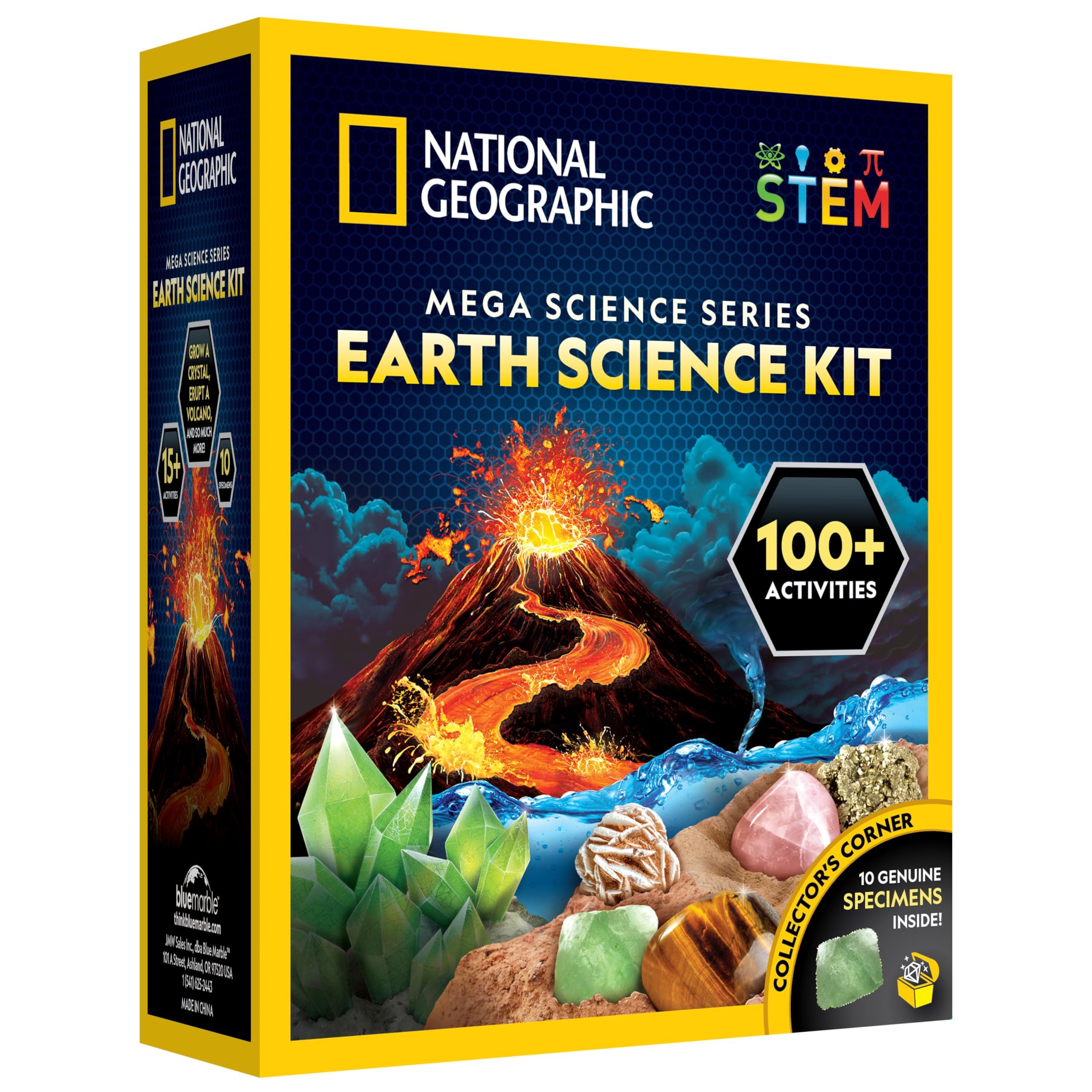
Nat Geo Earth Science Kit

Nat Geo Earth Science Kit

Geology

Doodle Score 9.4/10
Check Price

Worth Noting

  • Instruction guide can be less detailed than some competitors, leaving room for confusion on a few experiments.
  • Some may find the quantity of materials provided doesn't match the price point.
Age Range
8+
Disciplines
Earth science
Experiments
15+
Read the full review

This Earth Science Kit bundles 15-plus activities that let kids grow crystals, build a volcano, study tornadoes, and dig for gemstones. The included materials cover geology, meteorology, and basic crystal chemistry, giving a broad introduction to earth science disciplines in one box.

It targets children aged 8-12 with a curiosity about rocks, volcanoes, and weather. For those seeking chemistry or physics experiments, a separate kit fills that gap. The appeal lies in the variety of earth science topics available without buying multiple sets.

Tip: Review the instructions together before starting – a quick online search can help clarify the less detailed experiments.

Bottom line: A solid earth science starter for kids aged 8-12 who prefer exploration over scripted experiments; skip it if your child needs chemistry or physics activities.

#3

Nat Geo Amazing Chem

Nat Geo Amazing Chem

Chemistry

Doodle Score 9.4/10
Check Price

Worth Noting

  • Limited to chemistry
  • Some kits may include fewer chemical samples or tools than expected for the experiment count.
Age Range
8+
Disciplines
Chemistry
Experiments
100+
Read the full review

Test tubes, beakers, and pipettes give this kit an authentic lab feel for young chemists. The 100+ experiments (15 in-box plus 85 bonus) include crystal growing and reactions, but each requires adult guidance — ideal for parent-child bonding with kids ages 8–12 who are serious about chemistry. This set stays focused on chemistry, so it won't satisfy a child looking for physics or biology activities.

Tip: Reserve the first experiment for a weekend afternoon — adult setup and explanation make the difference between frustration and fascination.

Bottom line: A focused chemistry kit that delivers on lab equipment and experiment volume, best when a parent is on hand to guide the young scientist.

#4

UNGLINGA 150 Exp

UNGLINGA 150 Exp

Many experiments

Doodle Score 9.4/10
Check Price

Worth Noting

  • Instructions can be unclear and may require adult interpretation to avoid frustration.
  • Some kits may have incomplete contents, so it pays to verify materials before diving in.
Age Range
8+
Disciplines
Multi-discipline
Experiments
150
Read the full review

With 150 experiments covering volcanoes, crystals, and holograms, this kit offers more hands-on activities per dollar than any other in the category. However, the instruction manuals are poorly written, and some kits may arrive with missing materials, so this set suits families where an adult is comfortable guiding the activities without step-by-step clarity.

Tip: Read through each experiment before starting with the child to identify any missing materials or steps that need clarification.

Bottom line: For budget-focused families who want maximum experiment variety and don't mind providing hands-on guidance, this kit delivers exceptional quantity — just be prepared to supplement instructions.

#5

Snap Circuits Beginner

Snap Circuits Beginner

Young kids

Doodle Score 9.4/10
Check Price

Worth Noting

  • Pieces may break after repeated use and some components may not work out of the box.
Age Range
5-9
Disciplines
Electronics
Experiments
21
Read the full review

21 large snap modules and a color-changing fan introduce electronics to ages 5-9. Picture instructions are clear, but the kit covers only electronics — no chemistry, biology, or geology. Pieces may break after repeated use and some components may arrive non-functional. For dedicated circuit learning it works; not a general science kit.

Bottom line: Best for a child who wants to learn basic circuits rather than a mix of sciences; for broad STEM exploration, consider the Earth Science Kit instead.

#6

Nat Geo Gross Science

Nat Geo Gross Science

Gross fun

Doodle Score 9.4/10
Check Price

Worth Noting

  • Missing parts like vials or scoops can occur, so verify contents upon arrival.
Age Range
8+
Disciplines
Gross science
Experiments
15
Read the full review

This kit delivers 15 hands-on gross science experiments (plus 30 bonus) that genuinely delight kids who enjoy slime, fake vomit, and body science. However, it is squarely focused on gross-out fun rather than broad STEM learning, and some units arrive missing small components like vials or scoops.

Bottom line: Best for households where the child specifically requests gross-out experiments and adults are ready to check all pieces are present.

#7

Nat Geo Science Magic Kit

Nat Geo Science Magic Kit

Magic shows

Doodle Score 9.4/10
Check Price

Worth Noting

  • Occasional spills or missing pieces in packaging.
Age Range
8+
Disciplines
Magic/science
Experiments
20+
Read the full review

With over 100 magic-themed experiments (20 in-box plus 85 bonus), this kit keeps kids engaged while revealing the science behind each trick. Scientific depth is limited compared to dedicated chemistry sets, and some kits may arrive with spills or missing components. It suits children who enjoy performance and showmanship over lab-style experimentation.

Bottom line: Best for kids who love putting on magic shows and are curious about the science behind each trick, but not as a standalone STEM curriculum.

#8

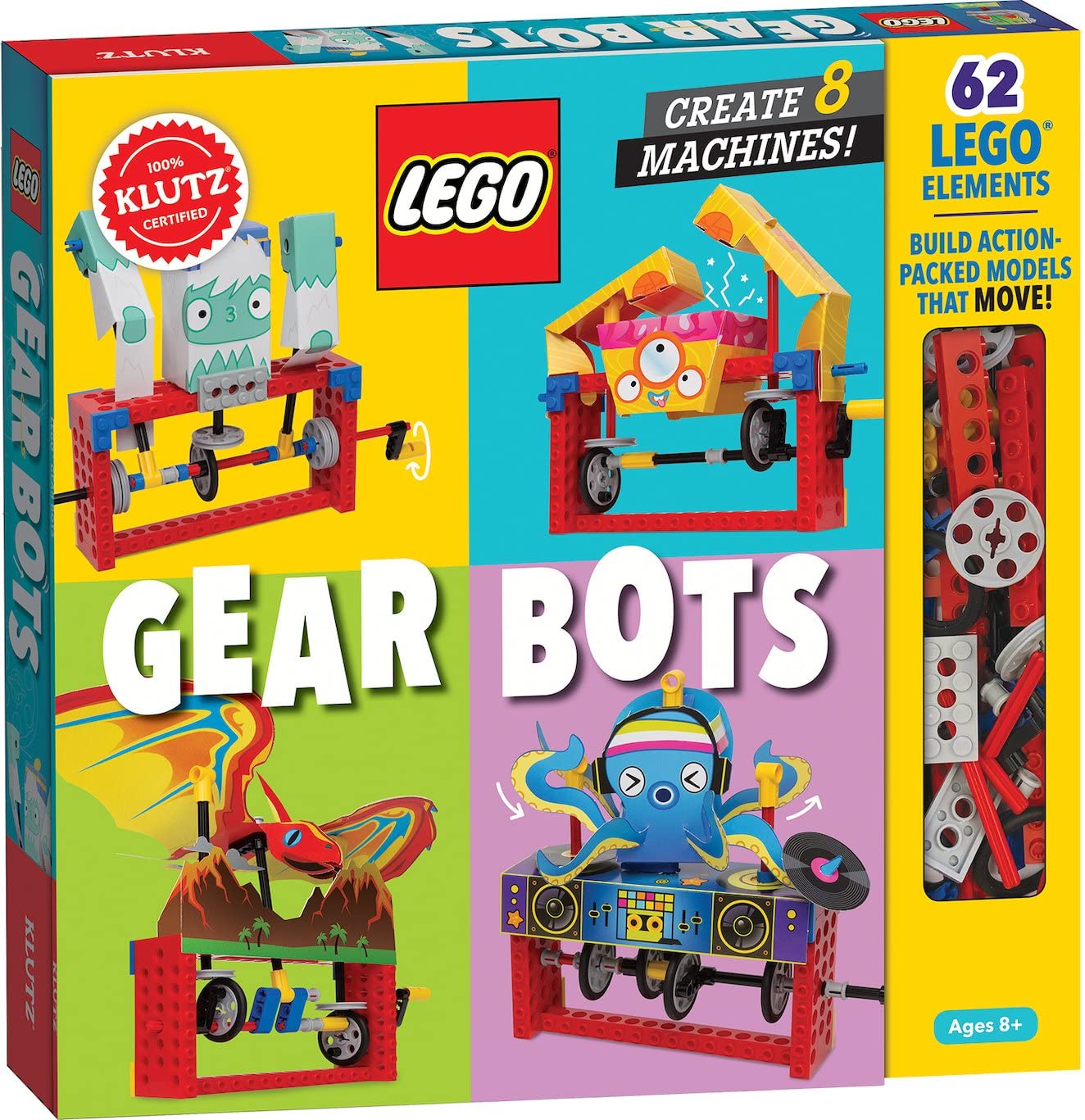
Klutz Lego Gear Bots

Klutz Lego Gear Bots

Lego lovers

Doodle Score 9.2/10
Check Price

Worth Noting

  • Instructions can be unclear, and some parts may not stay assembled securely.
  • Only one creature can be built at a time; the kit must be disassembled for each new project.
Age Range
8-12
Disciplines
Mechanics
Experiments
8 builds
Read the full review

This kit brings together 62 Lego Technic elements and papercraft to build eight moving creatures, each demonstrating a different mechanism like cams and cranks. The hands-on assembly gives kids a tangible feel for how gears transfer motion, making it a solid introduction to mechanical engineering for those who enjoy a challenge.

The build is best suited for patient Lego fans aged 8–12 who are comfortable working from instructions that can be unclear at times, and with parts that may shift out of place. Only one creature can be built at a time, so the kit requires disassembly between projects. It is a mechanical engineering kit only, not a general science set covering chemistry or biology.

Bottom line: Best for patient Lego fans who want to understand gears and cams, not for those seeking a broad science kit covering multiple disciplines.

#9

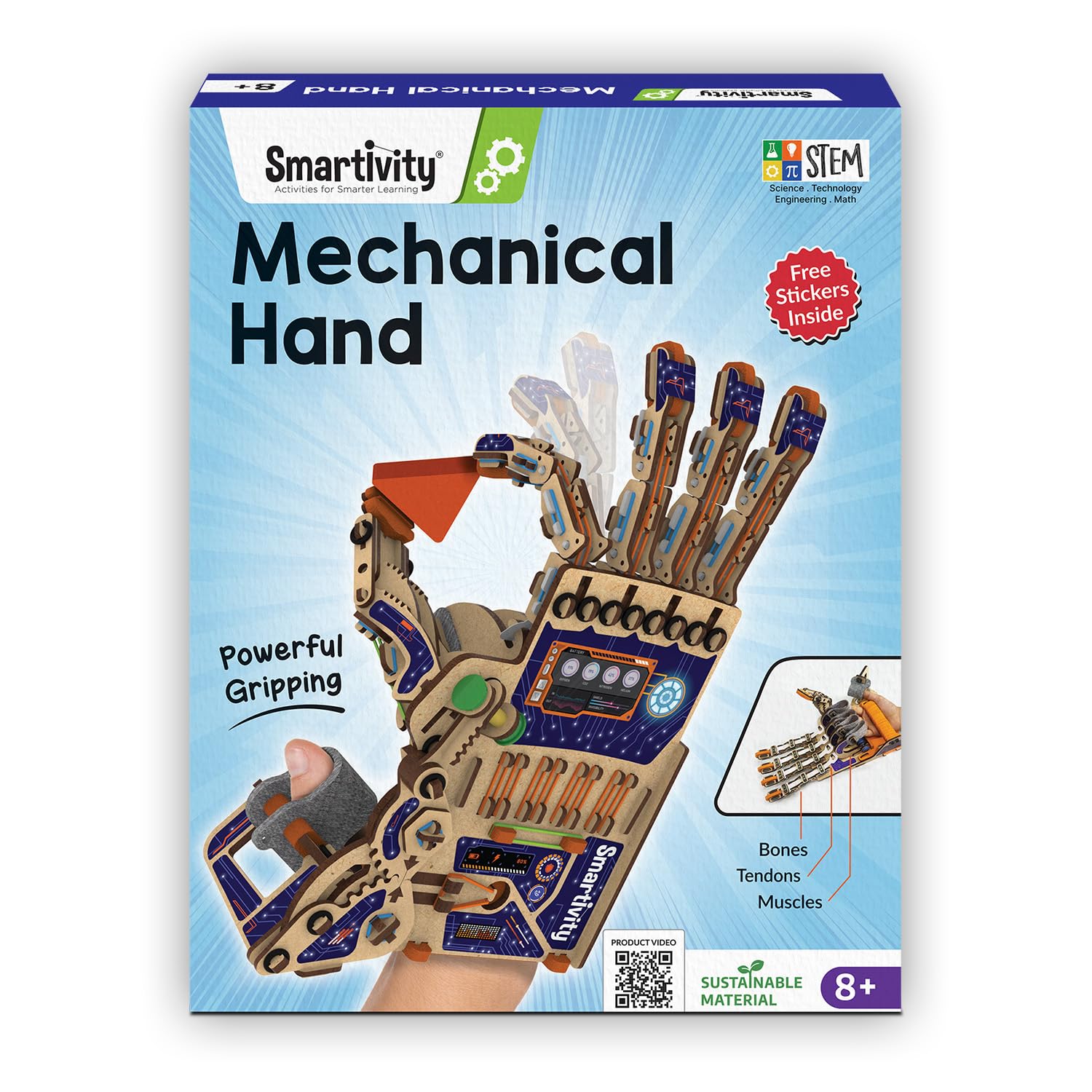
Smartivity Robotic Hand

Smartivity Robotic Hand

Engineering

Doodle Score 9.2/10
Check Price

Worth Noting

  • Assembly requires patience and may need adult help due to many small, intricate parts.
Age Range
8-14
Disciplines
Engineering
Experiments
1 build
Read the full review

This award-winning engineering kit builds a functional robotic hand that can pick up objects, offering a pure mechanical engineering experience distinct from papercraft or electronics kits. The assembly involves many small wooden pieces that fit together to create working fingers, teaching real-world concepts like levers and tendons. The finished hand moves realistically and can grip small items, providing a sense of accomplishment. Using the hand to pick up cups or small toys reinforces the lesson. This is a rewarding project for budding engineers who enjoy a challenge.

Best suited for kids 10-14 who enjoy detailed, screen-free building challenges. However, the assembly is time-consuming and often requires adult help; younger children will need extensive assistance. Parents should expect to spend a few hours guiding the process. It is a focused engineering project, not a general science kit covering multiple disciplines.

Tip: Set aside a few hours and have small containers for parts; adult supervision recommended during assembly.

Bottom line: A rewarding mechanical engineering project for kids 10-14 who love building, but expect a time investment and adult assistance. Not a general science kit.

#10

Creativity Terrarium Kit

Creativity Terrarium Kit

Botany

Doodle Score 9.2/10
Check Price

Worth Noting

  • Seeds may fail to sprout or be missing from the kit, making the growing outcome uncertain
Age Range
6+
Disciplines
Botany
Experiments
1
Read the full review

This kit combines craft decorating with basic plant care, offering a low-cost activity for kids who enjoy art and nature. The included glow stickers, sand, and figurines make assembly fun, but the seeds may not sprout or could be missing, so the growing part is a gamble. It works best as a one-time craft project for younger children who won't mind if the plants don't grow.

Bottom line: A cheap craft project that introduces botany, but only if you treat the seeds as optional and have a backup plan for growing a plant.

#11

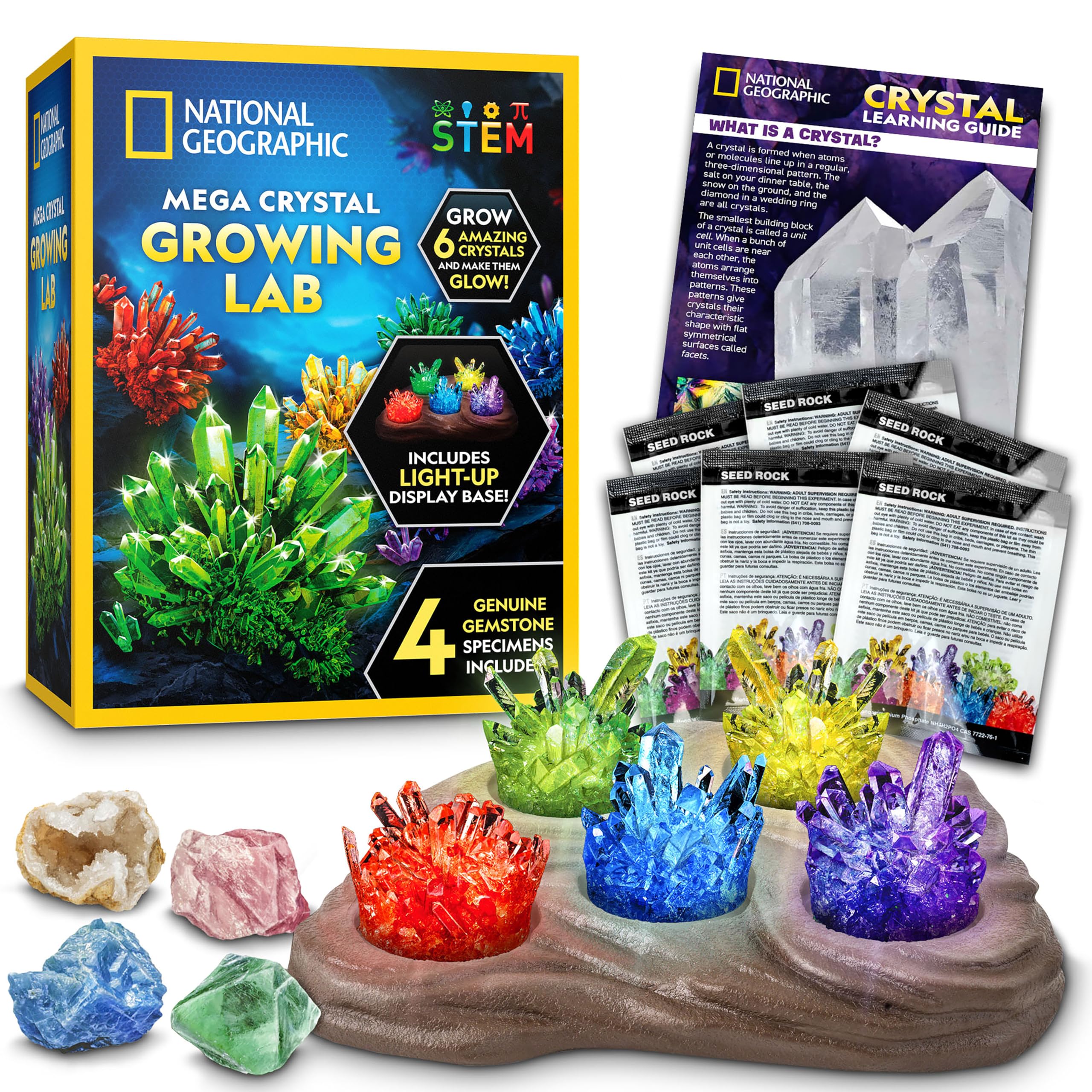
Nat Geo Crystal Growing

Nat Geo Crystal Growing

Crystal growing

Doodle Score 9.2/10
Check Price

Worth Noting

  • Some batches may grow slowly or not at all, and the light-up base can be temperamental
Age Range
8+
Disciplines
Crystallography
Experiments
6 crystals
Read the full review

This kit lets kids grow six crystals (including a glow-in-the-dark one) and showcase them on a light-up stand, making the results feel like a real collection. Crystal growth can be slow or fail to start in some cases, and the base may have occasional power issues. It suits children who enjoy watching a process unfold over days rather than expecting immediate results.

Bottom line: Best for a patient child who loves geology and won't mind if one or two crystals take their time — not a reliable all-in-one science kit.

How to Choose

Number of Experiments vs. Quality

A kit with 150 experiments sounds impressive, but many of those are tiny variations that use the same materials. A 20-experiment kit with detailed, reliable projects often provides more genuine learning time.

Check recent reviews for how many experiments actually work as described. Kits that rely on growing crystals or sprouting seeds have batch-to-batch variability that no box label can predict.

Age Range and Adult Help

Age ranges on the box are rough guidelines. An 8-year-old who reads well and follows steps can handle more complex kits than a 10-year-old who wants instant results. The real question is whether the child can work independently or needs constant adult assistance.

Many chemistry kits require close supervision because of chemicals or small parts. If you're looking for a set-your-child-free activity, choose a snap-circuit or building-based kit instead.

Disciplines Covered

General science kits often cover multiple fields but spread the materials thin. A child obsessed with rocks will get more joy from a geology-specific kit than from a mixed bag that includes one fossil. Know your child's current obsession and lean into it.

If you want breadth, the National Geographic Earth Science Kit packs the widest variety of earth science disciplines into one box. For chemistry or electronics, specialized kits go much deeper.

Instruction Clarity

The number one complaint across all science kits is confusing instructions. Picture-based manuals with numbered steps work well for younger kids, while text-heavy guides can frustrate even older children. Look for kits that include online video tutorials as a backup.

If the kit requires tools or household items (like a hammer for geodes or vinegar for volcanoes), make sure you have them before starting. Nothing kills momentum like a half-finished experiment.

Need for Adult Supervision

Some kits are designed for independent play (Snap Circuits, terrarium growing), while others demand a parent at the table (chemistry sets, geodes). Be honest about the time you can commit. A kit that requires you to be present for every step will collect dust if you're too busy.

The UNGLINGA 150 Experiments kit, for example, has many projects that need adult guidance due to unclear instructions. Budget for that time or skip it.

Frequently Asked Questions