STEM & Learning

11 Best Telescope for Kids 2026: Which Ones Actually Deliver Moon Views

Find the best telescope for kids that shows real moon craters and Saturn's rings, not blurry spots. Guide for parents of kids 6-12 who want easy setup and genuine stargazing.

Many telescopes marketed for kids promise views of Saturn and Jupiter, but families often end up with blurry, disappointing images that frustrate young stargazers. The root cause is aperture size: a 25-50mm opening simply can't gather enough light for anything beyond a dim moon.

The real value starts at 70mm aperture, where craters, rings, and even Jupiter's moons become visible. Combine that with a stable tripod and tool-free assembly, and you have a telescope that actually gets used, not abandoned after one session.

This guide focuses on that 70-80mm sweet spot, balancing ease of use, portability, and optical quality. The trade-off between proven reliability and slightly larger aperture is the key decision you'll face.

#1

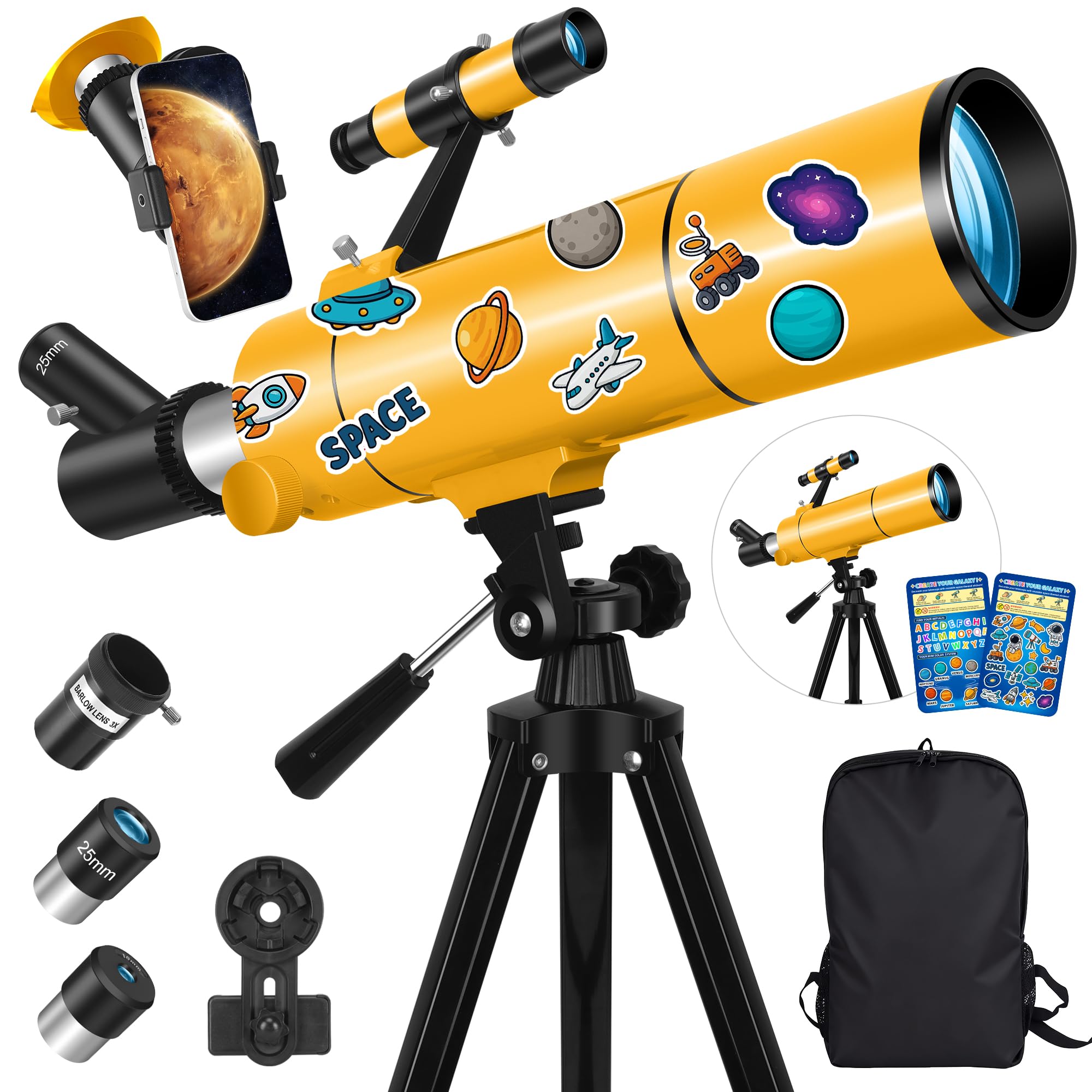
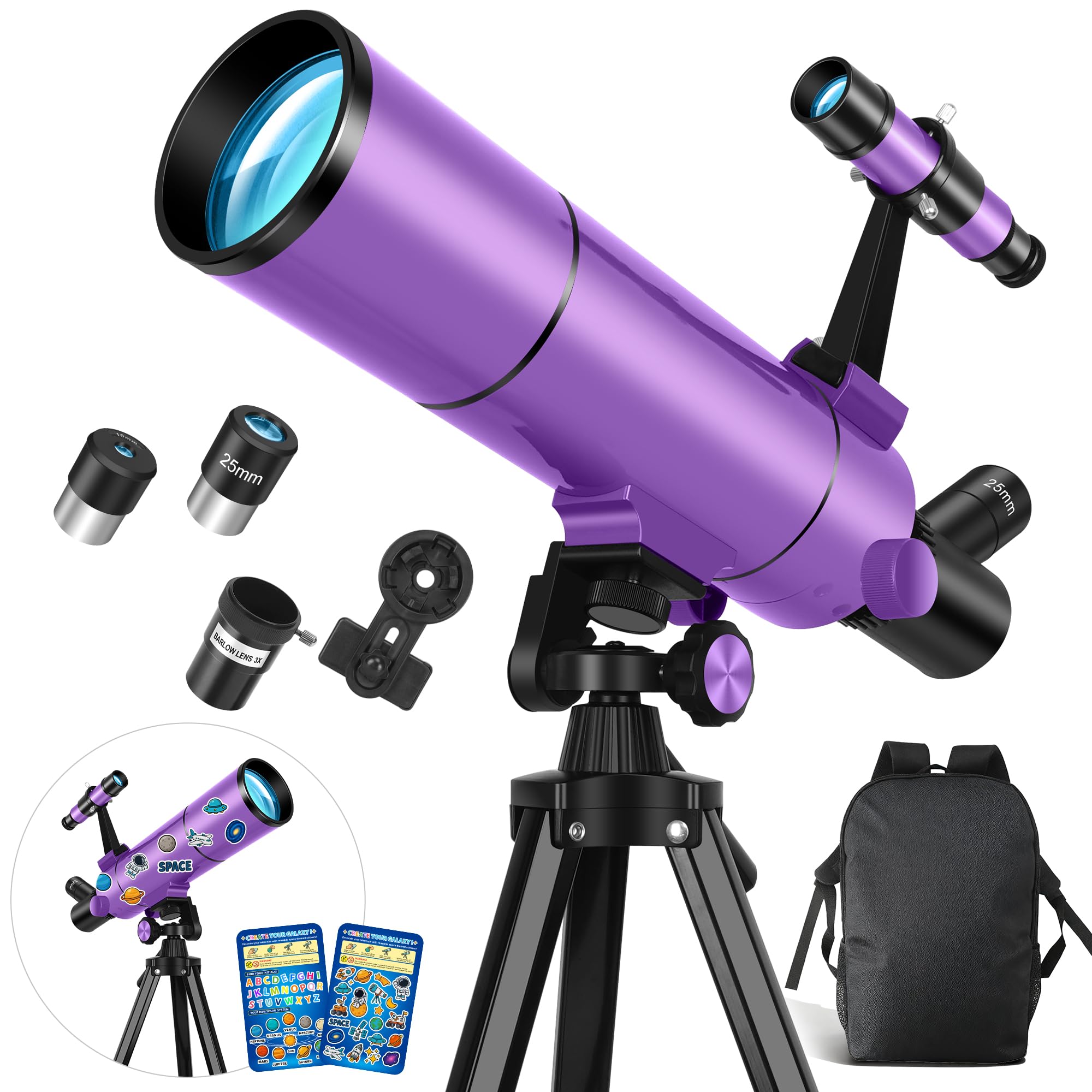
Dianfan 80mm Backpack
Dianfan 80mm Backpack

Backpack travel

Doodle Score 9.0/10
Check Price

Worth Noting

  • Tripod can feel flimsy, reducing stability during observation
Mount
Altazimuth
Aperture
80mm
Included
Backpack, stickers, phone adapter, 2 eyepieces, Barlow
Focal Length
500mm
Read the full review

The Dianfan 80mm Backpack delivers sharp views of the Moon and planets, especially for its portable size. The custom-fit backpack makes it easy to take on trips, and kids will enjoy the included stickers. However, the tripod can feel flimsy during use, which may affect stability. For a similar aperture with a more solid setup, the sharper planetary performer in this comparison is a safer bet.

Bottom line: Best suited for families who prioritize portability and are willing to accept some tripod limitations; for a more robust setup, consider the sharper planetary performer in this comparison.

#2

EACONN 80mm Travel

EACONN 80mm Travel

Planetary views

Doodle Score 8.8/10
Check Price

Worth Noting

  • Focus knob on some units is stiff and may need a break-in period
  • Occasional version or packaging mismatches
Mount
Altazimuth
Aperture
80mm
Included
Backpack, phone adapter, 2 eyepieces
Focal Length
600mm
Read the full review

The EACONN 80mm uses an 80mm aperture and 600mm focal length — a clear step above the 70mm / 300mm combos common at this price. The result is better light gathering that translates to crisp Saturn rings, distinct Jupiter bands, and visible moon details. For families who want more than just a pinpoint star in the eyepiece, this optical advantage is the main reason to choose it over the top pick.

That optical gain comes with a couple of setup quirks. The focus knob on some units is stiff and may require a break-in period, and the tripod height adjustment can take extra force. These are manageable for an adult or an older child (8+) but might frustrate younger kids or anyone wanting a friction-free first experience. The included backpack and phone adapter make this a good travel companion for camping trips, and the tool-free assembly is nearly as simple as the top pick.

The value proposition is strong: you get a fully multi-coated 80mm refractor with two eyepieces and a carry bag at a mid-range price. Storage is straightforward, and the altazimuth mount keeps the learning curve low. Just be aware that packaging errors have occurred — it is worth checking you received the correct configuration on delivery.

Tip: A light application of silicone grease to the focus knob threads can resolve stiffness; test focus before returning the unit.

Bottom line: If planetary detail is your family's priority, the EACONN 80mm gives you the best views in this price tier – just be ready to work through minor setup stiffness.

#3

Celticbird 80mm 600mm

Celticbird 80mm 600mm

Premium upgrade

Doodle Score 8.8/10
Check Price

Worth Noting

  • Focus knob may feel stiff initially, requiring a break-in period before it smooths out.
  • Tripod height adjustment can be finicky, especially on uneven ground.
  • Priced at the higher end of the mid-range category, which may exceed strict budgets.
Mount
Altazimuth
Aperture
80mm
Included
Backpack, moon filter, phone adapter, 2 eyepieces
Focal Length
600mm
Read the full review

Sharpest images in this lineup: fully multi-coated optics and a 600mm focal length pull in enough light to show Saturn's rings as distinct bands and moon craters with fine detail. The included moon filter cuts glare so young eyes can linger on the surface without discomfort. The well-designed backpack keeps everything organized for transport to a dark-sky spot or campsite.

Assembly is straightforward enough for a parent and older child to complete in about 20 minutes — the manual is clear and no tools are needed for the mount. The trade-off is that the focus knob may feel stiff initially, requiring a brief break-in period; a few dozen turns usually resolves it. The tripod height adjustment can also be finicky, which matters less if you use the telescope seated or on level ground.

This telescope suits families willing to invest a bit more for noticeably sharper views. It works best for kids aged 10 and up who can handle a slightly more involved setup and appreciate seeing planetary detail. Camping trips are a natural fit given the portability. For strict budget buyers or children under 8, the simpler Gskyer 70mm is a less-expensive, more forgiving alternative.

The focus knob may be stiff initially; working it back and forth a few times usually smooths it out.

Bottom line: If crisp detail on Saturn's rings and moon craters matters more than the lowest price, this telescope delivers the sharpest images in the group — just be prepared for a short break-in period on the focus knob.

#4

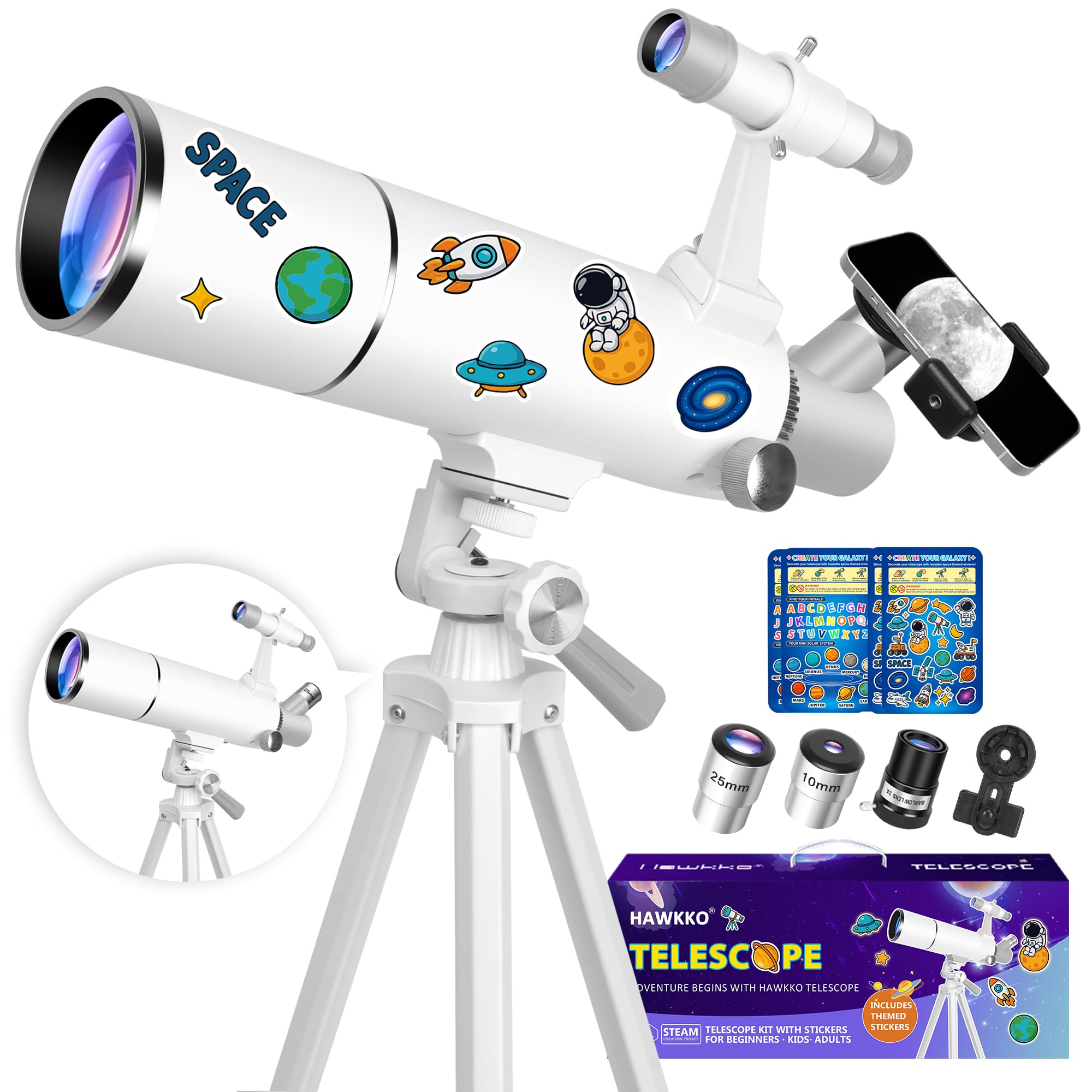
Hawkko 80mm Refractor

Hawkko 80mm Refractor

Starter with stickers

Doodle Score 8.8/10
Check Price

Worth Noting

  • Image clarity degrades noticeably beyond 40x magnification, limiting planetary detail.
  • Tripod stability can be insufficient on uneven ground or in light wind.
Mount
Altazimuth
Aperture
80mm
Included
Stickers, phone adapter, 2 eyepieces, Barlow
Focal Length
500mm
Read the full review

The Hawkko 80mm brings a larger aperture than typical budget telescopes at this price point, and the included stickers let kids personalize the tube. Assembly is quick and straightforward, making it easy to get started. For moon viewing and spotting Jupiter's moons, the scope can deliver crisp views when the optics are well-aligned. However, quality control is inconsistent – some units produce blurry images at higher magnifications, and the tripod can feel wobbly. This makes the Hawkko a better fit for families willing to test and possibly return a defective unit, rather than for those expecting a surefire first telescope.

Tip: Start with the lowest eyepiece (20x) – higher magnifications rarely produce a usable image.

Bottom line: Best for families who want a low-cost moon scope with a playful sticker feature and are prepared to return if the optics fall short.

#5

Gskyer 70mm AZ Refractor

Gskyer 70mm AZ Refractor

First-time astronomers

Doodle Score 8.6/10
Check Price

Worth Noting

  • Tripod leg rivet can arrive damaged; check the leg joints on delivery
  • Bluetooth app pairing (if used) may be unreliable; the scope works fine without it
Mount
Altazimuth
Aperture
70mm
Included
Phone adapter, wireless remote, carry bag
Focal Length
400mm
Read the full review

The Gskyer 70mm delivers exactly what a young astronomer needs: tool-free assembly, a wide field of view for moon craters and even Saturn's rings, and a carry bag that makes it easy to bring along. Its 70mm aperture and 400mm focal length strike the balance between portability and enough light-gathering to see the moon's surface in crisp detail. That consistency across tens of thousands of units is why it edges out higher-spec competitors for the family buyer.

Setting up takes minutes: slide the tube into the mount, tighten one knob, and aim. The included phone adapter and wireless remote let kids snap pictures without bumping the scope. Lunar observations are the clear highlight — users consistently see crater rims, mare, and the soft glow of the terminator. With patience, Saturn's rings come into view as a tiny ellipse, though finer planetary detail like Jupiter's bands requires a larger aperture scope.

This telescope suits families who want a no-fuss introduction to stargazing, especially for children aged 6–12. The tripod extends to about chest height on an average adult, which means younger users can reach the eyepiece comfortably while parents need to squat or use a chair. That short tripod is a design tradeoff for stability and portability, not a defect. Also, a small fraction of units arrive with a damaged rivet on one tripod leg — something to check immediately upon opening the box. If that happens, a replacement leg is straightforward to request.

Tip: Inspect the tripod leg rivets before first use; if one is loose, request a replacement leg through the seller.

Bottom line: If you're buying a first telescope for a child and want something that will actually show the moon's craters and maybe Saturn's rings, this is the one to get. The 80mm models deliver slightly sharper planetary views, but the Gskyer's track record of working out of the box makes it the safer investment.

#6

Koolpte 70mm AZ

Koolpte 70mm AZ

Budget beginners

Doodle Score 8.6/10
Check Price

Worth Noting

  • At the highest magnification, the image may appear soft
  • When an adult uses the telescope, the tripod height may require bending or sitting
Mount
Altazimuth
Aperture
70mm
Included
Phone adapter, wireless remote, carry bag
Focal Length
500mm
Read the full review

The Koolpte 70mm AZ stands out among budget scopes for including a phone adapter and wireless remote alongside a carry bag – extras often sold separately. Assembly takes under five minutes with no tools required, and the 70mm aperture brings moon craters into clear view. While the top pick has been used by more families, the Koolpte matches it on ease of use and portability at a slightly lower entry price.

This telescope suits families buying their child’s first telescope, especially those who plan to take it on trips or store it easily. The tripod, however, is noticeably short for adults – kids ages 6–10 will find it comfortable, but parents may need to crouch or use a low chair. At the highest magnification settings, the image softens; this is typical for the price tier and doesn’t affect moon viewing. For a child’s first scope that won’t break the budget, the Koolpte is a well-equipped starter.

Tip: Set the telescope on a sturdy table or low stool to raise the eyepiece height for adult use.

Bottom line: The Koolpte 70mm AZ is the right pick for families who want a functional first telescope with the lowest possible upfront cost and don't mind that adults will need to adjust for the short tripod.

#7

ToyerBee 70mm 300mm

ToyerBee 70mm 300mm

Travel use

Doodle Score 8.6/10
Check Price

Worth Noting

Mount
Altazimuth
Aperture
70mm
Included
Phone adapter, wireless remote, 2 eyepieces, Barlow
Focal Length
300mm
Read the full review

The ToyerBee 70mm collapses into a package small enough for a carry-on bag, and its tool-free assembly means you can have it ready on a table in 60 seconds. At just over a foot long when collapsed, it's the most portable option in this comparison – ideal for vacations or trips to a dark-sky site.

This telescope is designed for young children (ages 5-10) who are getting their first look at the moon. The short 1.5-foot tripod works best on a table or the ground while sitting, and the wireless remote lets parents snap photos without jostling the scope. For families wanting a budget-friendly pick that won't overwhelm a beginner, this fits the bill. The 300mm focal length is suited for lunar and terrestrial views rather than planetary details.

The altazimuth mount is intuitive, and the included 20mm and 10mm eyepieces cover 15x and 30x magnification – appropriate for a first scope. The phone adapter and remote are thoughtful additions for sharing the experience with siblings or friends.

Bottom line: If portability is your priority – for camping trips or visits to the grandparents – the ToyerBee packs down smaller than any other telescope here while still delivering moon views.

#8

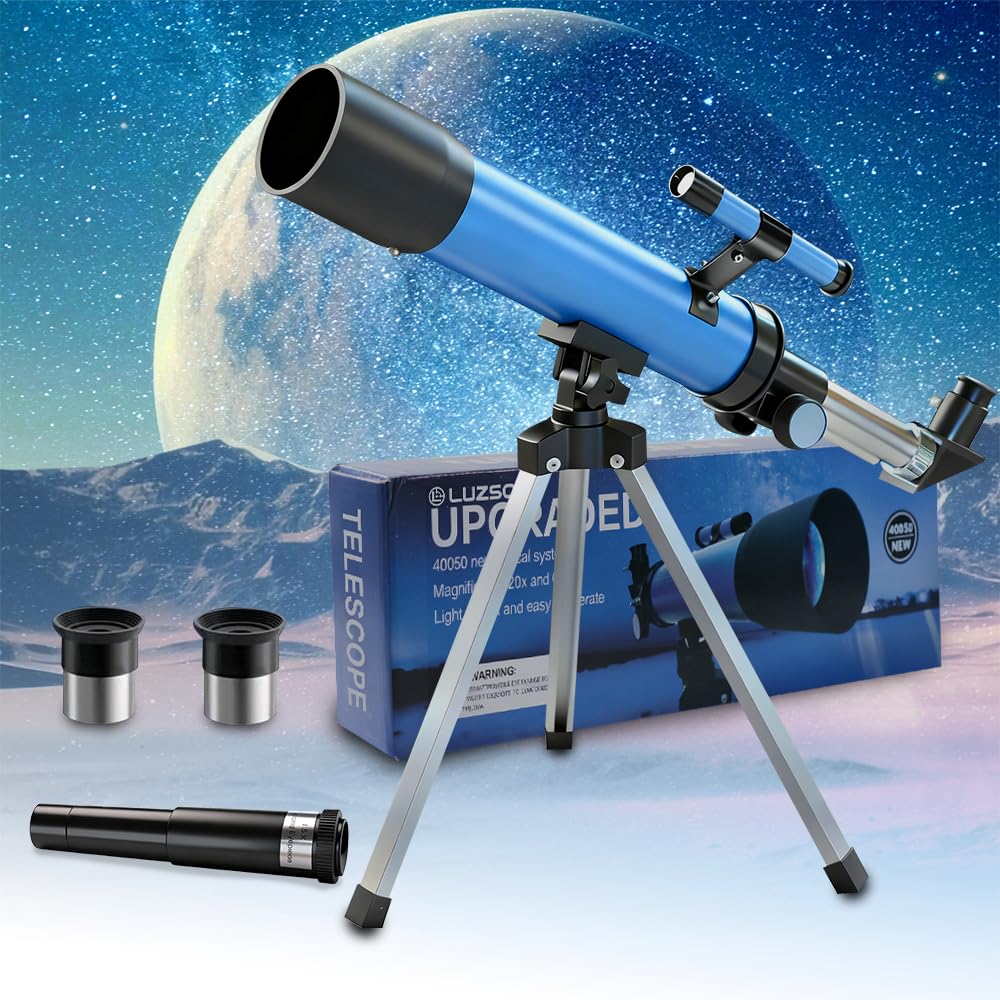
Luzsco 50mm Kids

Luzsco 50mm Kids

Young kids

Doodle Score 8.6/10
Check Price

Worth Noting

  • The 50mm aperture limits the view to the moon and bright planets
  • Tripod height requires a table or sitting position for comfortable use.
Mount
Altazimuth
Aperture
50mm
Included
2 eyepieces, Barlow, finder scope, tripod
Focal Length
400mm
Read the full review

The Luzsco 50mm is the lowest-risk entry point for a young child's first look at the moon. Its 50mm aperture and multi-coated optics deliver a bright enough image of lunar craters that a 4- to 8-year-old will recognize, and the whole setup weighs little enough for a toddler to carry. This is not a telescope for planetary detail – it's a moon viewer, period.

This telescope suits parents who want a no-fuss, budget-friendly introduction to astronomy for a child aged 4 to 8. The 50mm aperture cannot show Saturn's rings or resolve Jupiter's bands; stars appear as points of light. The tripod is short, so using it on a tabletop is more comfortable than placing it on the ground. If your goal is to spark curiosity about the moon without spending much, this fits.

Assembly takes minutes with a simple screw mount, and the finder scope is basic but adequate for aligning with the moon. The included two eyepieces and Barlow provide a range of magnifications, though the highest setting can get blurry – the sweet spot for moon viewing is the lower magnification. For a child's first experience, the views are satisfying enough to encourage further exploration.

Tip: Place the telescope on a sturdy table or countertop for a comfortable viewing height.

Bottom line: An ideal first telescope for a 4- to 8-year-old who wants to see the moon up close, but not a tool for serious stargazing or planetary observation.

#9

MEEZAA 80mm Backpack

MEEZAA 80mm Backpack

Backpack travel

Doodle Score 8.6/10
Check Price

Worth Noting

  • Long-term reliability under regular use by children is not yet established.
Mount
Altazimuth
Aperture
80mm
Included
Backpack, stickers, phone adapter, 2 eyepieces, Barlow
Focal Length
500mm
Read the full review

The MEEZAA 80mm delivers clear lunar and bright-planet views thanks to well-regarded optics, and the tool-free tripod assembly gets young stargazers observing within a couple of minutes. The included backpack and stickers add appeal for kids who enjoy customization. However, with only a small sample of owners reporting on durability, long-term performance under regular use by children remains unconfirmed — this telescope is a bet on a new brand rather than a safe bet from thousands of vetted units.

Bottom line: Best suited for families willing to accept a younger brand’s track record in exchange for a full 80mm travel kit and kid-friendly extras like stickers and a backpack.

#10

Luzsco 50mm Silver

Luzsco 50mm Silver

Budget gift

Doodle Score 8.4/10
Check Price

Worth Noting

  • Limited to Moon and bright planets; stars appear as dim points
  • Tripod is short, requiring a tabletop or seated position for comfortable use
Mount
Altazimuth
Aperture
50mm
Included
2 eyepieces, Barlow, finder scope, tripod, moon guide
Focal Length
400mm
Read the full review

This is the most affordable entry-level telescope that actually shows the Moon's craters. The included moon guide and quick assembly make it a suitable STEM gift for children under 8. However, the 50mm aperture restricts clear views to the Moon and a few bright planets; stars appear as faint points. The tripod is short, so tabletop placement works best. With fewer reviews than the white Luzsco 50mm, it is a secondary choice when that model is out of stock.

Bottom line: Best for parents seeking the lowest-cost functional telescope for a child under 8, provided the white Luzsco 50mm is unavailable.

#11

ToyerBee 70mm Black

ToyerBee 70mm Black

Travel use

Doodle Score 8.4/10
Check Price

Worth Noting

  • Best for lunar views; higher magnification beyond 100x shows blurry details.
Mount
Altazimuth
Aperture
70mm
Included
Phone adapter, wireless remote, 2 eyepieces, Barlow
Focal Length
300mm
Read the full review

This 70mm refractor assembles without tools in under a minute, making it a quick grab for backyard sessions. Children ages 8 to 12 can operate it independently because the controls are simple and the included wireless remote avoids jostling the scope. The tradeoff for this portability is a short tripod — at 1.5 feet tall, it needs a stable table or seated position. Combined with a 300mm focal length, the view is best on the moon and Jupiter’s moons; Saturn’s rings appear small. The white ToyerBee model has a slightly higher rating, but this black version is functionally identical, so the choice comes down to color preference or price availability.

Bottom line: Best for families who want a travel-friendly scope and already have a stable surface – the white version rates slightly higher, but this black model performs identically.

How to Choose

Aperture: The Light Collector

Aperture diameter determines how much light the telescope collects. A 70mm opening gathers 96% more light than a 50mm, turning a dim moon blob into a sharp crater field. For a child to see Saturn's rings, 70mm is the floor.

Bigger apertures (80mm) capture even more light, making Jupiter's moons distinct. The trade-off is weight and cost – an 80mm tube is noticeably heavier and pricier, but for a motivated 10-year-old it's worth it.

Focal Length: Magnification Reality

Focal length (mm) determines the telescope's magnification potential. A 400mm scope with a 10mm eyepiece gives 40x; a 600mm scope gives 60x. Higher magnification seems better, but real-world limits apply: a 70mm telescope tops out around 150x on a steady night.

Short focal lengths (300mm) are very portable but sacrifice planetary detail – they're best for wide moon and star field views. Longer tubes (500-600mm) need a sturdy tripod and more patience aligning, but deliver crisp Saturn rings.

Mount Type: Stability Matters

Altazimuth mounts are the simplest for kids – they move up-down and left-right with no complicated polar alignment. A wobbly tripod undermines even the best optics, so check for leg thickness and locking mechanisms.

Tabletop mounts (included with some budget models) require a stable table and restrict viewing angles. For backyard use, a full-height tripod with spreader bar is far more practical and prevents accidental tip-overs.

Included Accessories: What You Actually Need

A phone adapter lets kids share what they see, but expect mediocre astrophotography – it's for documenting, not magazine images. A carrying bag or backpack protects the tube and encourages travel, while a moon filter reduces glare on bright nights.

Extra eyepieces and Barlow lenses sound generous, but cheap Barlows often degrade image quality. Stick to the included eyepieces first; upgrade only if your child gets seriously interested.

Ease of Assembly: The Engagement Killer

Tool-free assembly in under 5 minutes is the difference between 'let's set up the telescope' and 'it's too hard, I'll just watch TV.' Look for quick-release leg locks, pre-attached finder scope, and a simple one-screw eyepiece holder.

Models that require Allen keys or complex counterweight balancing are designed for adults. For a child's first telescope, the fewer steps between box and sky, the more likely it will be used.

Frequently Asked Questions